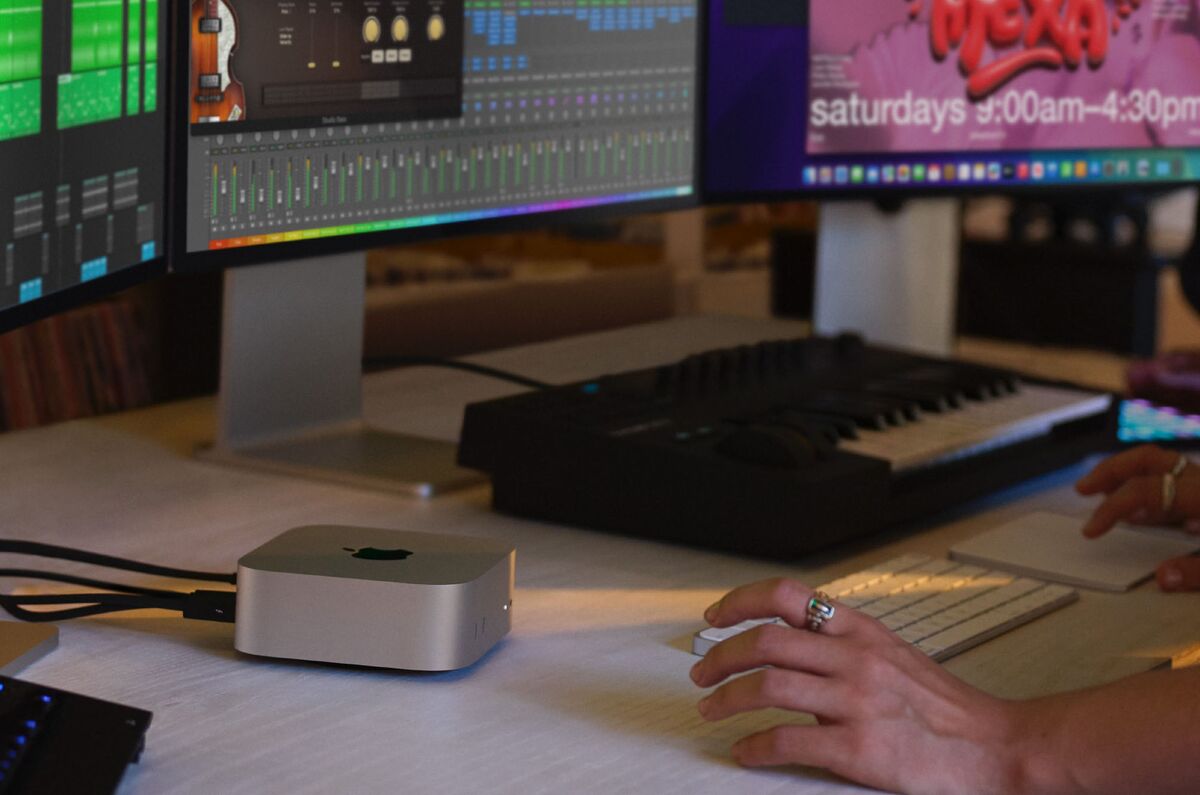
Apple raised the Mac mini starting price to $799 from $599 by eliminating the entry-level 256GB configuration, effectively forcing buyers into a 512GB base model. The increase reflects AI-driven demand and constrained processor supply rather than a broader product repositioning, while the M4 Pro model remains unchanged at $1,399. The news is modestly negative for consumers and margin-sensitive positioning, but likely only a limited stock catalyst.
This is less a consumer-demand story than a supply-allocation signal: Apple is prioritizing higher-margin, higher-ASP configurations when component availability is tight. The second-order effect is that constrained AI-related silicon demand is likely to persist longer than the market expects, which supports the idea that the bottleneck is upstream capacity, not just one-off launch noise. For Apple, the immediate P&L math is favorable because removing the low-end SKU lifts average selling price and gross margin mix, but it also creates a small risk of demand leakage at the entry point for price-sensitive buyers.
Competitively, the biggest beneficiaries are not obvious PC peers but suppliers with leverage to AI-capable compute and advanced packaging if the shortage reflects broader processor scarcity. If this inventory pressure lasts into the next 1-2 quarters, it reinforces a “pay-up for availability” environment where premium hardware vendors can defend pricing, while lower-end desktop competitors may see a temporary opening if Apple’s floor price pushes some budget buyers to Windows alternatives. The market should also watch whether this pricing move is isolated to desktops or becomes a template across more of Apple’s hardware lineup.
The contrarian read is that this may be mildly bullish for Apple fundamentals despite the negative headline sentiment: Apple is showing pricing power exactly where investors worry about commoditization. The real risk is not unit loss today but a broader signal that AI infrastructure demand is crowding out consumer device supply, which could delay channel restocking and create a softer holiday mix if the shortage persists beyond one cycle. A reversal would require either faster chip output or a clear normalization in AI capex ordering over the next 3-6 months.
AI-powered research, real-time alerts, and portfolio analytics for institutional investors.
Request DemoOverall Sentiment
mildly negative
Sentiment Score
-0.15
Ticker Sentiment
