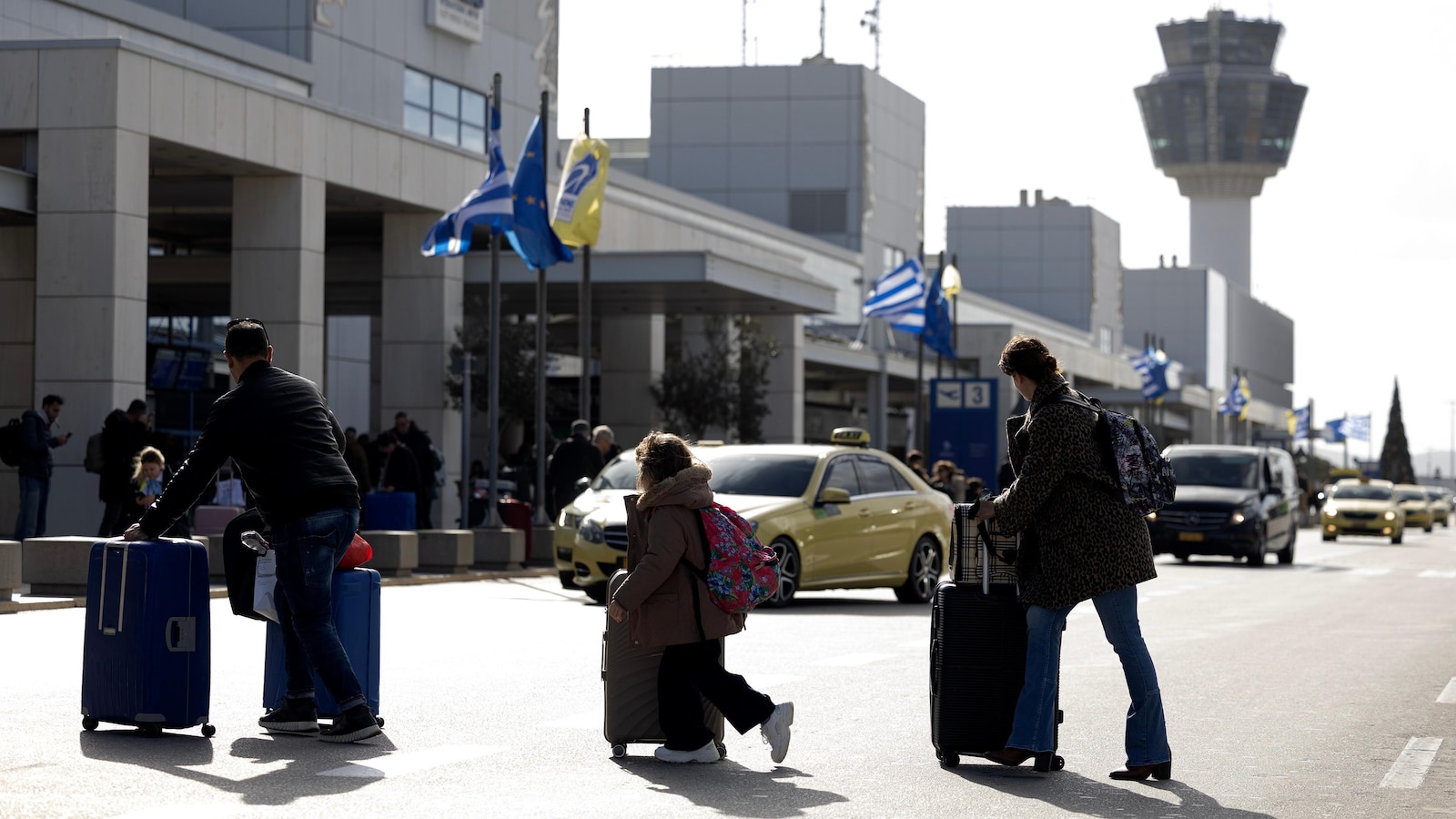
A nationwide radio communications failure forced Greece to shut its airspace for several hours, grounding, diverting or delaying flights and stranding thousands of passengers; noise was reported across primary and backup air-traffic channels. Transport Minister Christos Dimas said a cyberattack appears unlikely, while the Greek Civil Aviation Authority and air-traffic controllers called attention to outdated equipment; a judicial and internal probe has been launched. The incident raises operational and reputational risks for Greek aviation and increases pressure to modernize infrastructure, but presents limited immediate market impact.
Market structure: Short, multi-hour groundings highlight immediate winners in cybersecurity vendors and avionics/infrastructure contractors as governments and airports accelerate CAPEX to replace legacy radio and backup systems. Expect 6–24 month procurement cycles to shift incremental market share toward large systems integrators (RTX, LHX, THALES) and niche comms suppliers; incumbent small vendors with legacy kit face pricing pressure and write-down risk. Airlines and travel operators suffer transient revenue loss (days of cancellations) and higher operating costs from contingency measures; European leisure demand could see a 1–3% tick down in bookings for high-sensitivity markets if public concern persists through peak season.
Risk assessment: Tail risks include (a) discovery of a coordinated cyberattack triggering EU-wide regulatory mandates and emergency capex (+30–50% spending spike for compliant vendors), or (b) systemic equipment failure prompting fines/compensation for carriers and airport authorities reducing dividend capacity. Immediate risk window is 0–30 days (investigation/judicial updates), short-term 1–6 months (procurement signals, budget approvals), long-term 6–24+ months (modernization CAPEX and regulatory changes). Hidden dependencies: national defense suppliers, EU recovery funds, and certification timelines (EASA) will be gating factors that can delay revenue recognition by 3–9 months.
Trade implications: Direct plays — overweight cybersecurity ETFs (HACK) and select large-cap vendors (PANW, CRWD, FTNT) for 3–12 month re-rating; overweight avionics/defense names (RTX, LHX) on 6–24 month modernization contracts. Relative value — pair long cyber ETF HACK, short airline ETF JETS to capture structural shift to security spending versus transient airline cashflow pressure. Options — buy 3–6 month call spreads on PANW/PANW or CRWD to control cost, and buy 1–3 month puts on JETS as tactical hedge around investigation outcomes.
Contrarian angles: Consensus will overweight cybersecurity broadly; the nuance is latency: validation/certification delays mean hardware integrators may see revenue later than pure software/security names — overweight software/cloud defenders 60/40 vs hardware integrators. Reaction may be underdone for European airport services and consultants (engineering firms) that win smaller, fragmented retrofit contracts — consider small tactical exposure to FT-listed engineering contractors if investigation points to equipment obsolescence. If investigation clears as non-malicious within 30 days, airline short trades should be trimmed quickly to avoid mean reversion.
AI-powered research, real-time alerts, and portfolio analytics for institutional investors.
Request DemoOverall Sentiment
neutral
Sentiment Score
-0.10
