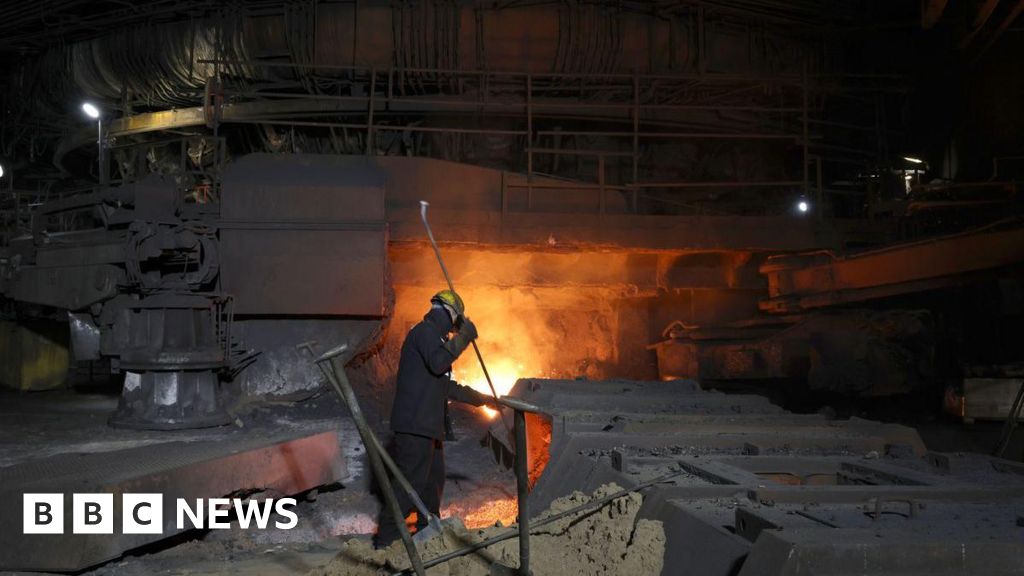
The government spent £377m in nine months to keep British Steel's Scunthorpe site operating—around £1.3m/day—and classified the sum as a loan with no repayment schedule; DBT forecasts spending could reach £615m by June and exceed £1.5bn by 2028 at current rates. Emergency legislation was used to keep the UK's last blast furnaces running, averting major job losses; prior owner Jingye reported losses of ~£700k/day and talks on transitioning to electric arc furnaces (2022–25) failed. The NAO flagged £15m on advisers, £359m for operating costs and unclear prospects for loan repayment, creating fiscal risk and ongoing sectoral uncertainty.
The government's open-ended support functionally places a strategic blast-furnace demand sink under the UK steel value chain for as long as political tolerance holds, extending near-term demand for coking coal and iron ore and keeping merchant scrap prices artificially depressed. That creates a timing mismatch: miners and raw-material suppliers get a temporary cushion while EAF-capable steelmakers (scrap consumers) face deferred feedstock tightening — a dynamic that can compress spreads for ore miners within 3–12 months but widen in favor of scrap/EAF players over 12–36 months if a coordinated conversion program is credibly funded.
Operationally, the dominant marginal costs are energy and carbon; any shock to power markets or accelerated carbon pricing would rapidly flip the economics of blast furnaces versus EAFs. Key catalysts to watch on a tight timetable are: outcome of negotiations with the private owner (days–months), parliamentary budgetary decisions and emergency-instruction sunset dates (weeks–months), and formal commitments to capital for EAF conversion (6–36 months) — each has binary impact on asset cashflow and creditor recovery prospects.
Second-order winners include EAF-focused steel producers and electrified utilities that can capture industrial offtakes; losers include coking-coal exporters and legacy-BF operators without scrap access. The real contrarian opportunity is that markets likely overprice persistent fiscal support as either politically unsustainable or convertible into a near-term industrial policy pivot; put another way, short-duration commodity exposure and long-duration EAF/electricity exposure is a cleaner way to play the divergence than owning local incumbents exposed to policy uncertainty.
AI-powered research, real-time alerts, and portfolio analytics for institutional investors.
Request DemoOverall Sentiment
strongly negative
Sentiment Score
-0.60
