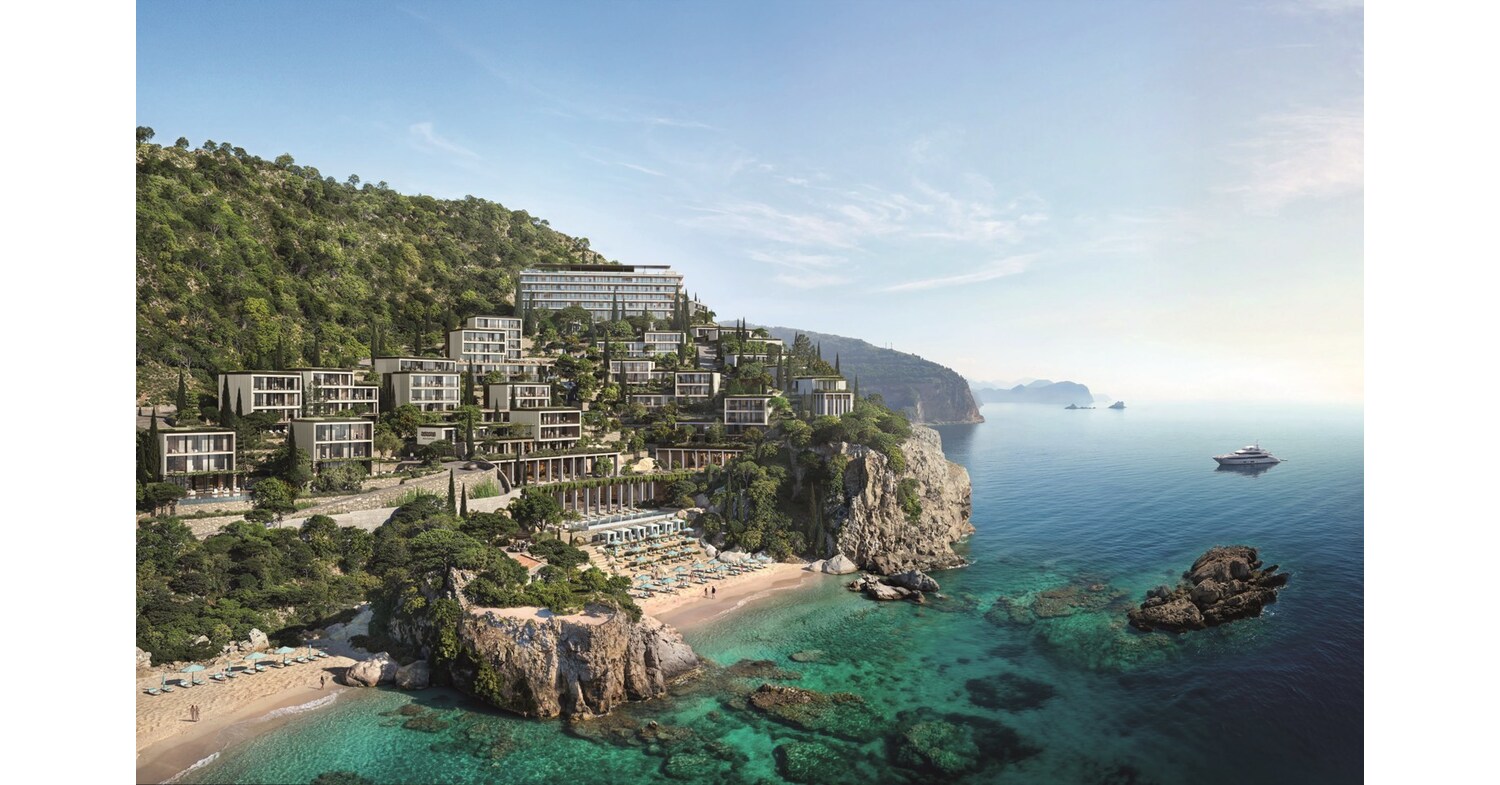
Nammos Hotels & Resorts and Smokva Bay announced a partnership to develop Nammos Resort Montenegro, a 117-key luxury lifestyle destination on Montenegro’s Budva Riviera, targeting a 2029 opening. The project will include 47 hotel suites, 61 branded residences, and 9 branded villas, with signature dining and wellness offerings plus an early 2026 pop-up preview at Sveti Stefan. The news is broadly positive for brand expansion, but it is unlikely to move public market prices given limited financial detail.
This is more of a brand-optionity story than a near-term earnings event. For public markets, the incremental signal is that luxury hotel brands are leaning harder into mixed-use and branded residences, which shifts economics away from volatile room revenue toward higher-margin licensing, management fees, and upfront developer payments. If the model works, the winners are the asset-light operators; the losers are pure property owners who must fund capex while taking most of the execution risk.
The second-order effect is competitive: a successful Adriatic luxury node can siphon affluent demand from nearby Mediterranean resort pockets, but only at the margin because these destinations are largely discretionary and itinerary-driven. More important is that branded-residence supply can compress scarcity premiums if too many operators chase the same playbook, especially in secondary leisure markets where absorption depends on foreign buyers, financing availability, and reliable infrastructure. That makes the real watch item not the press release, but pre-sale velocity, deposit quality, and whether the project needs future equity support.
Over 1-3 months, there is likely no tradable public-market catalyst unless management commentary elsewhere quantifies fee-bearing pipeline growth. Over 6-18 months, the thesis is whether luxury hospitality brands can repeatedly monetize their names without taking balance-sheet risk; if not, the economic value accrues mostly to the developer and local landowners. Contrarian view: this may be overread as a growth signal when it is really an isolated, long-dated development with high geopolitical and permitting sensitivity; any delay, weaker pre-sales, or funding gap would quickly turn the narrative from brand expansion to project risk.
AI-powered research, real-time alerts, and portfolio analytics for institutional investors.
Request TrialOverall Sentiment
mildly positive
Sentiment Score
0.15
