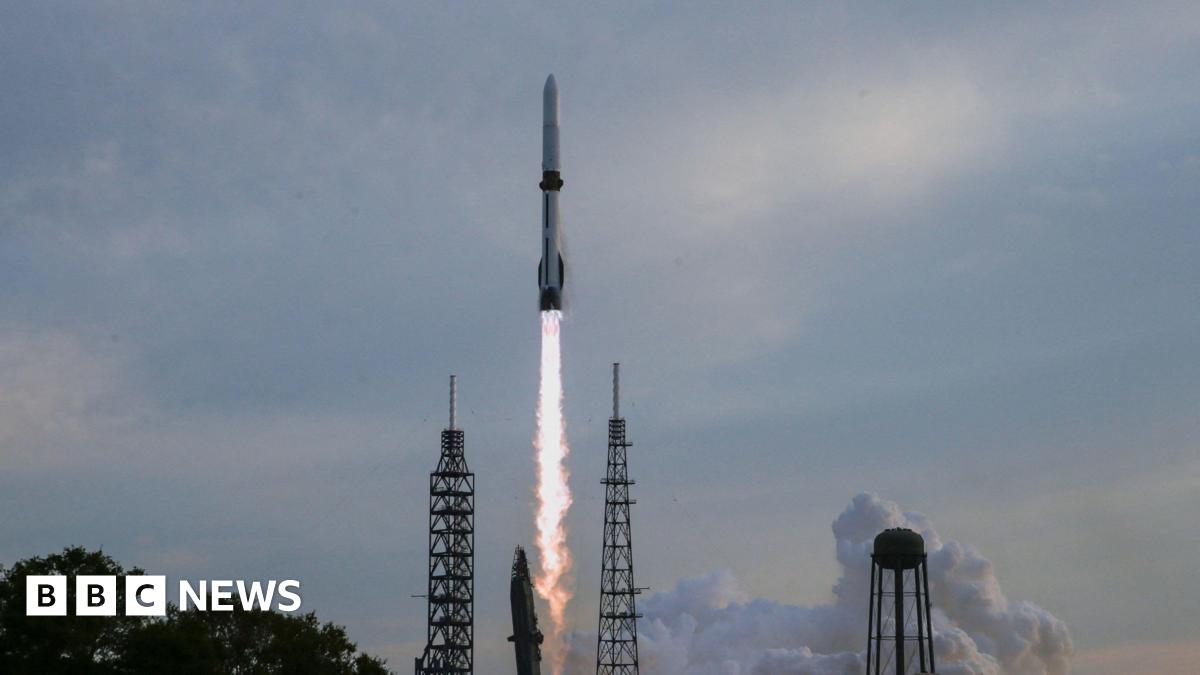
Blue Origin’s New Glenn rocket has been grounded after an FAA-ordered mishap investigation following a failed satellite launch due to insufficient engine thrust. The failed mission leaves the AST SpaceMobile satellite unusable, though AST said the loss is insured; AST shares fell more than 6% on Monday. The FAA will determine when New Glenn can return to flight, and the setback may delay Blue Origin’s launch cadence for the year.
This is more than a one-off launch failure: it highlights how fragile the commercial space launch bottleneck remains when payload customers increasingly depend on a small number of heavy-lift providers. A grounding at this stage matters because the market is implicitly underwriting a steep ramp in flight cadence; any slippage in launch rate compresses the learning curve and delays unit-cost improvement, which can snowball into weaker customer retention and slower satellite constellation deployment across the ecosystem.
For ASTS, the near-term hit is mostly sentiment, but the second-order effect is timing risk for the broader business model. When launch windows slip, the value of each incremental satellite declines because network rollout is a coordination problem: delayed deployment postpones revenue recognition, extends cash burn, and raises financing risk if equity markets stay closed. Insurance softens the direct loss, but it does not fully offset the opportunity cost of lost orbital slot time and potential knock-on delays to commercial trials.
The more interesting implication is competitive rather than binary: repeated launch reliability issues would implicitly strengthen the incumbents with validated launch cadence and weaken the would-be challengers trying to build constellation businesses on top of them. That creates a subtle positive for the vertically integrated space platform with the highest launch frequency and the clearest execution record, while also improving the relative bargaining power of alternative launch providers. For AMZN, this is not a near-term earnings issue, but it does raise execution scrutiny on its adjacent space ambitions, which could keep valuation upside capped until the market sees a credible cadence.
Consensus may be over-discounting the spillover to launch-service availability over the next 3-6 months. The key catalyst is the FAA investigation outcome: a narrow corrective action should allow recovery, but any finding tied to systemic propulsion or quality-control issues would likely push New Glenn timelines out by multiple quarters and force customers to diversify providers. That would be bullish for the few launch alternatives and bearish for any satellite operator that needs reliable rides to orbit on a fixed schedule.
AI-powered research, real-time alerts, and portfolio analytics for institutional investors.
Request DemoOverall Sentiment
moderately negative
Sentiment Score
-0.45
Ticker Sentiment
