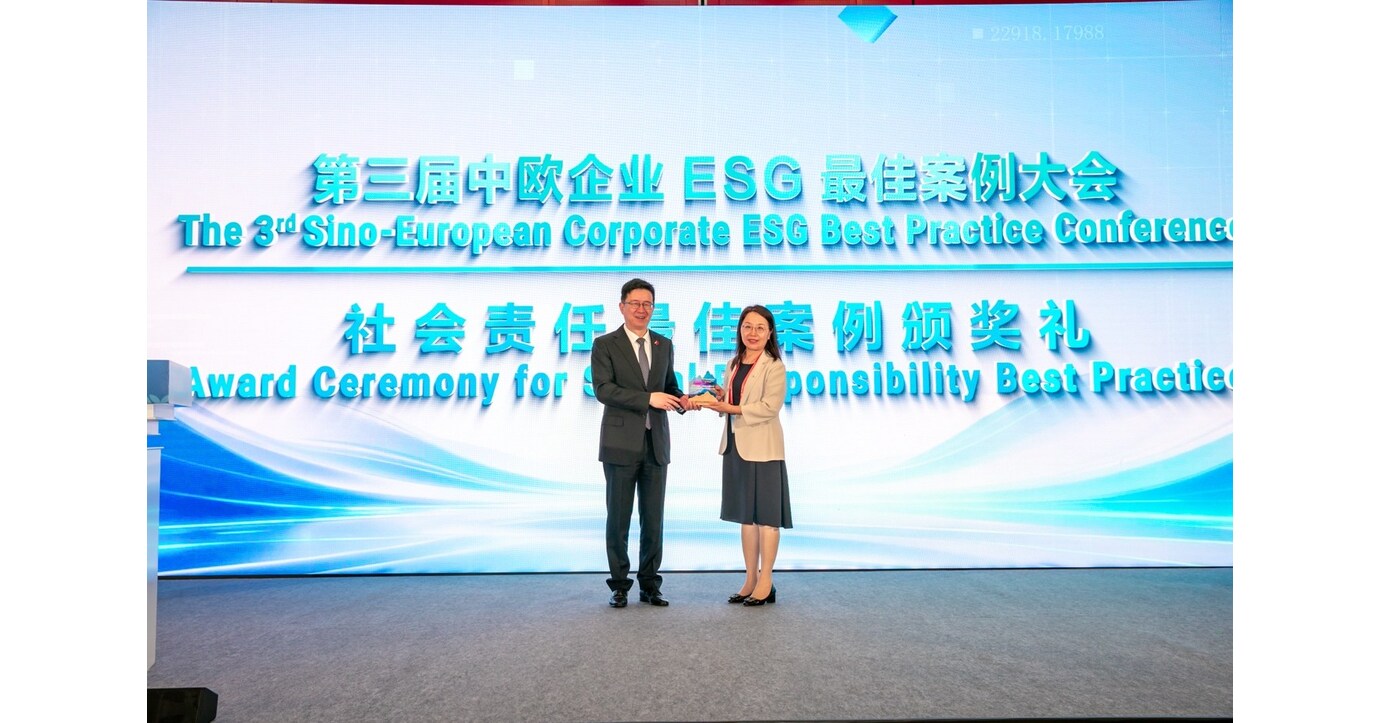
Sinopec was honored with the “Social Responsibility Best Practice” award for its CO₂-management approach across the full product value chain, including alignment with both Chinese and European standards. The company highlighted cross-border recognition with BASF for CO₂ accounting methods and integrated carbon-account requirements into procurement processes to support China’s “Dual-Carbon” goals. Overall, this is a positive ESG milestone but not a financial/guidance catalyst likely to materially move markets.
This is more strategic signaling than earnings news. The real economic value is not the award itself, but the fact that Sinopec is trying to become a “qualified supplier” in European industrial procurement, where audited product carbon data is increasingly a gatekeeper rather than a branding exercise. If that interoperability with BASF is scalable, it can reduce sales friction, support longer contract duration, and modestly improve pricing power for selected low-carbon product lines.
Second-order, the winners are not just Sinopec and BASF but any counterparty that can monetize verified emissions data across the supply chain: banks financing trade flows, logistics firms with traceable carbon reporting, and European chemical buyers under pressure to decarbonize Scope 3 inputs. The losers are regional peers without credible lifecycle accounting, because this creates a procurement moat that is operational, not ideological. In chemicals, that can matter more than headline ESG scores: if you cannot provide product-level carbon data, you can be excluded before price is even negotiated.
The contrarian point is that the market may overestimate near-term P&L impact. Until this translates into actual volume wins, financing cost improvement, or preferential access to EU customers, the stock response should be limited. The main catalyst path is 1-3 months: look for follow-on contract disclosures, green funding, or expanded recognition by other European buyers. The thesis is falsified if there is no commercial follow-through by the next reporting cycle or if EU policy shifts from voluntary ESG alignment to stricter trade barriers that raise compliance cost faster than it opens market access.
AI-powered research, real-time alerts, and portfolio analytics for institutional investors.
Request DemoOverall Sentiment
mildly positive
Sentiment Score
0.12
Ticker Sentiment
