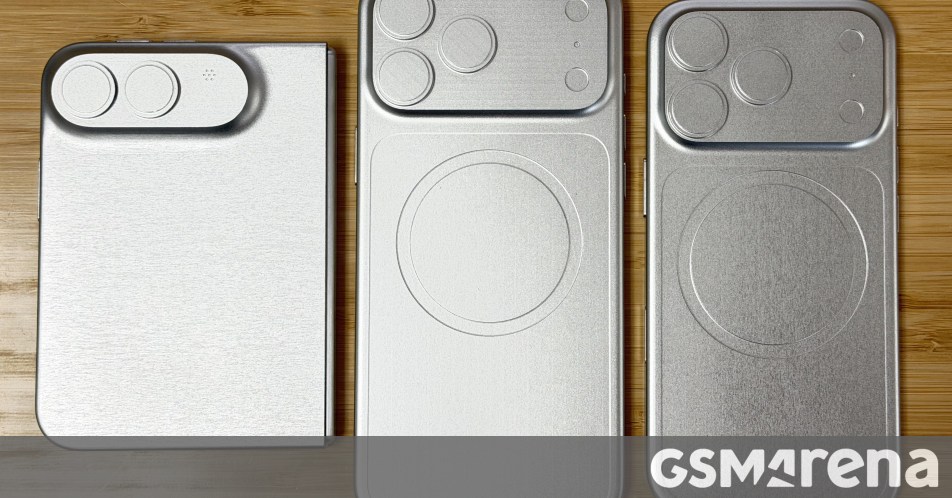
Apple’s rumored iPhone 18 lineup is described with CAD-based dummy units, highlighting an iPhone Ultra foldable variant that reportedly lacks MagSafe support and has only two cameras. The iPhone 18 Pro Max is said to be thicker than its predecessor, measuring 11.54mm versus 11.23mm excluding cameras and 13.77mm versus 12.92mm including them. The devices are rumored to launch at Apple’s September event, but the article is largely speculative and unlikely to have a material near-term market impact.
The important signal here is not the cosmetic redesign; it is product segmentation under physical constraints. If Apple is choosing to sacrifice magnets and potentially charging convenience to preserve foldable geometry, that implies the launch priority is novelty and form factor over feature completeness in year one. That usually favors a strong initial brand response but raises the odds of early adopter dissatisfaction, which can cap upgrade conversion beyond the most enthusiastic base.
For the supply chain, a foldable with fewer components in the hinge/camera stack does not automatically mean lower BOM risk because the yield curve on new mechanical assemblies is typically steep. The bigger implication is mix: if Apple prices this as a halo product, it can pull premium ASPs upward without needing unit scale immediately, but component suppliers tied to traditional MagSafe ecosystem content may see less incremental attach than expected. Meanwhile, a thicker camera module on the Pro Max suggests Apple is still willing to spend physical volume on imaging differentiation, which preserves the premium tier's appeal and may reduce cannibalization from the foldable in the first cycle.
The contrarian angle is that the market may be overestimating near-term iPhone supercycle economics from the foldable alone. Foldables have historically been more effective at generating media value than broad replacement demand, and omission of a familiar convenience feature could slow conversion among mainstream users who already have strong iPhone inertia. If the first-gen Ultra is positioned as an aspirational showcase rather than a mass-market device, the revenue impact is likely back-end loaded into FY27, not a clean FY26 step-up.
Catalyst timing matters: the next 3-6 months are about sentiment and supply-chain reads, while actual margin/volume impact is a 12-18 month story. The key reversal risk is that Apple later adds charging accessories or a revised hinge solution, restoring feature parity and reigniting upgrade demand. Until then, the setup is more supportive of selective supplier rotation than a blanket bullish call on the handset complex.
AI-powered research, real-time alerts, and portfolio analytics for institutional investors.
Request TrialOverall Sentiment
neutral
Sentiment Score
0.05
Ticker Sentiment
