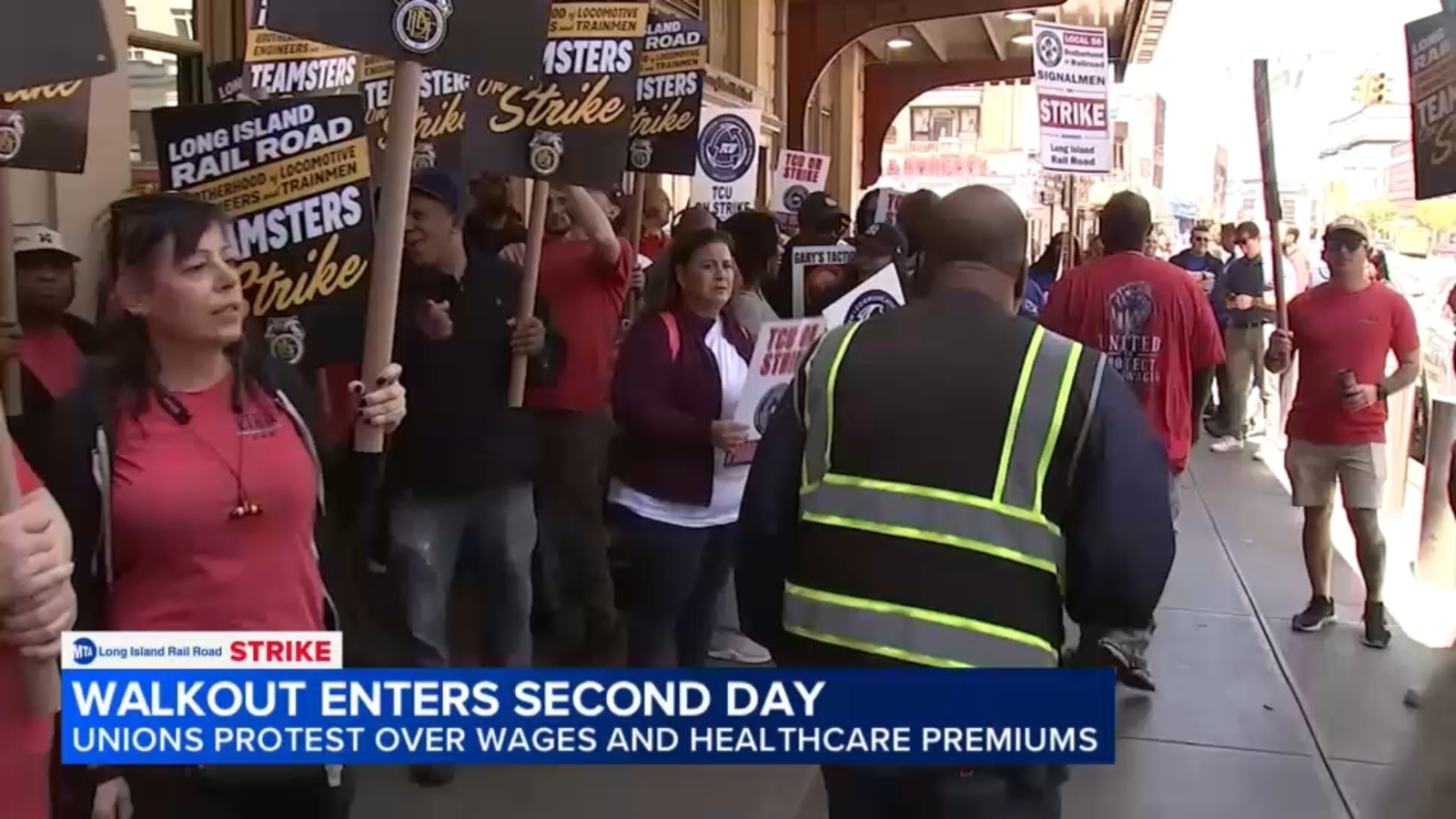
About 3,500 Long Island Rail Road workers, roughly half the workforce, are on strike, suspending service for 300,000 daily riders and disrupting commuter traffic into New York City. The MTA says it will start limited weekday shuttle buses Monday from six Long Island stations to two Queens subway hubs, but capacity will be far below demand. Negotiations remain stalled after three years of failed talks and two federal interventions, with the strike now threatening broader weekday economic disruption if it continues.
The immediate market is not the rail line itself but the forced substitution effect: every day of disruption shifts commuter behavior toward autos, ride-hailing, parking, and buses, with the highest marginal stress on corridor infrastructure into Queens and Manhattan. That creates a short-duration demand bump for toll roads, parking operators, and potentially transit-adjacent real estate, while depressing retail and office foot traffic near Long Island stations and commuter hubs. The second-order risk is stickiness: once commuters and employers rework routines, some of the lost rail volume may not fully snap back even after a settlement.
For MTA specifically, the equity story is not a clean “bad headline, buy the dip” setup because the market is really pricing governance and budget credibility. A prolonged strike raises the probability of political intervention that could force a richer labor deal, but the offset is a higher likelihood of fare pressure, subsidy requests, and tighter capex flexibility over the next 6-18 months. That combination is structurally negative for credit quality at the agency level even if the near-term optics of a quick settlement improve.
The consensus may be overestimating how quickly service normalizes. Federal mediation can end the strike, but back-to-work agreements often leave residual overtime, scheduling, and morale issues that degrade reliability for weeks, which matters more for ridership than the strike itself. The real catalyst to watch is not just the resumption of talks, but whether the MTA signals any concession on wage escalators or work-rule changes; if it does, the precedent increases labor-cost pressure across other transit agencies and public employers.
Contrarian angle: the most attractive trade may be against businesses that depend on predictable daily commuter flows rather than against MTA directly. A multi-day disruption is enough to hit near-term revenue for station-adjacent retail, parking, and some suburban office landlords, but if the strike is resolved quickly, those names could mean-revert just as fast. The asymmetric setup is therefore in short-dated optionality or event-driven pairs, not in trying to underwrite a prolonged structural decline before there is evidence of a wider commuter habit shift.
AI-powered research, real-time alerts, and portfolio analytics for institutional investors.
Request DemoOverall Sentiment
moderately negative
Sentiment Score
-0.45
Ticker Sentiment
