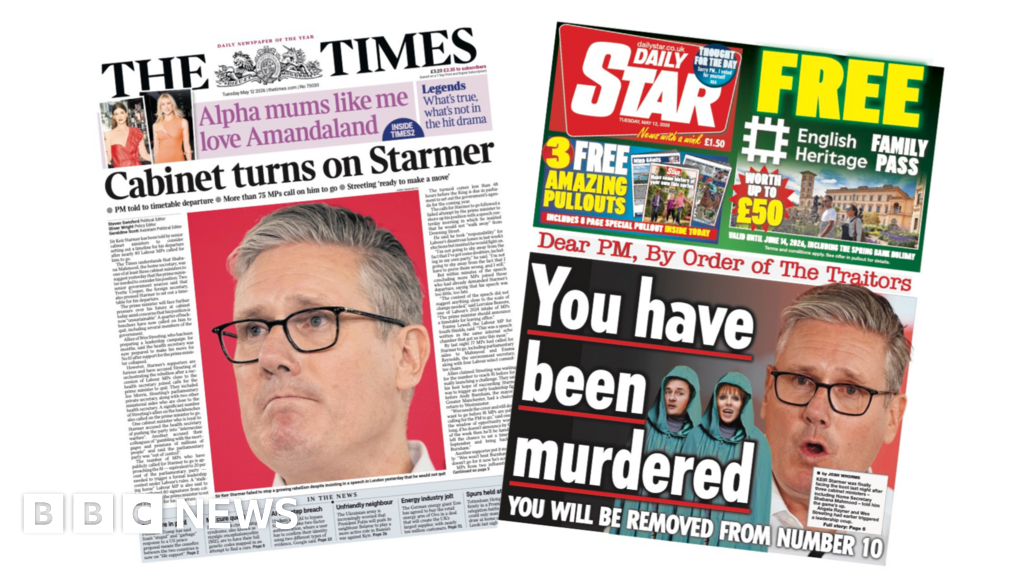
Sir Keir Starmer is facing a major internal Labour rebellion, with nearly 80 MPs publicly calling for him to go and at least three senior Cabinet ministers reportedly pressing for a departure timeline. The article also notes potential leadership bids from Angela Rayner and Wes Streeting, while the government is trying to refocus attention on Tuesday’s King's Speech and new legislation, including British Steel ownership. This is primarily a domestic political stability story with limited direct market impact.
The market implication is not immediate policy shock but a sharp increase in UK governance discount. When a government looks internally unstable, the first-order hit is to execution: procurement timelines slip, civil-service risk appetite falls, and departments delay discretionary decisions until ministerial authority is clearer. That typically matters most for UK domestics with regulatory leverage, lower-beta business models, and companies waiting on state-led demand or approvals rather than exporters with global revenue streams.
The second-order effect is that political uncertainty can freeze rather than reprice policy, which is more damaging for capex than for earnings. Infrastructure, construction, defense procurement, utilities regulation, and public-sector service providers are most exposed if the next 2-8 weeks become dominated by succession management and legislative brinkmanship. Conversely, internationally diversified UK-listed names may outperform on a relative basis because they can decouple from Westminster noise while domestic cyclicals de-rate on “policy paralysis” alone.
The tail risk is a rapid leadership contest that forces a fiscal reset or a looser coalition-style policy market more hospitable to spending promises but less credible on delivery. In the near term, any bounce would likely come only if the government regains agenda control via a high-salience legislative win; otherwise, the overhang can persist for months and widen the UK equity risk premium. The consensus may be overestimating the probability of immediate regime change and underestimating the duration of paralysis, which is usually the more investable trade.
I would treat this as a relative-value event, not a broad macro short, because sterling and gilts are more sensitive to policy coherence than headline drama. The cleanest expression is to fade UK domestic beta against multinationals or global peers, while using short-dated options to avoid paying for an event that may drag on rather than resolve quickly.
AI-powered research, real-time alerts, and portfolio analytics for institutional investors.
Request DemoOverall Sentiment
moderately negative
Sentiment Score
-0.35
