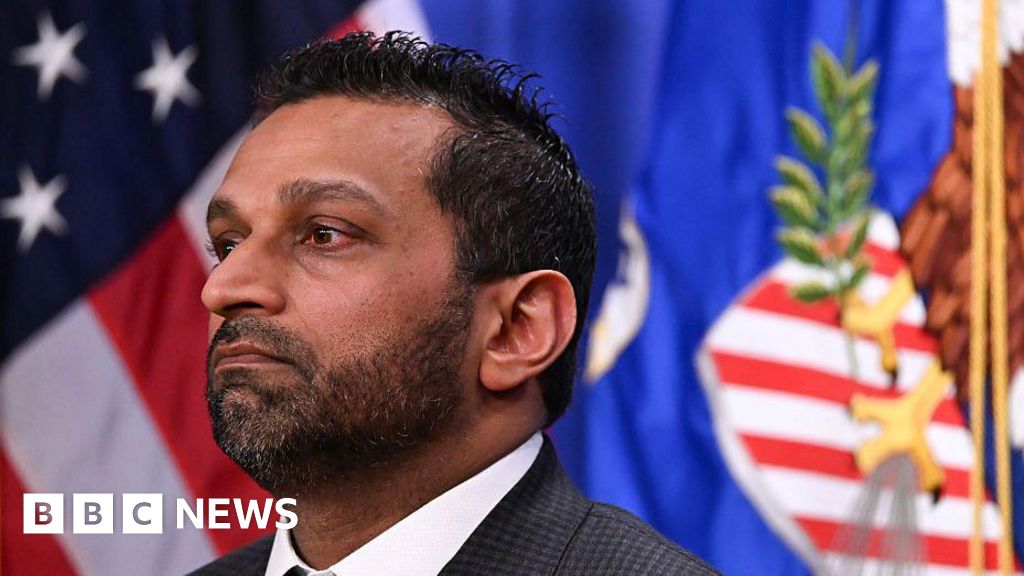
At least 10 FBI employees who worked on Special Counsel Jack Smith's probe of classified documents at Mar-a-Lago were fired, a move confirmed by media partners and announced shortly after FBI Director Kash Patel said federal agents subpoenaed his and Susie Wiles's phone records when they were private citizens. No evidence of wrongdoing by the terminated staff was offered, and the FBI Agents Association condemned the action; the firings occur amid broader Justice Department and FBI personnel actions since President Trump's return, following indictments and subsequent case dismissals on procedural grounds. The developments increase political and enforcement uncertainty and present heightened governance and regulatory risk for firms sensitive to DOJ/FBI oversight or to wider political-legal volatility.
Market structure: The immediate winners are safe-haven and security-related providers—gold (GLD) and government-contractor/cybersecurity revenue streams (e.g., LMT, GD, PANW, CRWD)—as perceived political risk nudges institutional buyers toward defense and private security. Losers are diffuse: DOJ/FBI-dependent vendors and any firms whose revenue relies on stable federal enforcement (some law firms, compliance consultancies) may see contract volatility; equity impact is likely <1–3% revaluation absent broader institutional crisis. Cross-asset flows should be modest but visible: expect a 5–25bp intra-week Treasury rally (TLT up), a 1–3% bid for GLD, and a small VIX uptick short-term.
Risk assessment: Tail risks include escalation to widespread firings, IG findings, or large-scale prosecutions that trigger protests or bond market repricing; probability low (<10%) but could move 10y Treasury yields by 50–100bps in extreme scenarios. Time horizons: immediate (days) — headline-driven volatility and small safe-haven bids; short-term (weeks–months) — legal cascade and private contract reallocation; long-term (quarters–years) — potential sustained shift of some security spend from public to private. Hidden dependencies: federal contractor revenue is tied to appropriations cycles and IG reports; recruitment gaps at FBI could accelerate private-sector cybersecurity spend by 5–15% annually. Key catalysts: IG report, congressional hearings, DOJ announcements in next 30–90 days.
Trade implications: Tactical hedges and selective longs preferred. Buy modest safe-haven exposure (GLD, TLT) and overweight pure-play cyber contractors (PANW, CRWD) with 6–12 month horizon; favor large-cap defense (LMT, GD) for a 6–18 month hold if appropriations stay intact. Use options for cost-effective hedges: 1–3 month put protection on SPY or a VIX call spread around major hearings.
Contrarian angles: Consensus overstates systemic risk—history shows institutional shocks tied to personnel moves produce transient volatility (weeks) rather than structural sell-offs; if IG reviews clear most procedural issues, cyclicals and small caps should rebound 5–8% in 1–3 months. Conversely, the market may underprice a sustained reallocation of security spend to private firms; a contrarian overweight in high-growth cyber names could outperform by 10–25% if private contracts accelerate. Watch for unintended consequences—heightened private compliance/cyber spend—that create multi-quarter earnings upside for specialist vendors.
AI-powered research, real-time alerts, and portfolio analytics for institutional investors.
Request DemoOverall Sentiment
mildly negative
Sentiment Score
-0.30
