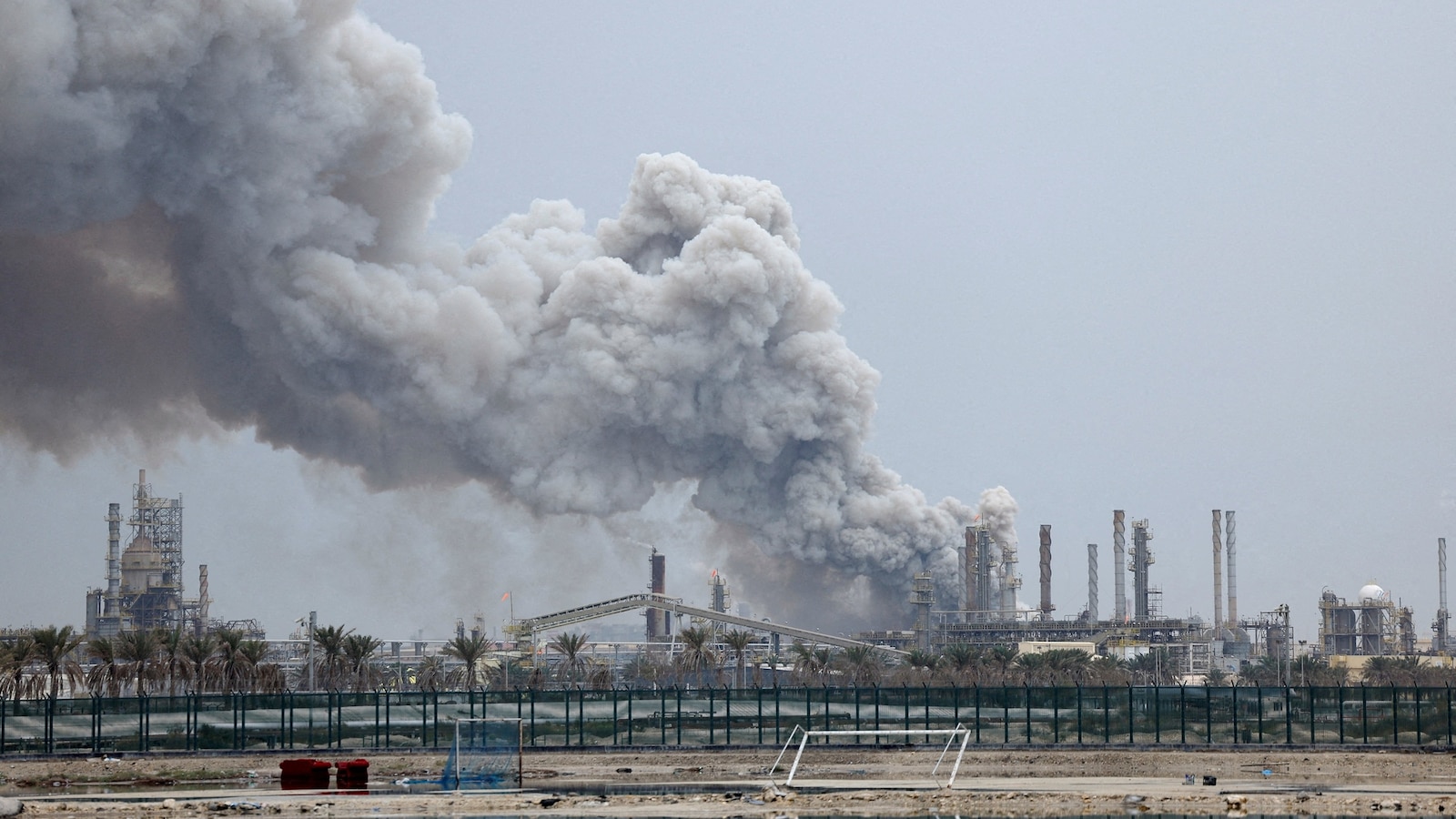
Oil spiked as high as $119/bbl (around $109 by Friday) and is up more than 50% over the past month after retaliatory strikes on Middle East energy infrastructure; U.S. gasoline averaged $3.91/gal, up $0.98 month-over-month. Iran's strike on Qatar's Ras Laffan LNG terminal cut Qatar's export capacity by ~17%, costing an estimated $20bn in annual revenue with repairs that could take up to five years. Analysts warn prolonged damage to energy infrastructure could sustain higher oil and diesel prices, lifting inflationary pressure (headline inflation 2.4%) and slowing U.S. and global economic output via higher input and transport costs.
The recent escalation materially increases the hydrocarbon risk premium beyond a simple spot-price shock: insurers, terminal operators and host-country O&M providers will reprice security and rebuild risk, creating a multi-year step-up in marginal delivered costs for oil/LNG flows even if physical flows resume. Expect insurance/reinstatement premiums and on-site security budgets to rise meaningfully (we model a 20–40% uplift in site-level operating costs across exposed export terminals over 12–24 months), which favors asset owners able to pass through tolling revenues and hurts low-margin transport and retail sectors.
Rerouting and capacity substitution mechanics create concentrated winners. Owners of flexible LNG offtake and shipping (charter owners) can arbitrage spatial price differentials; US exporters with spare liquefaction optionality and contracted short‑term cargo pricing capture outsized near-term spreads versus Asian hub prices. At the same time, diesel-driven logistics costs transmit rapidly into retail margins and inventory carrying costs, pressuring companies with thin gross margins and long, fuel‑intensive distribution chains.
Policy and market catalysts are asymmetric: a credible diplomatic ceasefire or coordinated liquidations from strategic reserves can compress risk premia within weeks, while repairs, reinsurance renegotiations and hardened security postures sustain a premium for quarters to years. Tail risks include sustained targeting of energy nodes that permanently raises reinsurance pricing and reduces investible capacity; a demand‑destruction macro feedback loop (commodity shock → weaker consumption → recession) is the principal downside scenario for cyclicals and credit.
Positioning should reflect that the move is not binary: there is probable near‑term overshoot in energy equities and commodity derivatives, but also durable structural winners (LNG optionality, charter owners, specialized E&P with hedges). Size trades to festival windows: event risk near-term, structural repositioning medium-term, and tightening risk controls around Brent/HH spread triggers.
AI-powered research, real-time alerts, and portfolio analytics for institutional investors.
Request DemoOverall Sentiment
strongly negative
Sentiment Score
-0.72
