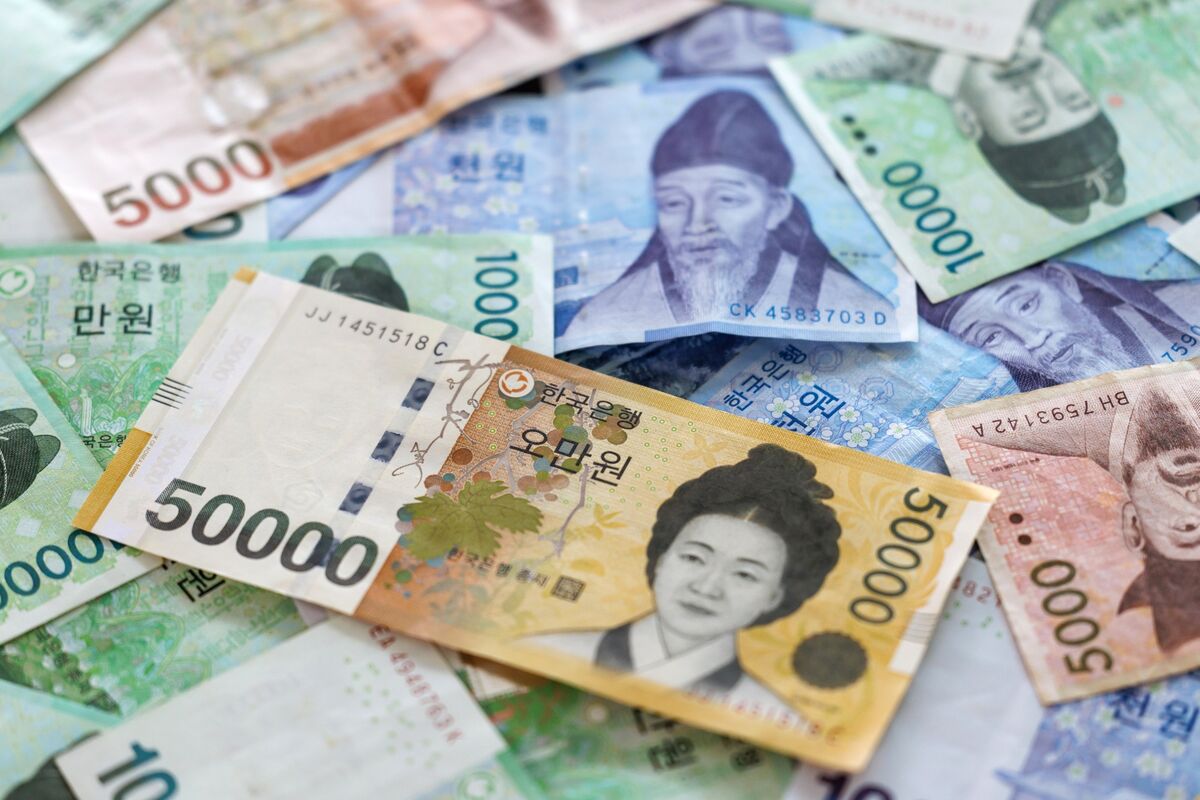
South Korea has opened 24-hour won trading as the currency fell to a 17-year low and was Asia’s worst performer in the first half, prompting heightened scrutiny of won price moves and trading volumes by Finance Ministry officials. The setup signals a higher likelihood of FX intervention if volatility persists, which can spill over to regional risk sentiment and financial conditions.
The immediate market mechanism is not the 24-hour facility itself; it is that Korea is effectively admitting the FX stress is persistent enough to require continuous hedging. That usually raises near-term volatility first, because it gives global players a cleaner way to express bearish won views around the clock, but it can lower the risk premium over 1-3 months if it meaningfully reduces gap risk and intervention uncertainty. For U.S.-listed Korea proxies, the first order winners are exporters with natural USD receipts and low local-demand sensitivity; the losers are domestically levered balance-sheet stories whose funding and input costs move with the currency.
For KEP, the setup is more nuanced than a simple weak-won = bad. A softer won increases imported fuel and capex costs, but the bigger variable is tariff lag and policy willingness to reprice power; if regulators delay pass-through, margin pressure can outrun the currency move. Over 6-18 months, the structural risk is that a weaker won forces a higher country risk premium on all Korea utility and bank equities, compressing multiples even if earnings stabilize; that is especially relevant if foreign investors use the new trading window to hedge equity exposure more aggressively.
The contrarian view is that consensus may be overestimating how bearish this is for the broader Korea complex. If the new market structure improves liquidity and reduces the penalty for hedging, it can be mildly positive for foreign participation and for exporters already under-owned on valuation grounds. The real falsifier is not the policy announcement; it is whether the won keeps making new lows despite the new trading regime and whether policymakers are forced into direct intervention or rate rhetoric within the next 1-3 weeks.
AI-powered research, real-time alerts, and portfolio analytics for institutional investors.
Request DemoOverall Sentiment
mildly negative
Sentiment Score
-0.35
Ticker Sentiment
