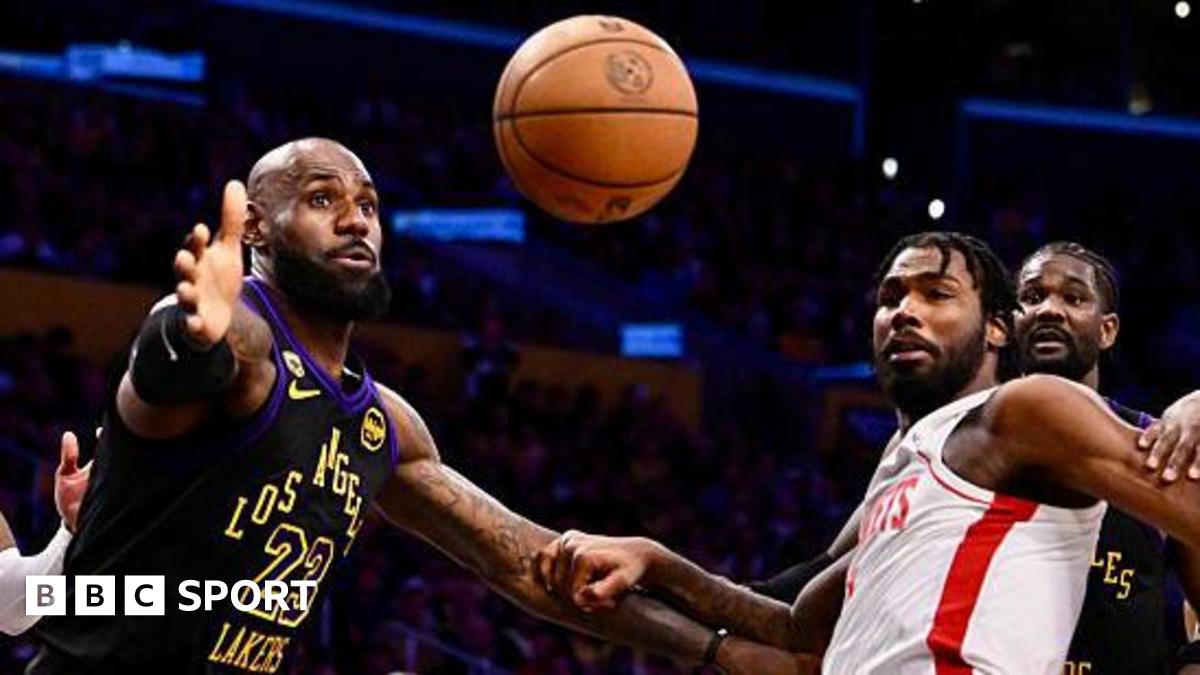
LeBron James led the Lakers with 28 points, 8 rebounds and 7 assists in a 101-94 win over the Rockets, giving Los Angeles a 2-0 lead in the first-round series. Victor Wembanyama sustained a concussion during San Antonio's loss to Portland and entered concussion protocol, while the Spurs and Celtics/76ers playoff results were otherwise routine. The article is primarily a game recap with limited broader market relevance.
This is a two-layer market story: one is short-duration health risk around a generational player, the other is a veteran persistence signal that gets overread by fans and underpriced by broadcasters, sponsors, and betting markets. The immediate edge is in volatility, not direction: concussion protocols create a hard 1-3 day information gap, which tends to widen market-implied uncertainty around the next game more than the eventual season impact. That favors anyone selling event-driven premium rather than making a binary health call.
The deeper second-order effect is competitive asymmetry. If the Spurs lose a usage gravity point, the replacement minutes do not just mean fewer points; they also collapse defensive attention and rebounding leverage, which can turn a close series into a pace-and-rebound mismatch over the next 48-72 hours. On the other side, age-resilient stars create a misleading narrative that can keep public money anchored to a team longer than the underlying roster durability would justify, especially when supporting scorers are already compromised.
The contrarian view is that the concussion headline may be more important for pricing than the actual playoff result. A single missed game in a best-of-seven is often a 5-10% swing in series win probability, but a return-after-protocol-clearance can reset that instantly, so the optimal trade is to monetize the uncertainty before medical clarity. Over a multi-game horizon, the bigger risk is cumulative availability drift: once one cornerstone exits, opposing defenses and coaching adjustments compound the damage rather than linearly replacing production.
AI-powered research, real-time alerts, and portfolio analytics for institutional investors.
Request TrialOverall Sentiment
neutral
Sentiment Score
0.05
