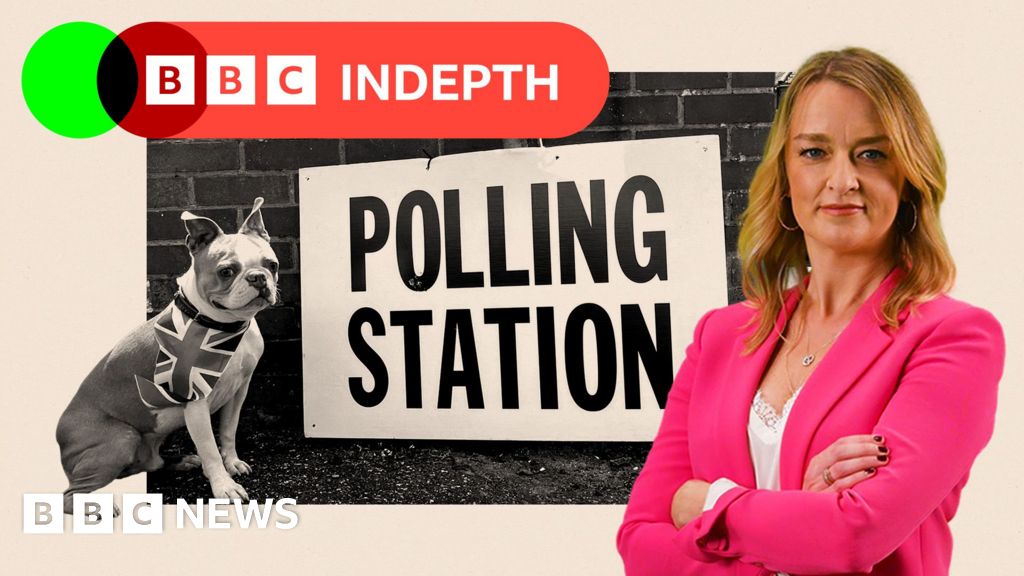
The article frames next week's UK local and national elections as a potential turning point for Labour, with Keir Starmer's leadership under pressure if the party suffers heavy losses. Reform is expected to win at least 1,000 council seats and possibly 1,500, while the Greens could gain around 500 and the Lib Dems about 150, implying a broad weakening of Labour and the Conservatives. The biggest political risk is a post-election leadership challenge or reshuffle, but the outcome remains highly uncertain.
The market takeaway is not the election outcome itself, but the probability of a governing paralysis premium in UK domestic assets over the next 1-4 weeks. When leadership stability is questioned, local-capex, housing-adjacent, and consumer-discretionary names tied to UK fiscal confidence tend to underperform even if the macro data do not change; the discount comes from delayed decision-making, weaker municipal spending cadence, and businesses pausing procurement until there is clarity. That is a bigger issue for domestically levered UK equities than for multinationals with sterling revenue translation upside.
The second-order dynamic is that a fragmented council map would strengthen challengers outside the traditional two-party axis, which increases policy uncertainty around planning, migration, and local taxation over the next 6-18 months. That matters because it raises the odds of more rent-seeking behavior at the local level and slower execution on housing and infrastructure, a negative for UK homebuilders, regional banks, and contractors exposed to planning approvals. Conversely, a weak showing by the incumbents could compress the time horizon for a leadership reset, which may initially be read as negative, but over 3-6 months markets often prefer a clean succession over prolonged drift.
The consensus appears to be overpricing headline seat counts and underpricing the signaling value of council control in London and Scotland. If the largest party can credibly claim national momentum, it may force the established opposition into a faster strategic repositioning, which is bearish for already fragile incumbent donor confidence but bullish for volatility and event-driven positioning. The key reversal catalyst is not polling improvement; it is any result close enough to deny a clean narrative of collapse, which would let leadership pressure dissipate into background noise.
Contrarian view: the immediate selloff risk in UK domestics may be sharper than the medium-term earnings impact. Local election noise usually fades fast, and if leadership turmoil does not materialize within 48-72 hours, the market could squeeze back crowded shorts in mid-cap UK cyclicals. That argues for using the event to own optionality rather than outright direction where possible.
AI-powered research, real-time alerts, and portfolio analytics for institutional investors.
Request DemoOverall Sentiment
moderately negative
Sentiment Score
-0.20
