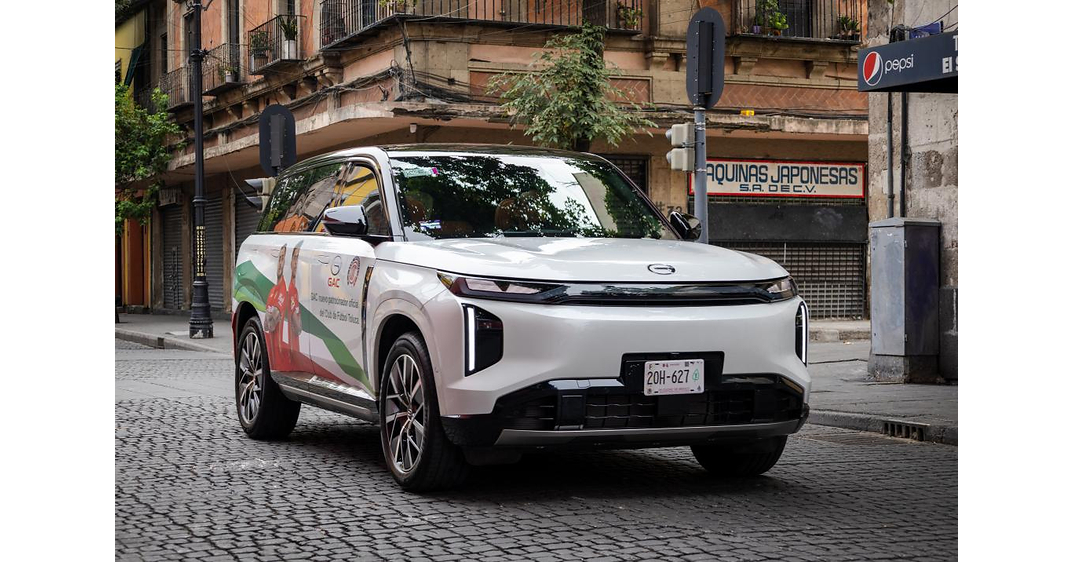
GAC fournit des véhicules de service (AION UT et GS7) à l’agence Xinhua pour la couverture de la Coupe du monde au Mexique, positionnant ses modèles comme solutions de mobilité “fiables, spacieuses et silencieuses”. Sur janv.-mai 2026, d’après JATO, les AION ES et AION UT figurent parmi les 10 BEV les plus vendus au Mexique, avec l’AION UT 3e du segment B 100% électrique et l’AION ES 2e du segment C. Le groupe met aussi en avant un partenariat marketing sportif avec Toluca FC pour renforcer son expansion en Amérique latine.
This reads less like a one-off PR and more like evidence that Chinese OEMs are using Mexico as a low-friction proving ground for brand-building before larger capital commitments. The economic value is not the sponsorship itself; it is the validation loop: visible fleet usage, localized product fit, and a faster path to dealer conversion in a market where B-segment EV pricing still matters more than technology storytelling. If that loop scales, the real losers are entrenched ICE-heavy small-car competitors and any incumbent with Mexico exposure that relies on margin-protected entry trims.
The immediate market impact is probably limited because media placements do not move quarterly P&Ls. The next 1-3 month catalyst is registration data: if the named models keep showing up in Mexican sales rankings, that signals repeatable demand rather than promotional inventory dumping. What would falsify the bullish read is a slip in Mexico monthly deliveries, signs of dealer destocking, or policy friction around Chinese imports; those would tell us this is brand theater, not share capture.
The contrarian point is that investors may underweight how cheaply Chinese autos can manufacture awareness through ecosystem marketing compared with Western incumbents’ traditional ad spend. Over 6-18 months, if Mexico becomes a credible Latin America hub, Chinese OEMs could compress pricing for GM, VW, Nissan, and Stellantis in the region, especially in compact EVs and fleet channels. The main nuance: this is a share-shift story, not a broad auto-demand expansion story, so valuation upside should stay tied to evidence of sustained unit growth and localization, not headline visibility.
AI-powered research, real-time alerts, and portfolio analytics for institutional investors.
Request TrialOverall Sentiment
mildly positive
Sentiment Score
0.15
