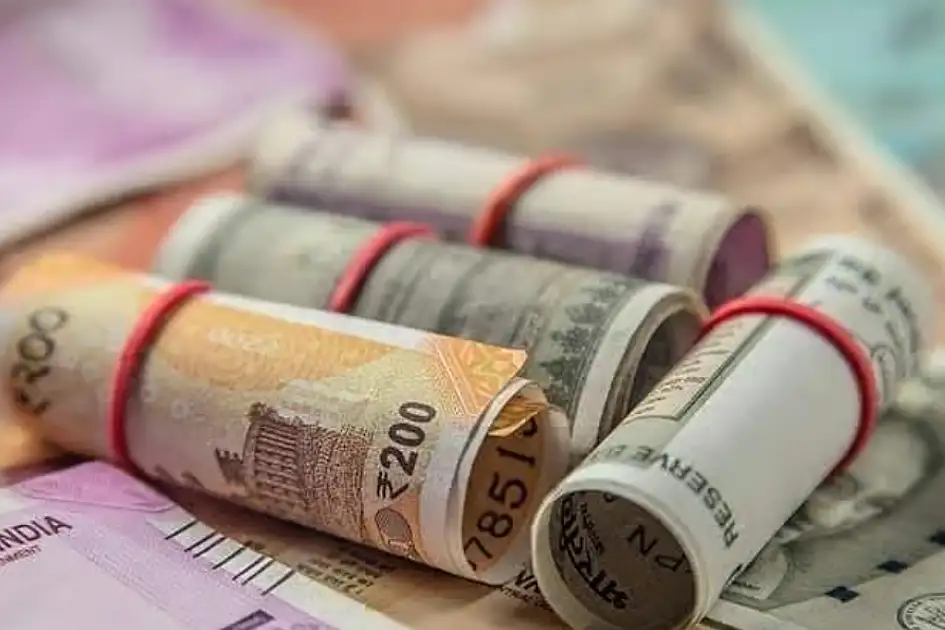
The Indian rupee is nearing Rs100 per US dollar, after weakening nearly 6% since late February and briefly trading near 97 this week. The article warns that prolonged Middle East conflict and elevated oil prices could trigger imported inflation, capital outflows, and further RBI intervention, including a possible rate hike, dollar swaps, sovereign dollar bonds, and NRI deposit schemes. For UAE-based NRIs, the weaker rupee boosts remittance value in the short term, with the dirham potentially moving toward Rs28 if the currency breaches 100.
The key market implication is that this is no longer just an FX story; it is a policy credibility and domestic-demand story for India. A weaker rupee with still-elevated oil acts like an implicit tax on households and corporates, so the near-term loser set is broader than importers: banks with unsecured consumer exposure, discretionary retailers, autos, airlines, and any company relying on dollar-linked inputs but selling into a price-sensitive domestic market are all vulnerable to margin compression and slower volume growth.
Second-order effects matter more than the headline level. If the central bank leans harder into defense, the likely transmission is tighter INR liquidity, higher front-end rates, and a temporary squeeze on credit creation — which is bearish for rate-sensitive sectors even if nominal growth holds up. If it does not defend aggressively, imported inflation can still force policy tightening later, making the adjustment more painful over the next 3-6 months; either path is negative for domestic cyclical multiples.
The most important contrarian point is that the market may be overestimating the persistence of the move if the shock is predominantly geopolitical rather than structural. A ceasefire or a meaningful rollback in oil would likely trigger a sharp short-covering rally in the rupee because positioning is already skewed and the level is symbolically important; in that scenario, the best risk/reward may be in fading extended dollar-hedge trades rather than outright India macro shorts. But if crude stays high into the next quarter, the move becomes self-reinforcing through inflation, capital outflows, and weaker growth expectations, which argues for staying defensive until policy response is visible.
AI-powered research, real-time alerts, and portfolio analytics for institutional investors.
Request DemoOverall Sentiment
strongly negative
Sentiment Score
-0.55
