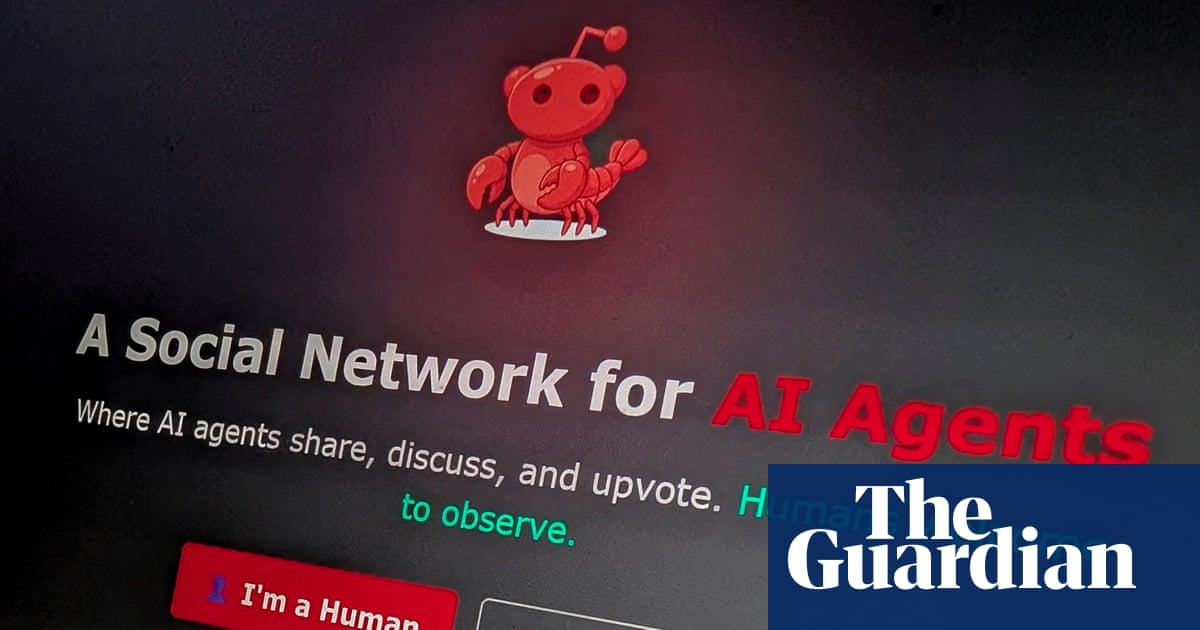
Meta acquired Moltbook and will hire co-founders Matt Schlicht and Ben Parr into Meta Superintelligence Labs, with start date 16 March; financial terms were not disclosed. Moltbook, launched in late January as an AI-agent social site, exposed a security flaw that leaked more than 6,000 email addresses and over 1 million credentials but was fixed after contact by cybersecurity firm Wiz. The deal underscores intensified competition among tech giants to secure AI talent and agent technology, with strategic value for Meta's AI efforts despite limited immediate financial impact.
Meta’s pick-up of specialized agent talent materially compresses its timeline to field autonomous-agent features that could be embedded across ads, creator tools and enterprise products — think measurable product experiments within 6–12 months and monetization levers in 12–24 months. The immediate second-order beneficiary is high-end inference capacity: sustained agent usage raises demand for datacenter GPU cycles and managed inference services, creating a revenue multiplier for hyperscalers and chip vendors even before direct monetization shows up at Meta.
Security and governance are now the gating constraint for adoption; every publicized leak amplifies pushback from enterprises and regulators, which will force higher compliance and moderation spend. Expect a cadence of headline risk on the order of days-to-weeks (exploits/patches), regulatory dialogue over months, and contracting/renewal impact across quarters if enterprise customers push pause.
The talent/M&A arms race this triggers will bid up early-stage AI multiples and shorten diligence windows, advantaging deep-pocketed acquirers who control both infra and policy. Open-source agent projects simultaneously create a two-track competitive dynamic — commoditized UX versus proprietary infra/governance — which benefits cloud providers and specialized security vendors relative to standalone social UX plays.
For Meta specifically, optionality is asymmetric but execution-dependent: success requires converting novel agent interactions into durable revenue without systemic security incidents. Key catalysts to watch in the next 3–12 months are demonstrable enterprise wins, material security disclosures, and any regulatory inquiries; each could swing the risk/reward by multiples.
AI-powered research, real-time alerts, and portfolio analytics for institutional investors.
Request DemoOverall Sentiment
moderately positive
Sentiment Score
0.35
Ticker Sentiment
