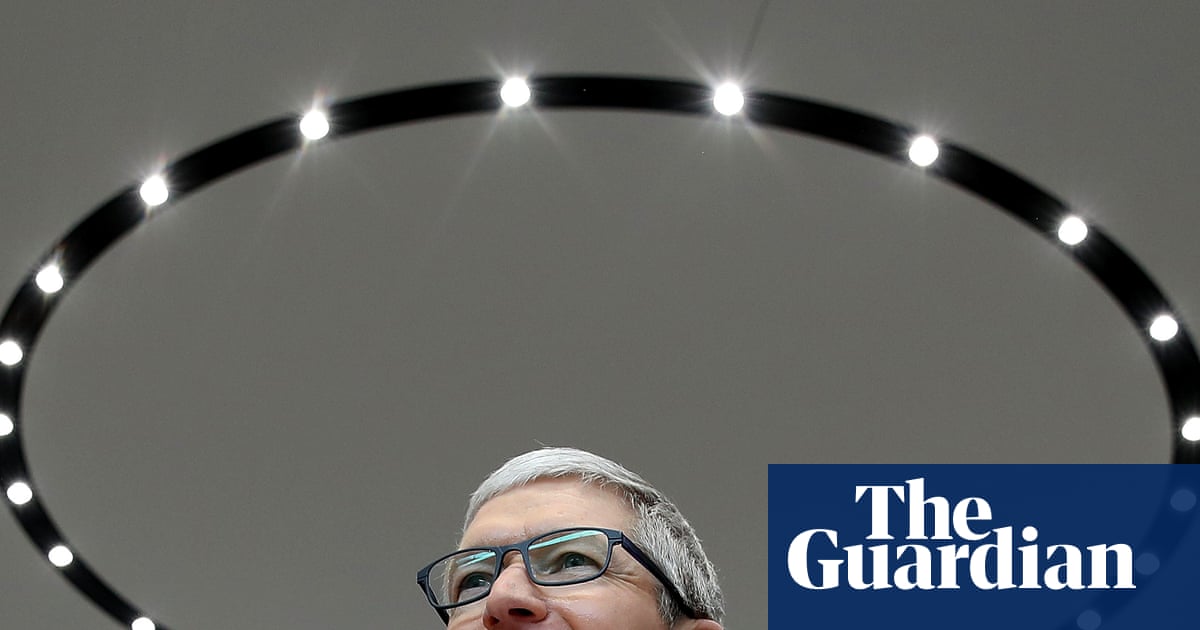
Tim Cook is stepping down after 15 years as Apple CEO, with John Ternus set to replace him while Cook remains executive chair. The article frames Cook’s tenure as highly successful, citing Apple’s rise from $350B in market value in 2011 to $4T today, but also notes missteps including slow AI adoption, a $3,500 Vision Pro launch that underwhelmed, and a shelved self-driving car project that cost about $10B. The news is mainly a leadership transition and retrospective on Apple’s operating performance, with limited near-term market impact.
Cook’s departure is less a “founder transition” event than a regime change in investor expectations: the market is likely to stop underwriting Apple as a pure capital-allocation machine and start pricing a slightly higher execution premium on product cadence. That matters because at Apple’s scale, even small multiple compression or expansion on forward growth can overwhelm fundamental changes; the near-term equity reaction should be driven more by confidence in the successor’s ability to preserve services attach rates and ecosystem lock-in than by any single product cycle.
The key second-order effect is organizational: moving a hardware engineering lead into the CEO seat raises the probability of tighter integration between device roadmaps and software/AI product timing, but it also increases the risk of internal capital being pulled toward longer-cycle hardware bets. That makes the next 6-18 months a sequencing trade: if AI features are credible and bundled into the installed base, the stock can re-rate on renewed “platform optionality”; if not, the market will view this as a maintenance CEO transition and refocus on slowing innovation versus larger-cap software peers.
Competitively, the most vulnerable names are not obvious handset rivals but ecosystem-adjacent beneficiaries of Apple’s product indecision: premium Android OEMs, mixed-reality suppliers, and developers dependent on faster AI distribution across devices. The biggest upside surprise for Apple would be a cleaner monetization of its base through paid AI services or higher hardware upgrade intensity; the biggest downside is that the transition becomes a pretext to delay expensive product resets, allowing rivals to capture mindshare in edge AI and premium consumer hardware. Over a multi-quarter horizon, that asymmetry argues for treating any initial relief rally as fragile unless management quickly proves that this is an innovation handoff, not just a governance handoff.
AI-powered research, real-time alerts, and portfolio analytics for institutional investors.
Request DemoOverall Sentiment
mildly positive
Sentiment Score
0.25
Ticker Sentiment
