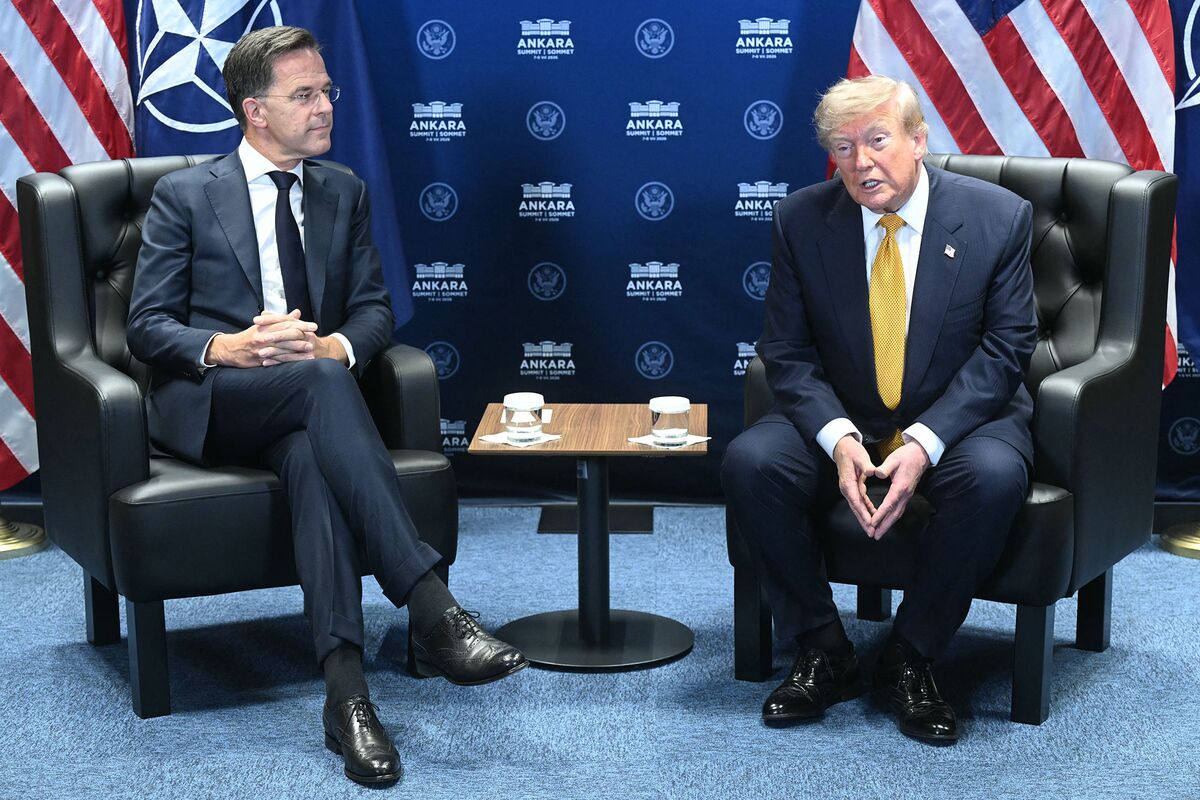
At the NATO summit, Trump resurfaced his Greenland focus and criticized European allies for “letting him down,” also tying the dispute to Iran. The remarks reflect heightened transatlantic friction around security and burden-sharing with Iran, a risk-off geopolitical signal that can pressure defense/sovereign-risk sentiment even without concrete policy changes or figures.
This is mostly a volatility event, not a cash-flow event. The market mechanism is a small but non-zero rise in the geopolitical discount on Europe and on any asset whose valuation depends on stable U.S.-allied policy, while the direct equity impact on most names should fade unless rhetoric turns into sanctions, tariffs, or defense-budget conditionality.
The only obvious single-name beneficiary is DJT, but that’s an attention trade, not a fundamentals trade; the stock can gap on headline intensity, yet that tailwind usually decays once the news cycle moves on. The second-order winners, if the rhetoric keeps escalating over 1-3 months, are U.S. defense primes and broad defense ETFs as investors infer more burden-sharing pressure on allies; the losers are European cyclicals, exporters, and any basket with high NATO/Europe revenue exposure that gets hit by a higher political-risk multiple.
The contrarian take is that the Greenland angle is probably being over-read by traders. Until there is an actual policy artifact — budget language, sanctions, trade action, or military posturing — the market should treat this as noise with a short half-life; the tradeable risk is the possibility that repeated NATO friction lifts implied volatility and keeps a small bid under defense names. For Greenland/Arctic-linked resource optionality, the catalyst horizon is months to years, not days.
AI-powered research, real-time alerts, and portfolio analytics for institutional investors.
Request DemoOverall Sentiment
mildly negative
Sentiment Score
-0.20
Ticker Sentiment
