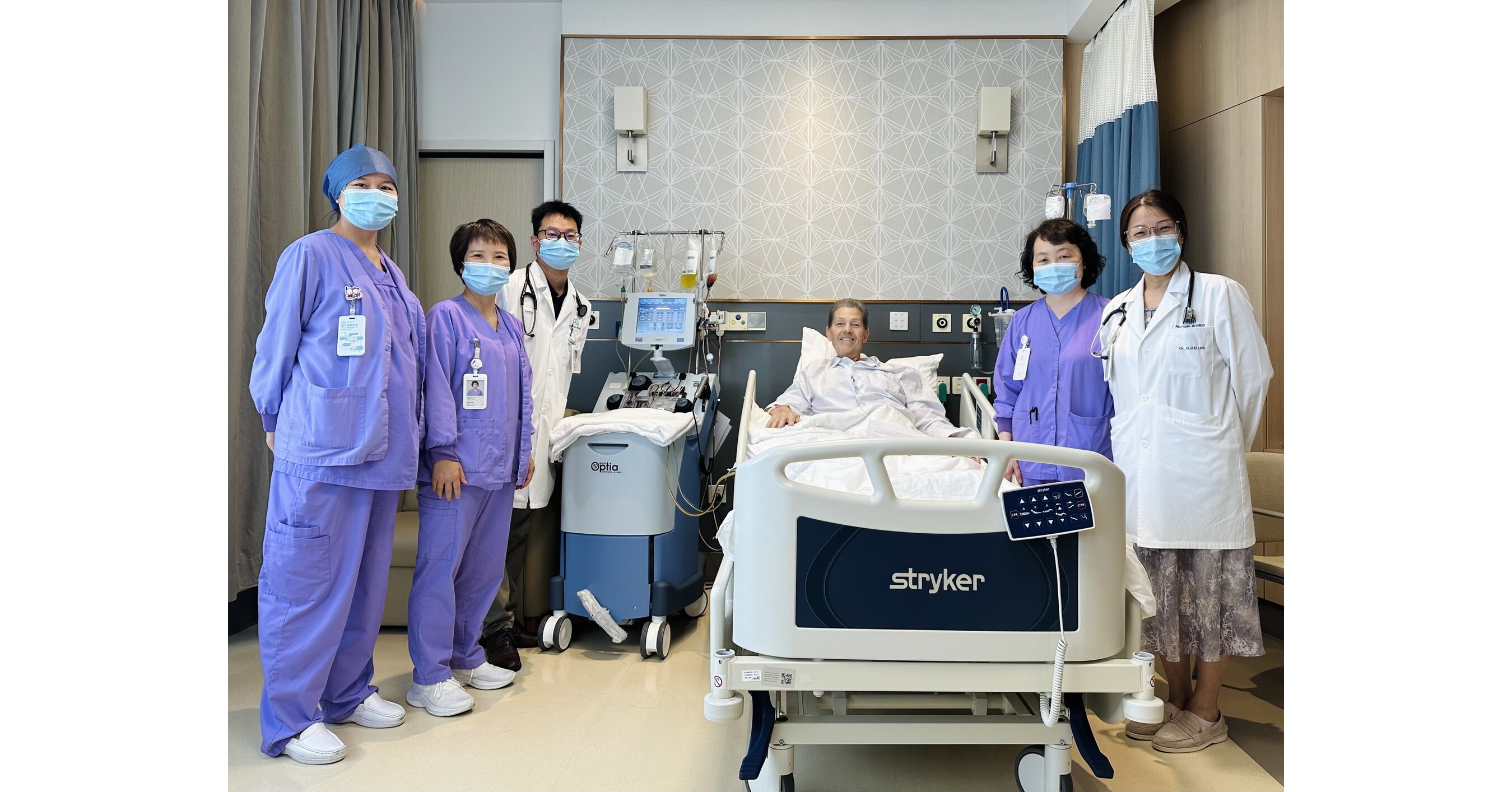
Jiahui International Cancer Center in Shanghai has started treatment for the world’s first international patient with Satri-cel, newly approved for a solid tumor CAR-T indication. The 59-year-old New Zealand patient with advanced gastroduodenal cancer tested Claudin 18.2 positive and HER2 negative, completed leukapheresis, and is slated for CAR-T reinfusion in the coming weeks. The milestone follows China’s recent approval of Satri-cel, which is currently available only in China, underscoring expanding global access to China-developed cellular immunotherapy.
This is commercially meaningful only if it becomes a repeatable patient funnel, not because of the first case itself. The first monetization layer is not the therapy sale; it is the premium services stack around it: biomarker screening, consults, cross-border coordination, and follow-up care. That favors the hospital platform and any local diagnostics/precision-medicine ecosystem more than the cell-therapy brand itself.
The competitive implication is that China is trying to position itself as a regional oncology destination before Western centers can export comparable solid-tumor CAR-T access. If even a small number of foreign patients show up, it can pull share from Singapore, Hong Kong, and select Australian/private hospital networks that rely on medical travel. The second-order winner is likely the Claudin 18.2 testing chain, because every incremental patient requires screening capacity and pathology throughput before treatment capacity matters.
The key risk is that CAR-T remains a manufacturing and toxicity bottleneck business, so one headline does not prove scalable economics. Near term, the stock reaction will be driven by follow-on evidence over the next 1-3 months: repeat bookings, turnaround time, and any early safety readouts. Over 6-18 months, the thesis fails if reimbursement stays cash-pay, if international volume remains one-off, or if efficacy data do not support broader adoption beyond the press-release stage.
AI-powered research, real-time alerts, and portfolio analytics for institutional investors.
Overall Sentiment
moderately positive
Sentiment Score
0.35
Ticker Sentiment
