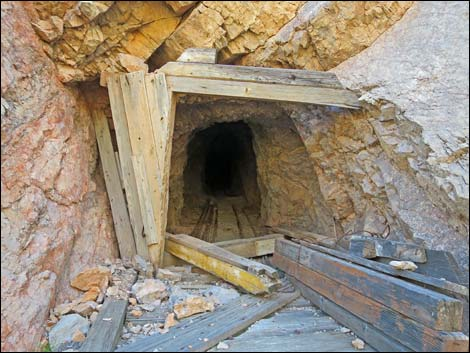
Germanium Mining Corp. (CSE: GMC; OTCQB: EMSKF; FSE: 1I30) has deployed a technical team led by William Feyerabend to commence a maiden reconnaissance and sampling program at the Azure Ridge historical mine in Nevada, targeting germanium and gallium and supporting preparation of an NI 43-101 technical report. The historical USBM/USGS work (1994) reported 43 samples with anomalous germanium, gallium and base metals across mineralization mapped over ~5,000 ft with outcrop thicknesses up to ~9 ft; Azure Ridge infrastructure includes five adits (~377 ft total), a shallow shaft and surface workings. The company emphasizes the work is early-stage, historical data are not NI 43-101 compliant, and future regulatory submissions and refurbishment studies are contingent on further technical review and funding.
Market structure: The immediate beneficiary is Germanium Mining Corp. (EMSKF) and its service providers (Amazona, field crews) as reconnaissance reduces technical risk; regional exploration peers could see correlated interest. However, this project alone cannot alter global germanium/gallium supply (China/Russia dominate ~70–80%), so pricing power is unchanged unless assays show bonanza grades that could trigger strategic inventory buys. Cross-asset impact will be muted — expect microcap OTC volatility, small upticks in junior-miner ETFs (GDXJ/GDX) on positive assays, negligible FX or sovereign bond effects.
Risk assessment: Key tail risks are non-verifiable historic data, permitting/environmental remediation at a historical mine, and financing/dilution risk if capital needs exceed $10–50m for refurbishment. Time horizons: immediate (days) — negligible market move; short-term (30–90 days) — assay/recon results that will drive re-rating; long-term (6–24 months) — NI 43‑101, drilling, permitting and potential federal grant decisions. Hidden dependencies include continuity of mineralization (not just surface anomalism) and federal critical‑minerals program timelines that could accelerate funding.
Trade implications: For risk-tolerant capital, a micro allocation (0.5–1% portfolio) long EMSKF ahead of assay windows (position entered within 30 days) with a hard stop at -50% and a profit target at +200–300% within 6–12 months is justified; size because liquidity and dilution risk are high. Hedged approach: dollar‑neutral pair — long EMSKF 1% vs short 0.25–0.5% GDXJ to neutralize junior‑miner beta. For sector exposure, buy a conservative GDX call spread (3–6 month) sized 0.5% portfolio to capture a possible junior‑miner rerating while capping loss.
Contrarian angles: Consensus understates the grade continuity requirement — meaningful commercial interest needs sustained germanium >~200–300 ppm over meter-scale widths or high Ga concentrations; isolated anomalies won’t attract buyers. The market may underprice M&A upside if GMC proves continuity (a single confirmed drill intercept could trigger multiple takeover bids), but also underestimates permitting/capex hurdles which can erase speculative gains quickly.
AI-powered research, real-time alerts, and portfolio analytics for institutional investors.
Request DemoOverall Sentiment
mildly positive
Sentiment Score
0.25
Ticker Sentiment
