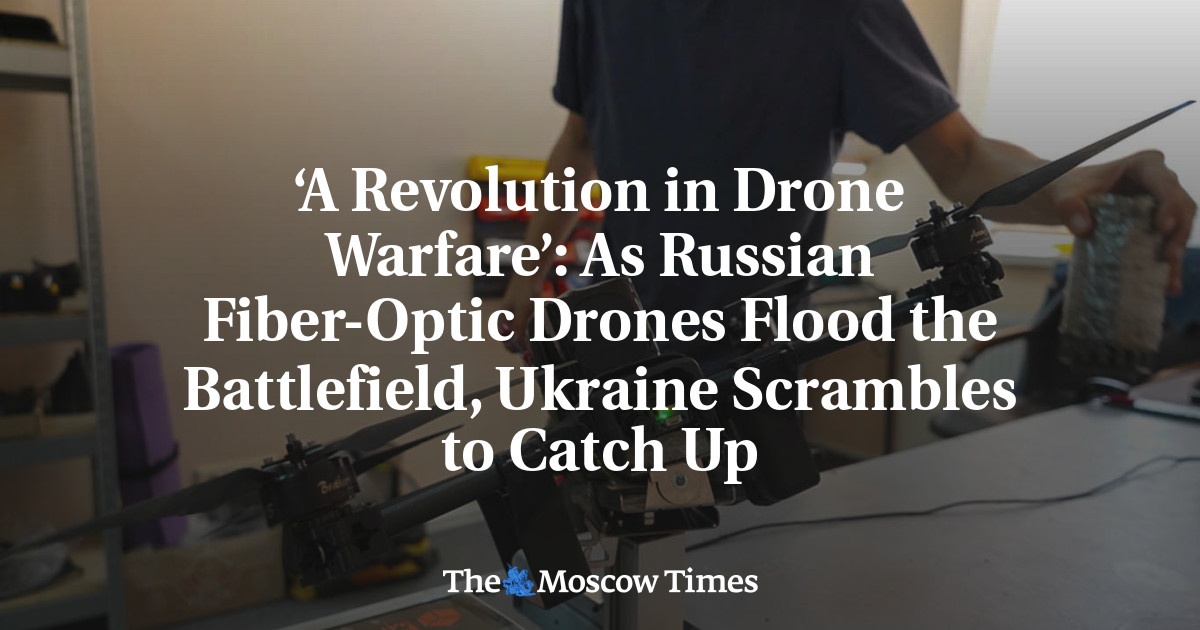
The Ukraine conflict is witnessing a significant evolution in drone warfare with the emergence of fiber-optic drones, which bypass traditional electronic warfare systems by maintaining a physical connection, rendering them undetectable. Russia's effective deployment of this technology has contributed to recent battlefield gains, compelling Ukraine to accelerate its own development and production efforts, including Technohawk's Shtorm and the locally designed Silkworm modular spool. Despite limitations such as reduced payload and physical vulnerability, these drones are deemed a decisive weapon, creating an urgent industrial and supply chain challenge for Ukraine, particularly given its reliance on Chinese components and China's shifting export policies.
A significant technological shift is underway in the Ukraine conflict with the deployment of fiber-optic drones, which leverage a physical cable connection up to 20 kilometers long to render them invulnerable to prevalent electronic warfare and jamming systems. Russia has effectively operationalized this technology, contributing to recent tactical successes in the Kursk region and creating a new threat on the critical Pokrovsk front, thereby challenging Ukraine's previously held dominance in drone warfare. In response, Ukrainian miltech firms like Technohawk are developing countermeasures such as the 'Shtorm' drone, but face a critical challenge in scaling production, not in technical design. This industrial ramp-up is severely constrained by a dependency on Chinese-made fiber-optic components, a vulnerability exacerbated by reports of China halting drone-related exports to Ukraine while continuing to supply Russia. Although Ukrainian-made drones are noted to be of higher quality, with an 80% target success rate versus Russia's 25%, the strategic advantage of EW-immune drones is profound. The technology does have limitations, including reduced payload capacity, higher visibility, and operational fragility in wooded terrain, but is still considered a potentially decisive battlefield innovation.
AI-powered research, real-time alerts, and portfolio analytics for institutional investors.
Overall Sentiment
Neutral
Sentiment Score
0.00
