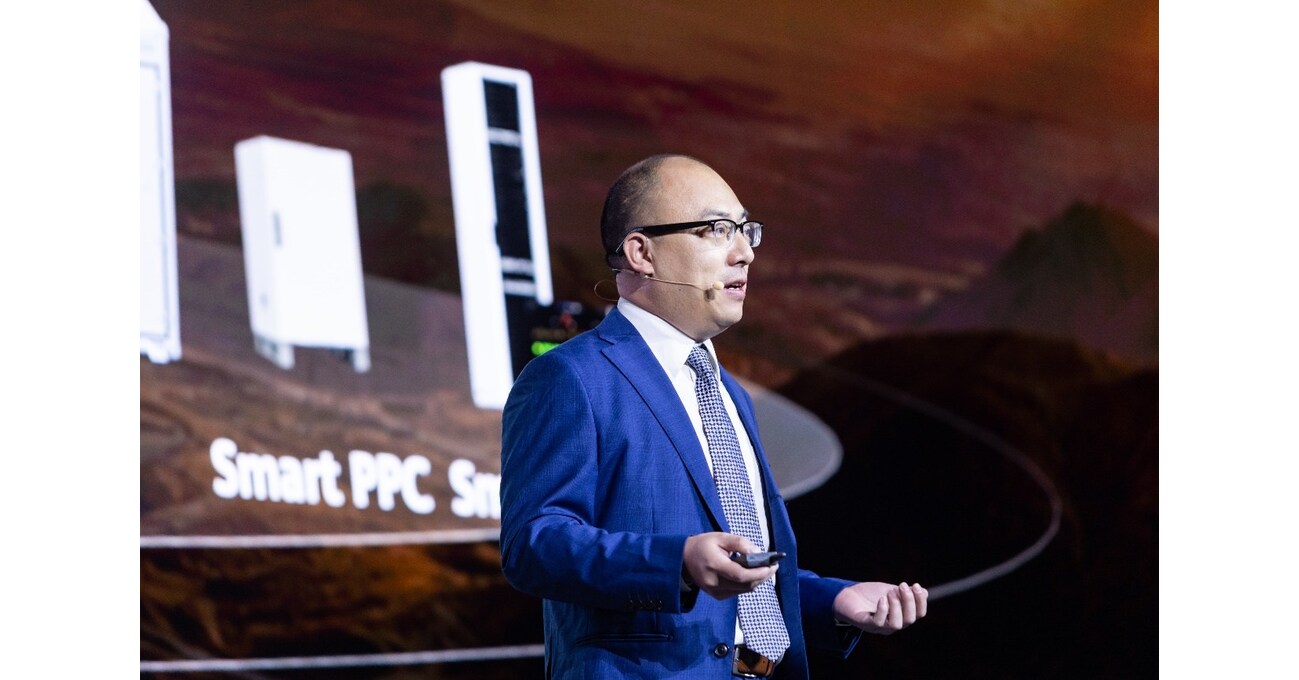
Huawei launched LUTERRA, a next-generation ESS platform for grid-forming (GFM) applications, at Intersolar Europe, highlighting performance of 93.1% round-trip efficiency (25°C) and SOC precision of 2.5% (plus 3% in the plateau zone). The company claims that for a 1 GWh BESS installation, LUTERRA cuts delivery lead times by at least 30%, auxiliary equipment (BOP) costs by at least 20%, and reduces footprint to ~1 m² per MWh installed versus conventional solutions. Huawei cites the “Red Sea” project (Arabia Saudite) operating stably for over two years on a 400 MW solar + 1.3 GWh BESS deployment, supporting its claim that multisite GFM coordination is feasible at gigawatt-hour scale.
This reads less like a Huawei stock story and more like a validation event for grid-forming BESS as procurement standard. The economic winner over the next 12 months is the project owner that can shave balance-of-plant, commissioning, and interconnection risk; that should support faster utility procurement cycles and higher attach rates for ancillary services. The immediate loser is any pure-play storage vendor whose edge is mostly hardware density rather than full-stack controls, because utility buyers will start benchmarking on delivered system-level $/MW, not container-level specs.
The second-order effect is margin pressure inside the BESS value chain. If grid-forming becomes table stakes, price competition shifts from cells to software, thermal management, and electrical balance-of-plant; that favors diversified industrials with grid exposure more than standalone battery integrators. In the U.S. and parts of Europe, however, Huawei itself may be partially boxed out by security and procurement restrictions, so the bigger trade is not "Huawei wins share" but "the TAM for storage grows while Western incumbents face a more demanding spec."
The contrarian point: the market may be overestimating how quickly this translates into revenue. Utility-scale storage is bankability-constrained, and certification cycles are slower than product launches; a few successful deployments do not eliminate field-performance risk. If grid-forming incidents, interconnection delays, or tighter localization rules emerge over the next 1-3 months, the enthusiasm can fade quickly; if German/UK market rulebooks harden over 6-18 months, the structural demand lift is real.
AI-powered research, real-time alerts, and portfolio analytics for institutional investors.
Request TrialOverall Sentiment
mildly positive
Sentiment Score
0.35
