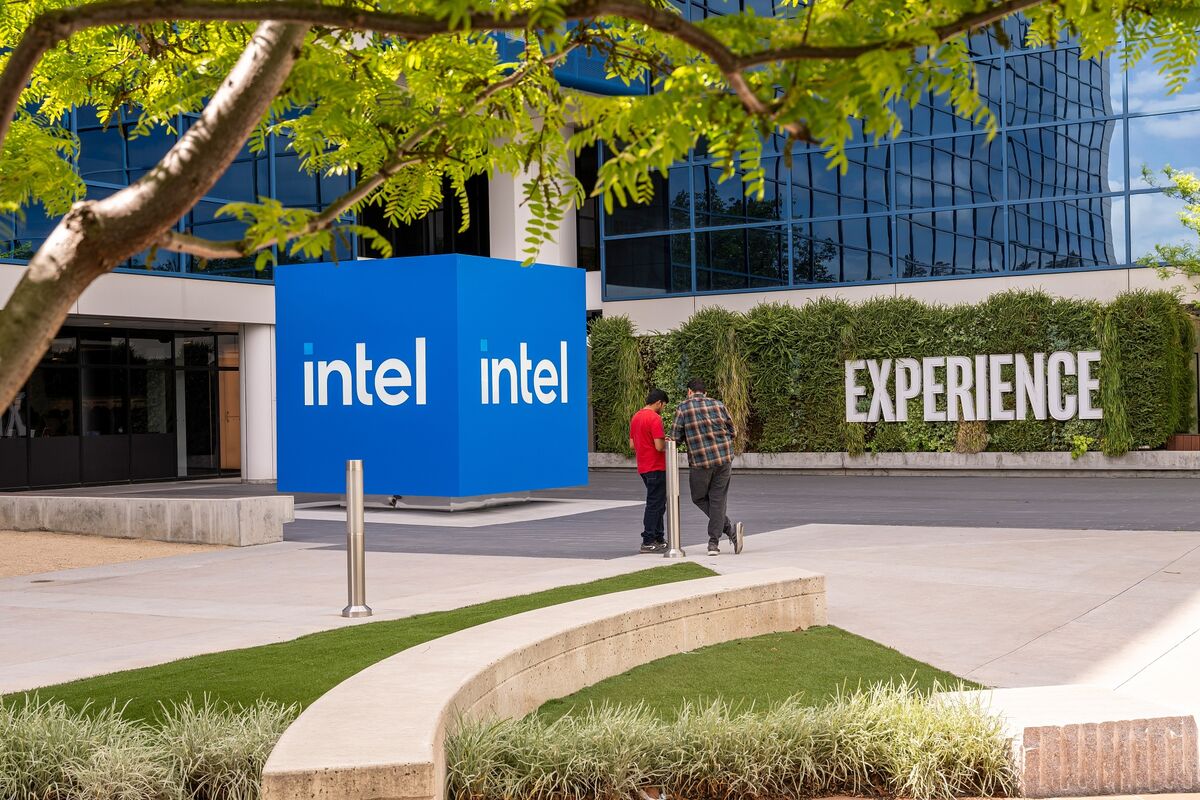
Intel issued a strong current-quarter outlook, guiding revenue to $13.8 billion-$14.8 billion versus the $13 billion analyst consensus. Adjusted EPS is expected to be about 20 cents, more than double the 9-cent Wall Street forecast. The upbeat guidance suggests Intel is beginning to benefit from AI infrastructure spending, a positive signal for the struggling chipmaker.
This is less about a single quarter and more about a narrative inflection: the market is beginning to reprice Intel as a beneficiary of AI capex rather than a stranded incumbent. The second-order implication is that every incremental proof point on AI-related design wins improves Intel’s ability to defend pricing, attract ecosystem support, and reduce the multiple gap versus other large-cap semis; that matters because the equity has been trading as a restructuring story, not a growth story.
The competitive read-through is more important than the headline. If Intel is seeing enough AI-related demand to print above-consensus guidance, that suggests supply-chain normalization and product acceptance may be better than feared, which can pressure sellers of adjacent compute and memory capacity if customers are rebalancing procurement toward a broader vendor mix. The beneficiaries may be less the obvious AI leaders and more the picks-and-shovels ecosystem around packaging, foundry services, and power delivery as Intel tries to re-enter a capital-intensive race.
The risk is that this remains a data point, not a durable operating turn. In the next 1-2 quarters, the stock is vulnerable if gross margin or free cash flow do not confirm that AI-led revenue is high-quality rather than mix-dependent; over a 6-12 month horizon, execution on roadmap and capex discipline will matter far more than near-term guidance beats. The other tail risk is that expectations now reset too fast: if the market extrapolates one strong quarter into a full AI comeback, the stock can overshoot fundamentals and become crowded ahead of any disappointment.
The contrarian angle is that this may be more a sentiment repair trade than a true structural rerating. A beat-and-raise from a deeply discounted base often triggers the fastest upside in the first 1-3 trading sessions, but follow-through usually requires evidence that competitors are losing share rather than Intel simply catching up to a low bar. That makes this attractive tactically, but fragile strategically.
AI-powered research, real-time alerts, and portfolio analytics for institutional investors.
Request TrialOverall Sentiment
strongly positive
Sentiment Score
0.75
Ticker Sentiment
