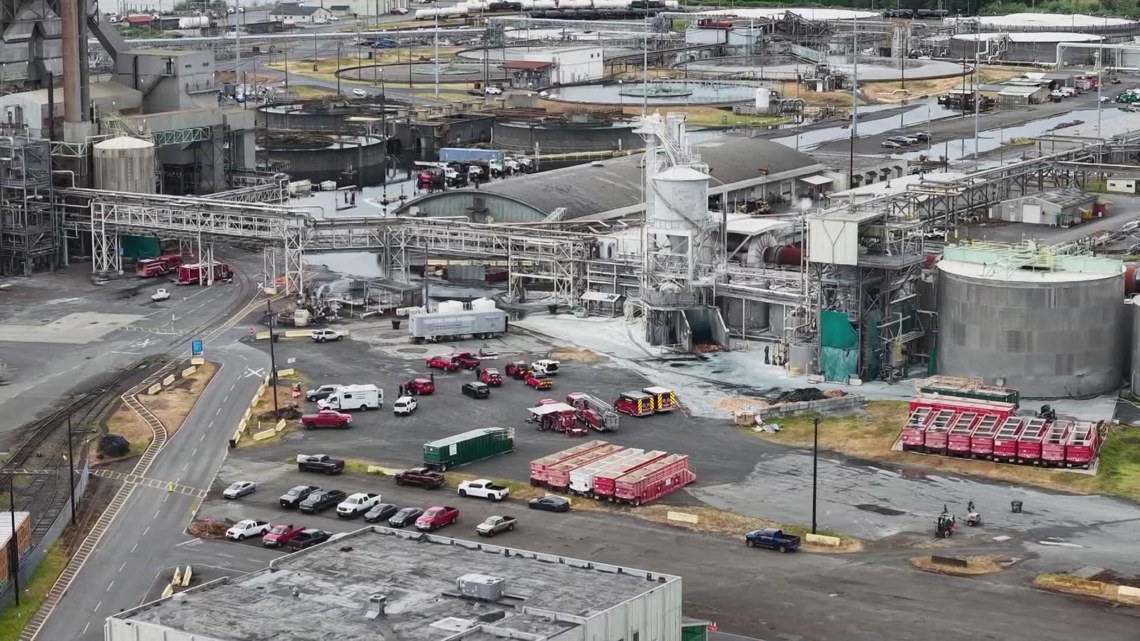
A second person has died after a tank containing 900,000 gallons of corrosive white liquor imploded at Nippon Dynawave’s Longview paper mill, with nine people still missing and eight others injured. Roughly 90,000 gallons of the chemical remain in the damaged tank as EPA, Washington state officials, and the U.S. Chemical Safety and Hazard Investigation Board monitor the site and investigate the incident. The event poses environmental and operational risks, but current indications are that air quality and the city water supply have not been negatively impacted.
This is less a one-off industrial accident than a reminder that heavy-process industries carry asymmetric downside: one mechanical failure can trigger production outage, environmental liability, and multi-year capex catch-up. The immediate loser is the owner/operator, but the second-order loser set is broader—nearby pulp, packaging, and chemical customers may face spot supply disruption if the mill idles long enough to tighten regional white-liquor and pulp logistics. That creates a temporary pricing tailwind for less-exposed competitors with available capacity, especially in the Pacific Northwest and Canadian export channels. The market should focus on the liability stack rather than the headline injury count. In these events, direct remediation is usually manageable; the real earnings risk is the combination of remediation, worker claims, regulatory scrutiny, and forced capital upgrades, which can pressure free cash flow for 4-8 quarters and delay return of capacity. If the investigation points to inspection or maintenance lapses, expect a broader read-through to other mills and chemical-handling operators, with elevated insurance pricing and tighter permitting timelines across the sector. The contrarian angle is that ESG-driven reaction may overshoot the actual industrial economic impact. Absent confirmed water contamination or prolonged outage, the event is more likely a localized earnings and legal story than a systemic paper-demand shock. The bigger risk is to underestimate follow-on capex and permitting friction: even after repairs, operators may face incremental redundancy requirements that permanently raise maintenance intensity and lower asset returns. Catalyst path: over the next 2-6 weeks, the key swing factor is whether regulators impose operational restrictions or whether the investigation broadens to systemic compliance issues. Over 3-12 months, watch for insurance renewals and any disclosed reserve buildup; those will tell you whether this is a contained incident or a margin-reset event for the broader mill cohort.
AI-powered research, real-time alerts, and portfolio analytics for institutional investors.
Request DemoOverall Sentiment
strongly negative
Sentiment Score
-0.82
