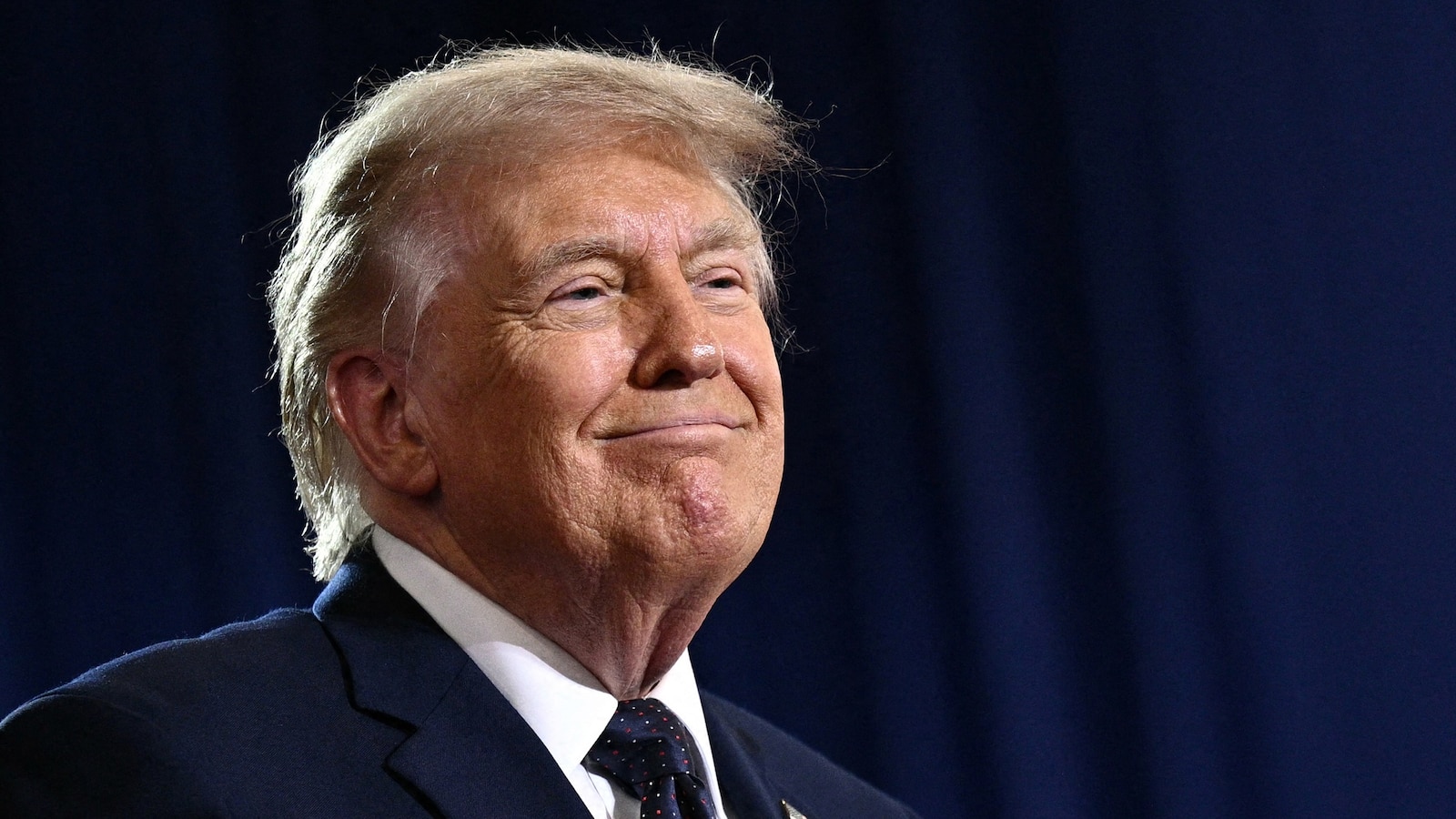
President Trump moved a planned Cabinet meeting from Camp David to the White House because of a forecast for thunderstorms on Wednesday. The article is a scheduling update tied to weather, with no material policy, economic, or market-moving information. White House officials said the meeting would focus on administration wins in the economy, small business, fraud enforcement, and foreign policy.
This is a low-signal event for markets directly, but it reinforces a broader pattern: the administration is prioritizing message control and operational flexibility over venue symbolism. That matters because Cabinet meetings framed around “wins” tend to be more about shaping headline velocity than changing policy, which usually supports short-term sentiment in domestically oriented cyclicals but rarely alters fundamentals beyond a trading window of hours to a few sessions.
The only real market implication is second-order: if the weather threat is real, the immediate beneficiary set is not political assets but lower-disruption logistics and business continuity trades. Any delay in ceremonial travel reduces the odds of near-term media-friendly policy rollouts from an offsite setting, which slightly lowers event risk for names sensitive to discretionary government signaling. Conversely, if the market interprets the White House consolidation as a precursor to tighter message discipline, that can modestly support volatility suppression around domestic policy headlines.
The contrarian view is that this is being over-read as a political signal. The move is much more likely a calendar and optics adjustment than a substantive shift in governance or weather preparedness, so fading any knee-jerk move in election-linked proxies is probably higher Sharpe than chasing it. The tradeable edge is in avoiding attribution errors: if weather is the driver, the effect should mean-revert quickly once the forecast clears, likely within 1-3 sessions.
The only tail risk is if the weather event escalates into broader regional disruption, in which case the market impact would shift from politics to local transportation/utility resilience. That would be a separate trade entirely; absent that escalation, this is mostly noise with a short half-life.
AI-powered research, real-time alerts, and portfolio analytics for institutional investors.
Request DemoOverall Sentiment
neutral
Sentiment Score
0.00
