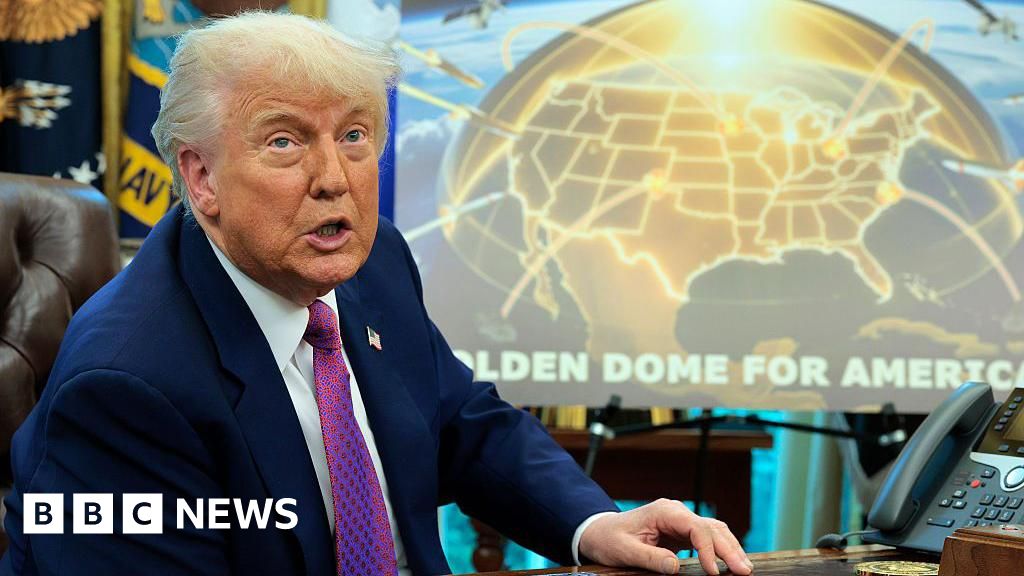
The Congressional Budget Office estimates Trump's Golden Dome missile defense system will cost about $1.2tn over two decades, far above the $175bn initially budgeted. The CBO also warned the system could be vulnerable to a full-scale attack by Russia or China, raising execution and effectiveness concerns. The article underscores a major fiscal burden and likely continued benefits for defense contractors such as SpaceX and Lockheed Martin, which already won up to $3.2bn in prototype contracts.
The market is likely underestimating how much of the Golden Dome spend becomes a multi-year appropriation stream rather than a one-time headline. That matters because the program’s economics skew heavily toward prime contractors with space, sensors, C2 integration, and test infrastructure, not just the interceptor layer; the first-order winner set is broader than the nameplate billion-dollar award to a single subcontractor. For LMT, the larger point is optionality: even a small share of a $1tn+ procurement pie can translate into several years of above-trend backlog conversion, but the stock may already be discounting some of that embedded defense tailwind.
The bigger second-order issue is program risk. A system that is politically marketed as absolute protection but operationally scoped to fail against saturation attacks creates a classic “cost growth with no clean success metric” setup, which usually favors incumbents in the near term and burdens the broader defense budget later. If Congress starts treating this as a wedge against readiness, procurement timing could slip 12-24 months, causing near-term order volatility even if long-run funding survives.
For LMT specifically, this is less a clean bullish catalyst than a dispersion opportunity. The incremental value from prototype work is real, but the bigger upside would come if the program shifts from concept to production-scale integration, which is unlikely to be resolved in weeks and depends on test outcomes over multiple quarters. The contrarian miss is that the headline may be more valuable as a budgeting and industrial-base signal than as an immediate revenue driver: the path to monetization is slow, but the public commitment may raise the floor for space-defense spending across the sector.
A key risk is political reversal if performance skepticism becomes dominant after the first test cycle or if the estimate becomes a symbol of fiscal excess. That would hit early-stage winners hardest and push capital toward larger primes with diversified exposure and political resilience. The near-term catalyst set is procurement sequencing, contract awards, and committee markup, not the initial announcement.
AI-powered research, real-time alerts, and portfolio analytics for institutional investors.
Request DemoOverall Sentiment
mildly negative
Sentiment Score
-0.25
Ticker Sentiment
