

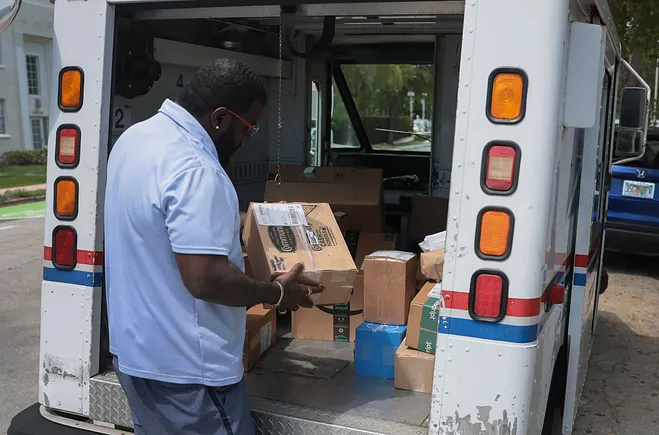
USPS and DHL eCommerce signed a multi-year contract worth well over $10 billion, extending a 25+ year partnership and securing USPS as DHL’s exclusive last-mile delivery provider in the U.S. The deal improves DHL eCommerce’s long-term planning visibility and supports USPS’s efforts to bolster revenue and leverage its nationwide delivery network. The agreement is strategically positive for both companies, but the market impact is likely limited outside the logistics sector.
This is structurally bullish for USPS’s partner ecosystem because it reduces a classic “last-mile underinvestment” problem: multi-year committed volume makes a shared network more financeable, which should improve utilization across hubs, linehaul, and delivery labor. The second-order winner is not just the Postal Service, but any shipper using consolidated parcel channels, because fixed-cost leverage tends to lower per-package economics when volume is locked in for years rather than negotiated quarter to quarter.
For UPS, the read-through is mixed but marginally negative on the marginal parcel-dollar. The contract reinforces a low-capex, asset-light competitor model in the exact segment where UPS Ground Saver and similar products compete on price, not service differentiation. That said, this does not automatically mean share loss; the bigger risk is that pricing pressure in deferred/economy parcels persists longer than expected, limiting UPS’s ability to re-rate domestic small-package margins over the next 4-8 quarters.
AMZN is the more subtle beneficiary. Anything that stabilizes USPS last-mile capacity improves Amazon’s optionality in rural/suburban delivery and holiday peak absorption, even if Amazon is not the direct counterparty here. The contrarian point is that the market may be over-discounting the durability of USPS partnerships as a sign of a healthier operator: the agency is still likely using these deals to backfill economics, so the underlying funding and labor constraints remain a medium-term overhang that can reassert itself if wage inflation or service reliability deteriorate.
Catalyst-wise, the near-term trade is not the headline contract itself but the next two quarters of carrier commentary on parcel mix and yield discipline. If USPS demonstrates better on-time performance and lower unit costs, expect more volume migration from private networks into hybrid solutions; if service metrics slip, customers will revisit redundancy and multi-carrier routing. The key reversal risk is a worsening USPS cost base that forces rate hikes or service degradation, which would undermine the multi-year value proposition and compress the implied benefit to DHL and its shipper base.
AI-powered research, real-time alerts, and portfolio analytics for institutional investors.
Request TrialOverall Sentiment
mildly positive
Sentiment Score
0.48
Ticker Sentiment
