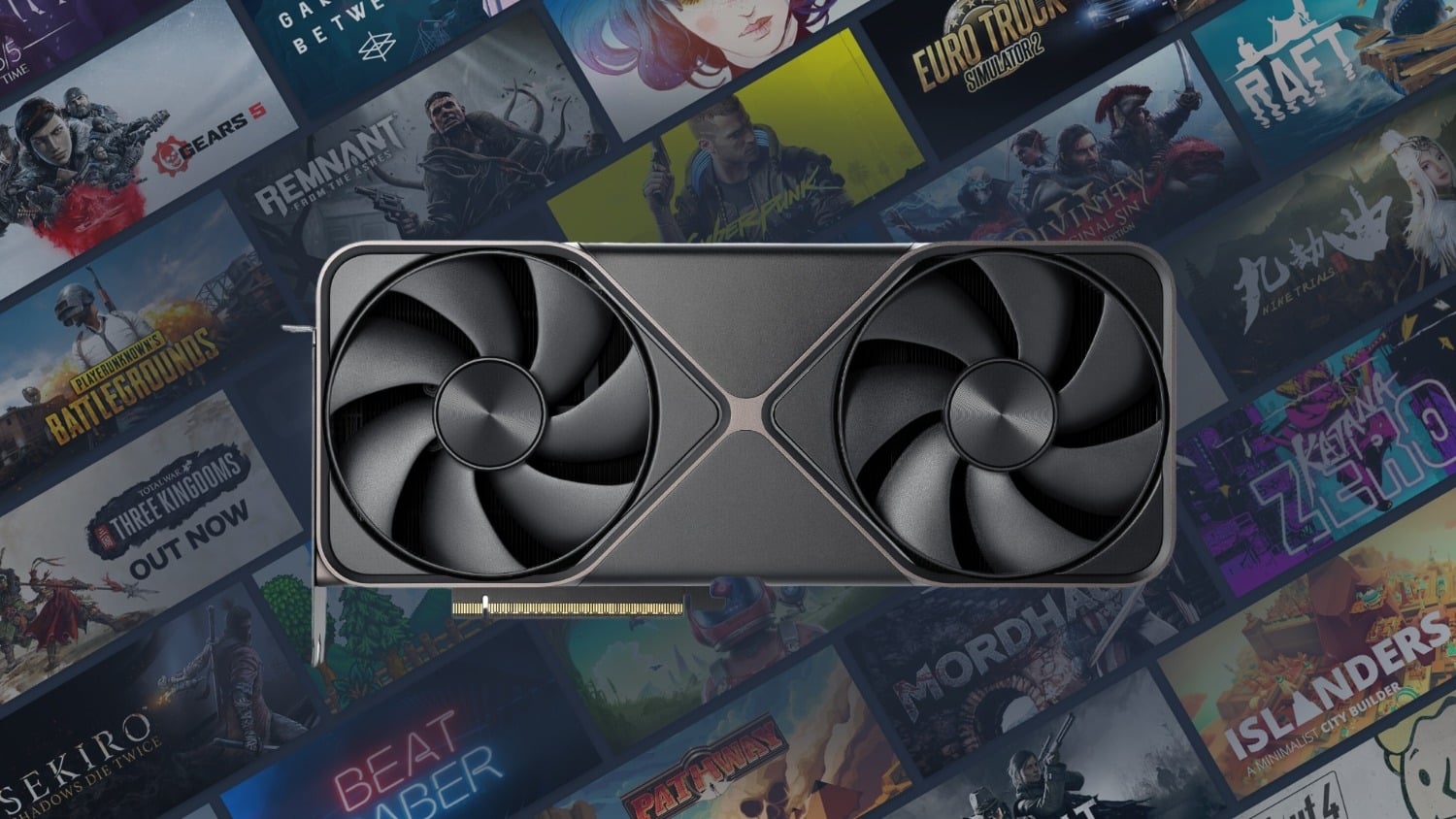
Valve’s April 2026 Steam survey shows 49.95% of PC gamers now use GPUs with more than 8GB of VRAM, while 23.51% are on 16GB cards and 26.76% remain on 8GB GPUs. The article argues that rising game fidelity and ray tracing demand are pushing the market toward 12GB-16GB as the new mainstream standard, though current GPU shortages and AI-powered texture compression could keep 8GB cards viable for another generation.
The important second-order read is not simply that VRAM demand is rising, but that the market is re-segmenting the gaming GPU stack around memory capacity as a feature, not just raw compute. That creates a clearer moat for vendors that can bundle more memory without collapsing margin, while pressuring lower-memory SKUs to either discount sharply or rely on software tricks to defend relevance. In practice, the value pool shifts toward the memory subsystem, board design, and packaging choices rather than shader throughput alone.
For NVIDIA, this is mildly negative near term for 8GB-oriented volume parts because it increases the risk that mainstream buyers trade up one tier or delay purchases until better-capacity models arrive. AMD has a tactical opening if it can keep 16GB cards price-competitive, since consumers are now more educated about texture-heavy workloads and ray tracing bottlenecks. Intel’s opportunity is more about share capture than category leadership: any credible 12GB+ mainstream offering would help it differentiate from the “cheap but compromised” perception that low-VRAM entrants tend to suffer.
The contrarian point is that this may be a cyclical feature spike, not a permanent retirement of 8GB. If AI-assisted texture compression and more efficient asset pipelines become standard within 12-24 months, the market could tolerate smaller frame buffers longer than current sentiment implies, especially in the sub-$300 segment. That argues for avoiding a blanket short on low-memory GPUs; the better expression is to fade the most exposed SKUs while staying neutral on platform leaders that can reprice mix quickly.
Near term, the catalyst path is inventory and channel behavior over the next 1-2 quarters: if retailers start discounting 8GB boards faster than expected, the mix shift could accelerate and compress ASPs. If launch cycles continue to prioritize 8GB at mainstream price points, expect consumer backlash and a faster upgrade cadence into 12GB/16GB products. The key risk to the thesis is a software breakthrough that defers the need for more VRAM before hardware vendors can monetize the transition.
AI-powered research, real-time alerts, and portfolio analytics for institutional investors.
Request DemoOverall Sentiment
neutral
Sentiment Score
0.10
Ticker Sentiment
