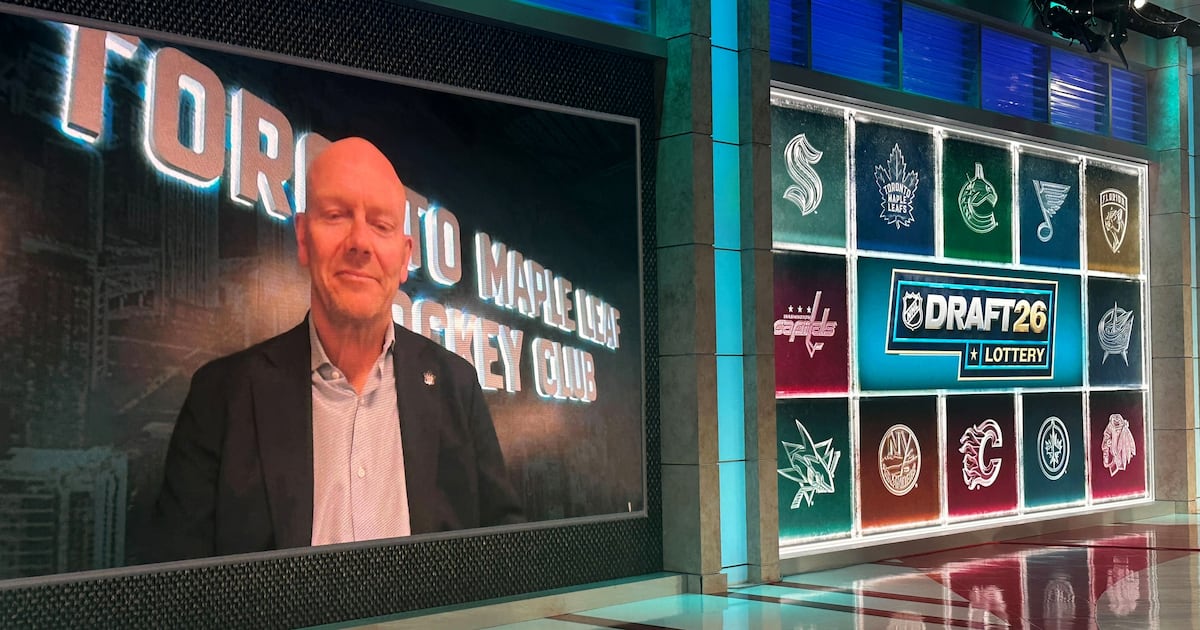
Toronto won the NHL draft lottery and now holds the No. 1 overall pick in the 2026 NHL Draft, despite just an 8.5% pre-lottery chance. The pick is a major organizational boost after a disappointing season and preserves Toronto's 2026 first-rounder, though it shifts the team's later draft obligations to the Bruins and Flyers in 2027 and 2028. The article is sports/news-driven rather than market-moving, with limited direct financial impact.
The immediate winner is not just Toronto’s hockey operations but the broader MLSE governance reset: a first-overall pick gives the new regime a credible anchor asset, which buys management time and reduces the probability of an early front-office shakeup. In practical terms, this lowers near-term organizational volatility and should improve retention/recruiting optics across the club’s player-development and sponsorship ecosystem. The larger second-order effect is on trade leverage: Toronto can now negotiate from a position of asset strength rather than desperation, which should improve returns in any future roster retool.
The real market implication is the removal of a contingent asset transfer overhang. By preserving the pick, Toronto has effectively moved itself from a low-probability tail risk of losing a top selection to a more painful but controllable future obligation in 2027-2028, when those unprotected picks could become material if the team remains mediocre. That creates a delayed-risk profile: the near-term narrative is sharply positive, but the longer the club stays out of contention, the more expensive the lottery win becomes in future draft capital. This means the upside today is mostly sentiment-driven, while the downside can re-emerge over a 12-24 month horizon if the rebuild stalls.
From a contrarian perspective, the consensus is likely overweighting the “franchise-saving pick” headline and underweighting execution risk. First overall only matters if scouting precision is high; if the organization whiffs, the pick merely postpones the same structural issues. The better framing is that the organization just gained optionality, not certainty, and the value of that optionality decays quickly if the front office fails to convert it into a long-term talent pipeline.
The most interesting dynamic is internal competition for capital allocation: a high-profile rookie arrival can crowd out veteran spending, accelerate a youth movement, and create pressure to avoid short-term wins that damage future draft position. That matters because the club’s operating strategy may now shift toward maximizing development runway rather than chasing marginal playoff odds, which is positive for long-run asset value but negative for any near-term “all-in” roster construction.
AI-powered research, real-time alerts, and portfolio analytics for institutional investors.
Request DemoOverall Sentiment
moderately positive
Sentiment Score
0.62
