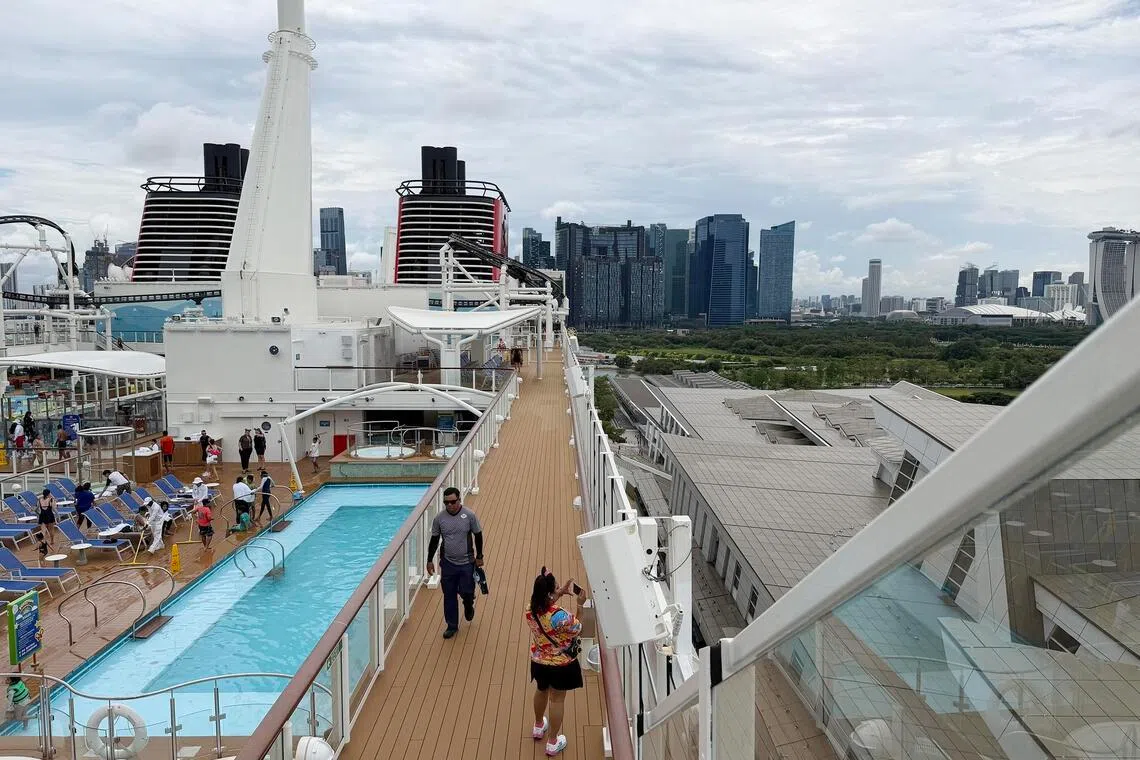
Disney Adventure’s May 8 sailing from Singapore was cancelled after an overnight delay due to an unresolved mechanical issue, forcing passengers to disembark. Affected guests are receiving full refunds, a hotel night, up to US$500 per stateroom, covered flight change fees for overseas travelers, and a 50% discount on a future cruise. The next scheduled voyage on May 11 remains uncertain, creating near-term operational and reputational headwinds for Disney Cruise Line.
This is a short-dated operational blemish, not yet a thesis change, but the market should care about the asymmetry between reputational damage and near-term revenue leakage. In premium leisure, one highly visible disruption can disproportionately dent conversion because the product is sold on reliability and anticipation, so the risk is less about this sailing alone and more about incremental hesitation in the next 1-2 booking windows. For DIS, the direct financial impact is small relative to segment scale, but the marginal cost is higher than it looks: refunds, accommodations, and goodwill credits hit current-period yield while creating a second-order drag on future pricing power.
The competitive angle is subtle: if Disney’s first major cruise deployment from Singapore is perceived as operationally fragile, nearby premium alternatives and other family-focused cruise operators can harvest displaced demand at the margin. The bigger issue is utilization risk on a large fixed-cost asset; a single cancelled voyage compresses economics because cruise businesses are highly levered to occupancy and ancillary spend, so one missed departure hurts twice — lost revenue today and potentially weaker onboard attach rates later. If the mechanical issue proves systemic rather than isolated, investors should expect broader scrutiny of startup/expansion execution across Disney’s newer experiential assets.
Near term, the catalyst path is binary: a clean resumption within days likely contains the damage, while any second cancellation or publicized technical follow-up extends the overhang into weeks and invites commentary about fleet reliability. The consensus may be overestimating the medium-term importance of one sailing cancellation, but underestimating how quickly this can become a narrative on operational discipline if customer complaints persist on social media. For that reason, I’d treat the event as a trading overreaction candidate only after the next voyage departs successfully; until then, the skew is still to the downside.
The contrarian angle is that Disney’s brand can absorb isolated service failures better than most operators, and the compensation package may actually protect lifetime value by preserving future booking intent. If management resolves this before the next scheduled departure, the selloff in DIS should fade quickly because the incident is too small to affect full-year earnings, leaving sentiment the main variable.
AI-powered research, real-time alerts, and portfolio analytics for institutional investors.
Request DemoOverall Sentiment
mildly negative
Sentiment Score
-0.35
Ticker Sentiment
