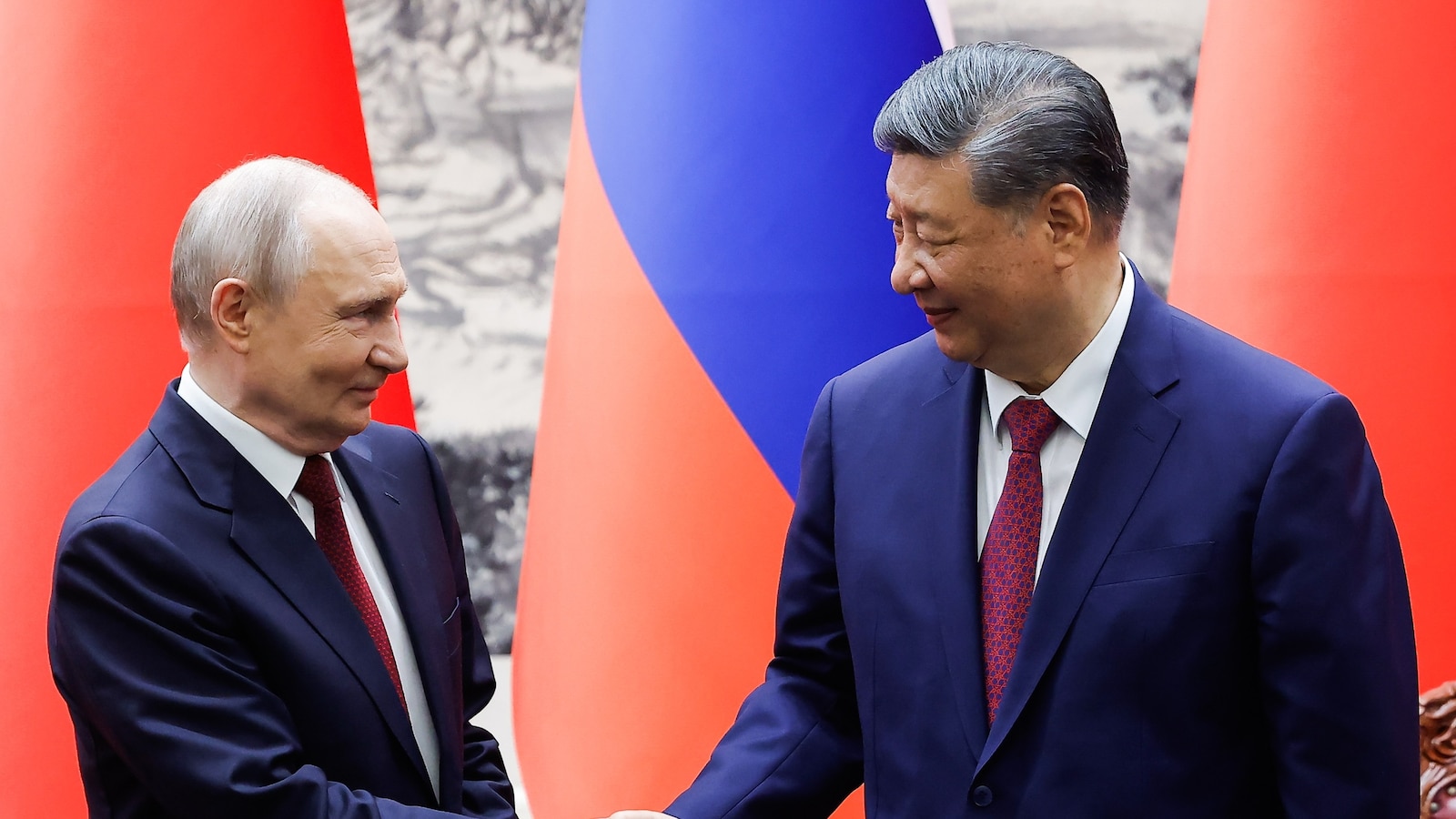
Xi and Putin jointly condemned U.S.-Israeli strikes on Iran and called for an end to the war with "utmost urgency," highlighting a sharper geopolitical split among major powers. The statement reinforces support for Tehran from Moscow and Beijing, with implications for sanctions pressure, Middle East stability, and global energy risk. The rhetoric raises the probability of prolonged conflict and heightened market volatility across oil and risk assets.
The bigger market signal is not the statement itself but the tightening of an anti-sanctions alignment between the two biggest strategic backers of Iran. That raises the odds that any Western attempt to isolate Tehran leaks faster than expected through crude offtake, dual-use imports, insurance workarounds, and gray-market shipping networks, which is a slow-burn negative for the effectiveness of sanctions but a medium-term positive for sanctioned-oil logistics, shadow tanker operators, and non-Western refiners.
For energy, the immediate risk premium is less about a lasting supply shock and more about episodic disruption in the Strait of Hormuz and nearby export infrastructure. Even a modest, temporary loss of flows tends to reprice prompt Brent/WTI faster than front-end product spreads, so downstream margins are likely to lag the initial move while upstream producers and tanker rates outperform first. The second-order effect is that Europe and Asia will accelerate diversification away from exposed cargoes, benefiting U.S. LNG, Atlantic Basin crude, and non-Chinese shipping/insurance ecosystems over the next 1-3 quarters.
The contrarian angle is that the market may be overestimating the durability of a geopolitical oil spike if Beijing continues to act as a pressure valve for Iranian barrels. If Chinese demand absorption holds, the ceiling on any price rally is lower than headlines imply, but volatility remains elevated because the tail risk is a one-off infrastructure hit rather than a clean supply embargo. That asymmetry favors optionality over outright directional exposure; the best risk/reward is to own convexity into any escalation while fading sustained dislocations once physical flows normalize.
Defense and cyber infrastructure also screen as indirect beneficiaries: sustained confrontation raises demand for missile defense, ISR, and critical infrastructure hardening, but budget response is slower than commodity repricing. The highest-probability trade is not a single-name winner but a dispersion trade between assets leveraged to energy shock inflation and assets exposed to higher input costs and lower global risk appetite.
AI-powered research, real-time alerts, and portfolio analytics for institutional investors.
Request DemoOverall Sentiment
moderately negative
Sentiment Score
-0.45
