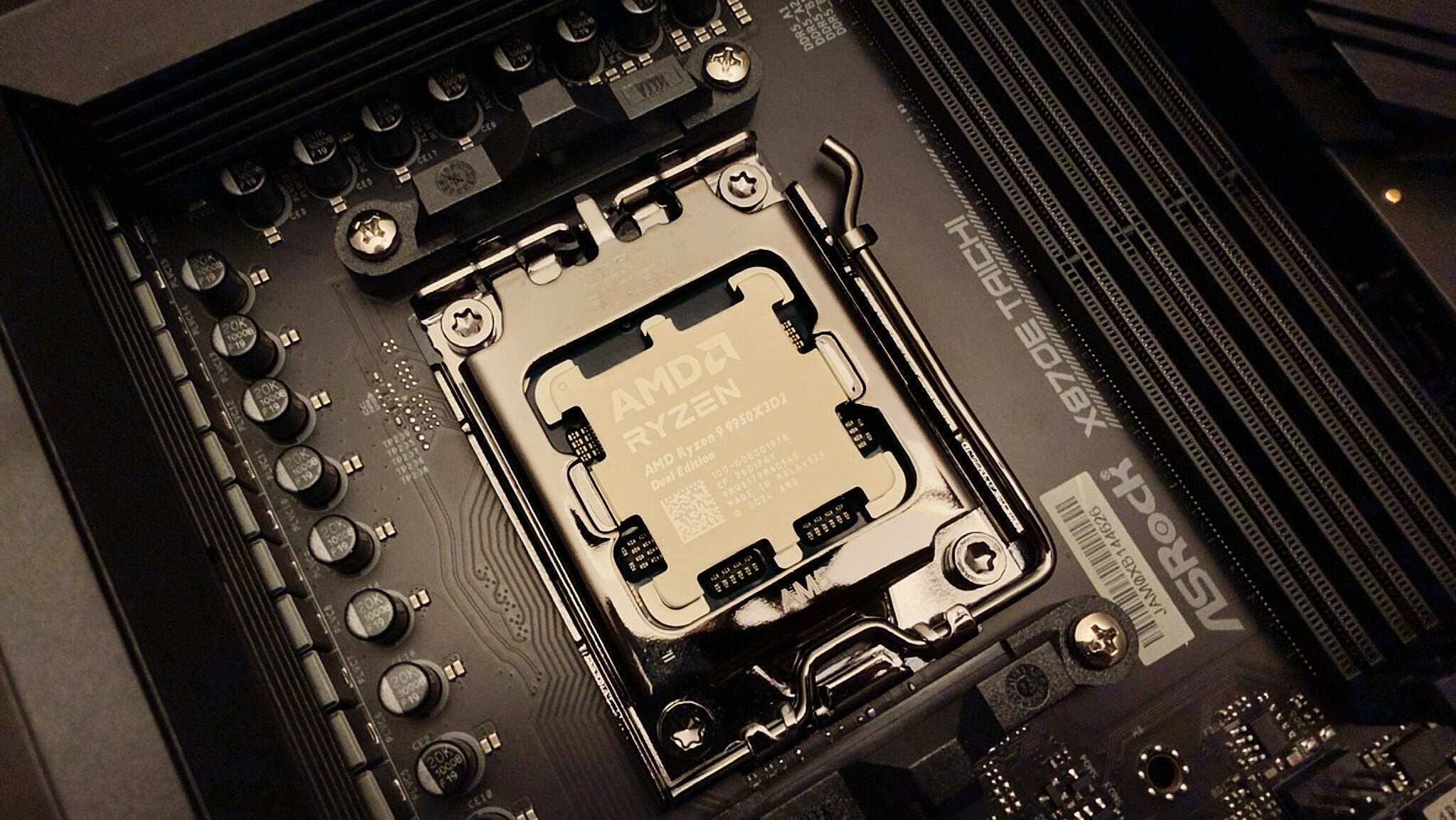
AMD's Ryzen 9 9950X3D2 Dual Edition launches at an $899 MSRP as the company's first true dual V-Cache halo CPU, delivering the fastest overall benchmark results in production workloads but little to no gaming uplift versus cheaper X3D chips. In testing, it beat the standard 9950X3D by roughly 3-9% in many productivity workloads, with larger gains in select tasks like GROMACS (+9.3%) and Blender (+13% to 16.6%), but gaming performance was essentially flat versus the 9850X3D. The article frames the chip as impressive engineering but poor value, with limited practical upside for most buyers.
AMD is using the halo SKU to widen the gap between perceived platform leadership and actual unit economics. The important second-order effect is not the CPU itself but the ecosystem pull-through: a $899 flagship legitimizes $699 and $499 X3D parts as “value,” which should support ASPs across the high-end desktop stack and keep motherboard/DDR5 attach rates elevated. That is mildly positive for AMD near term, but the incremental performance over cheaper siblings is too small to create meaningful volume at the top end, so this is more margin/brand management than a unit-growth catalyst.
For Intel, the problem is less direct share loss from this SKU and more narrative damage: AMD is now occupying the “no-compromise desktop” mindshare while Intel’s current consumer line remains framed as the value alternative. That matters because enthusiast spend often leads broader ecosystem enthusiasm, press coverage, and DIY channel shelf space. The more durable bear case for INTC is that it gets boxed out of the premium halo tier, which makes regaining premium pricing power harder even if its value chips remain competitive in production tasks.
The contrarian view is that the market may be overestimating how much this matters for AMD earnings. The performance delta vs lower-priced X3D parts is too narrow to move meaningful mix, and the relevant demand pool is tiny; this is likely a prestige launch with limited shipment upside over the next 1–2 quarters. The real risk to the bullish AMD story is not gaming leadership but demand elasticity: if retail PC budgets remain squeezed and memory pricing stays elevated, even AMD’s best desktop products can become showpieces rather than a growth engine.
AI-powered research, real-time alerts, and portfolio analytics for institutional investors.
Request TrialOverall Sentiment
neutral
Sentiment Score
0.15
Ticker Sentiment
