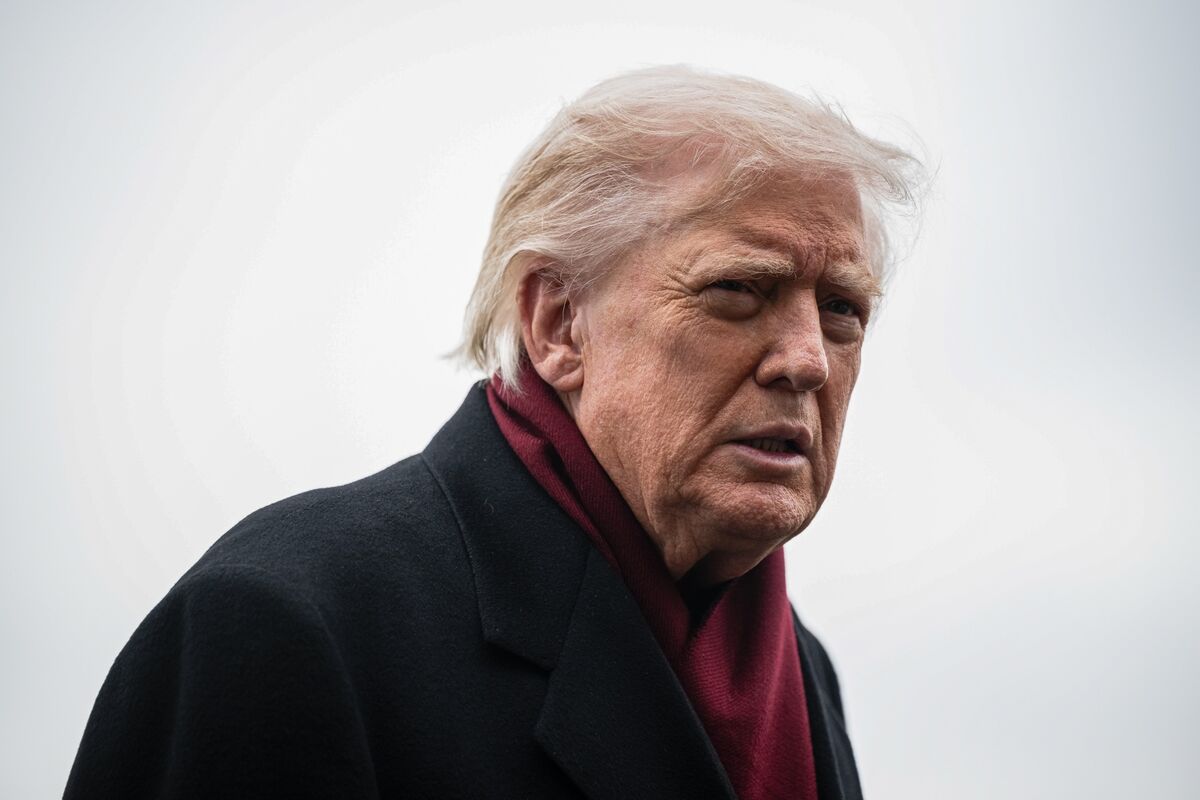
President Donald Trump, 79, underwent a preventative MRI of his heart and abdomen that the White House physician says showed normal organ function and “confirms that he remains in excellent overall health.” The letter from White House physician Sean Barbabella described the detailed assessment as standard for an executive physical at the president’s age, removing near-term public uncertainty about his medical fitness but is unlikely to materially shift market fundamentals.
Market structure: The White House MRI disclosure is a de-risking datapoint for election-sensitive asset pricing — expect a modest risk-on tilt that benefits small caps, regional banks and consumer cyclicals (short-term outperformance of IWM vs SPY of ~1–3% over 2–8 weeks) while pressuring safe-havens (TLT, GLD) and volatility products. Medical-equipment vendors (GE, PHG, IHI) see no material immediate demand shock; this is a narrative event, not a fundamentals shock to healthcare capex.
Risk assessment: Tail risks remain non-trivial — a material reversal (new adverse medical disclosure or legal escalation) could spike VIX >30 within days; assign ~5–15% near-term probability and 20–30% through election cycle. Immediate (0–7 days) effect is volatility compression; short-term (weeks–months) sees positioning flows and sector rotation; long-term (quarters) fundamentals unchanged unless the disclosure trend alters polling or policy.
Trade implications: Tactical trades favor small tactical longs and volatility shorts while trimming duration. Expect realized volatility to undershoot implied by ~5–15% over 2–6 weeks; use defined-risk options (6–8 week call spreads) or small notional short-UVXY with protective hedges rather than naked short exposure. Monitor flows into IWM/XLF and out of TLT/GLD as confirmation.
Contrarian angles: Consensus underestimates the chance that more disclosures (detailed cardiology reports, follow-ups) could reverse the move and trigger a 2–4% rotation back to quality within 72 hours. If VIX falls below 12 or SPY rallies >2% on the news, the move is likely overdone — that’s the window to fade with tight stops. Historical parallels (short-term relief rallies around politician health updates) tended to mean-revert within 1–3 weeks if uncertainty persisted.
AI-powered research, real-time alerts, and portfolio analytics for institutional investors.
Request DemoOverall Sentiment
neutral
Sentiment Score
0.10
