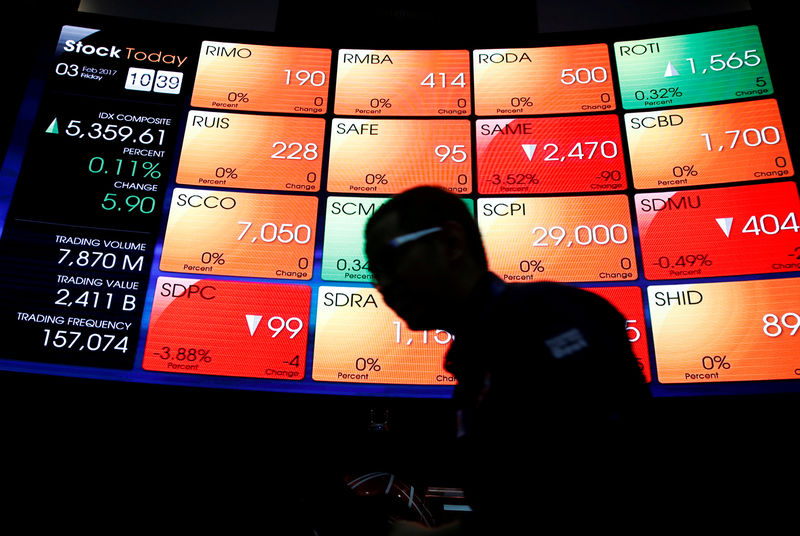
Indonesia's IDX Composite fell 0.50% as losses in Infrastructure, Agriculture and Basic Industry outweighed gainers, with 387 decliners versus 323 advancers. Kokoh Exa Nusantara, PP Presisi and Sinergi Inti Plastindo each surged about 34.75%-34.82%, while Jaya Agra Wattie dropped 14.56% and Paragon Karya Perkasa fell 13.39%. Crude oil rose 2.36% to $98.64 a barrel, Brent gained 2.21% to $103.94, and USD/IDR edged up 0.21% to 17,208.10.
The dominant second-order move here is not the index print, but the tightening of a macro squeeze on domestic cyclicals: a weaker rupiah plus firmer energy prices is a margin tax for transportation, chemicals, and import-dependent industrials, while selectively helping upstream commodity and export-linked names. In a market with breadth already leaning negative, that combination usually amplifies factor crowding into defensives and resource proxies over the next 1-3 sessions, especially if US dollar strength persists.
The jump in crude is the key catalyst because it raises the probability that local investors start pricing a less benign inflation path for Indonesia, even if the broader EM tape remains stable. Higher oil typically feeds through first into diesel logistics and power-related input costs, then into consumer discretionary downgrades with a 1-2 quarter lag; that means the losers are often not the obvious oil importers, but the downstream firms with limited pricing power and leverage to freight. Any further USD/IDR drift toward new highs would likely reinforce that risk-off rotation and pressure rate-sensitive domestic assets.
The most interesting contrarian setup is that the market may be underestimating how quickly leadership can rotate within Indonesia once commodity inflation re-accelerates. Small-cap momentum winners can keep running in a liquidity-driven tape, but if the currency weakens another 1-2% from here, the durability of those moves tends to deteriorate as risk budgets tighten and profit-taking accelerates. Conversely, energy-linked and raw-material names could continue to outperform even on a flat index, making relative value more attractive than outright beta.
Near term, the key reversal condition is any softening in oil or a stabilization in the dollar, which would relieve pressure on domestic margins and unwind the defensiveness bid. Over a multi-month horizon, the bigger risk is that sustained imported inflation forces policy tightening earlier than the market expects, which would hit small caps and leverage-sensitive sectors before it shows up in headline growth data.
AI-powered research, real-time alerts, and portfolio analytics for institutional investors.
Request DemoOverall Sentiment
mildly negative
Sentiment Score
-0.15
