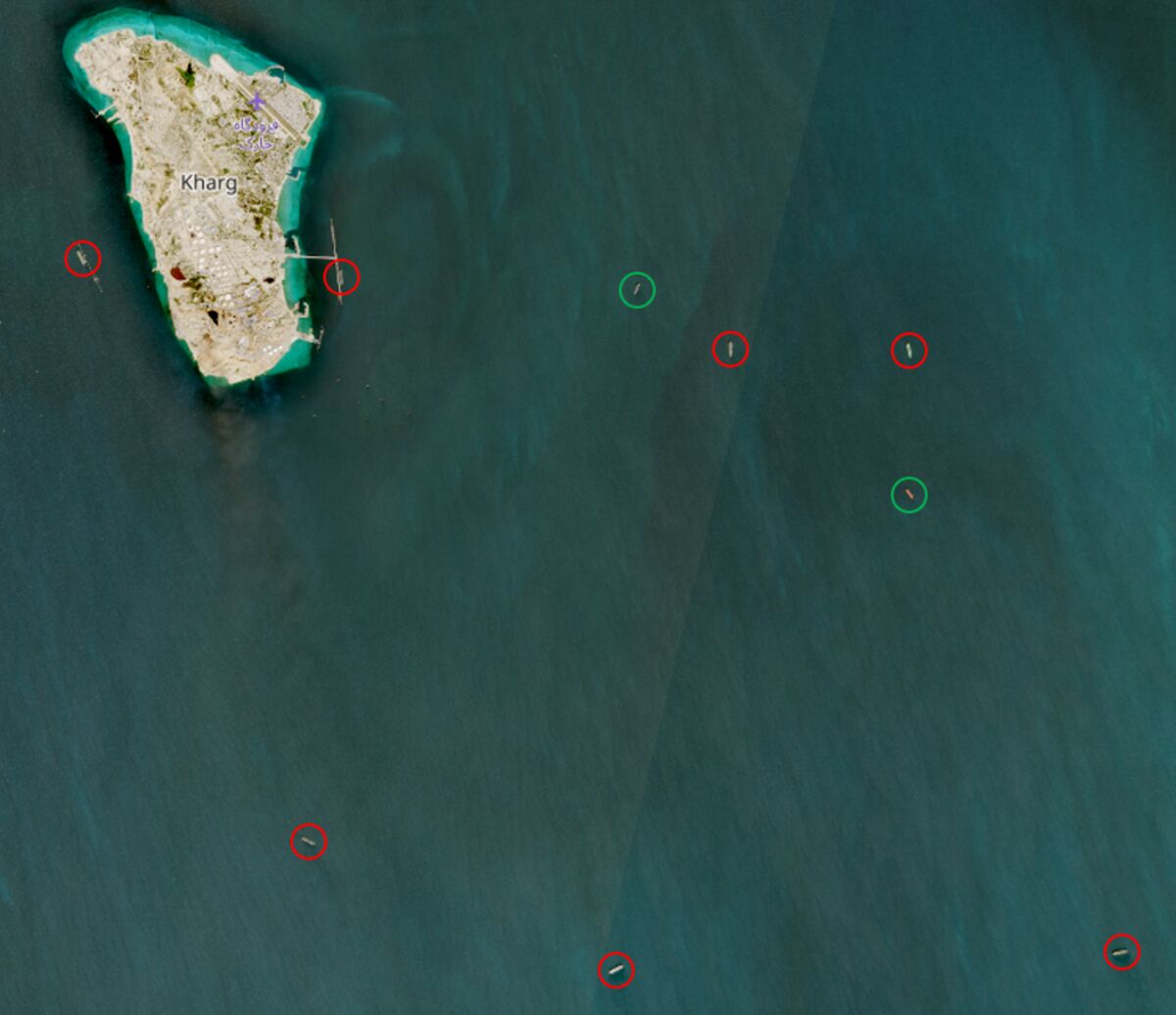
Two very-large crude carriers, each able to carry about 2 million barrels, were observed loading at Iran's Kharg Island terminal (satellite image timed 10:48 a.m. local time on Saturday), indicating Iran continued crude loading a week after US and Israeli air strikes. There have been no subsequent satellite images, so it is unclear whether operations have continued, leaving short-term supply implications and market impact uncertain.
The immediate knock-on is to tanker economics and short-term floating storage demand rather than direct crude price mechanics; incremental disruption inflates voyage durations and days-in-charter, which can lift VLCC/Tanker TCEs by 20–50% in stressed windows of days-to-weeks. That flow impulse is asymmetric: charterers absorb spot premia quickly, while owners capture outsized cash conversion as utilization and time-charter equivalents rise, compressing the typical supply response timeline for newbuilds to years.
Counterparties exposed to route complexity—insurance/reinsurance, shipbrokers, and midstream bunker suppliers—see revenue and volatility upticks, while regional refiners face margin pressure via higher delivered crude costs and reliability premium pass-throughs; European and Asian refiners will be most sensitive within 1–3 months due to inventory turnover. Traders should expect volatility clusters around discrete catalysts (attacks, interdictions, sanctions notices) with knee-jerk price moves that decay if alternate supply routes or releases occur.
Tail risks are low-probability but high-impact: kinetic escalation or formal interdiction could sustain a multi-month premium, while diplomatic de-escalation or SPR coordination can erase premiums within 30–90 days. The consensus underprices the speed with which tanker markets arbitrage geopolitical shocks into freight and insurance spreads — meaning shipping equities can outperform spot oil on a short-to-intermediate horizon even if Brent drifts modestly.
AI-powered research, real-time alerts, and portfolio analytics for institutional investors.
Overall Sentiment
neutral
Sentiment Score
0.00
