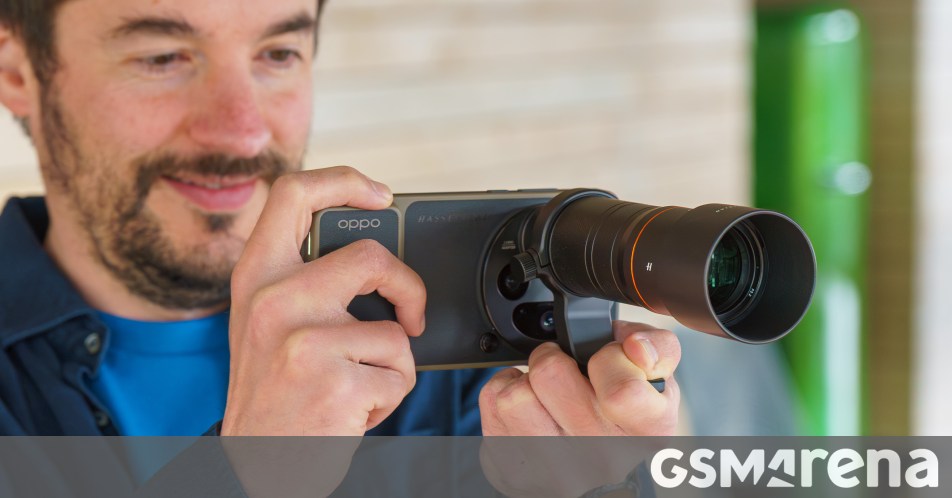
OPPO’s Find X9 Ultra Hasselblad Earth Explorer Kit adds a 300mm teleconverter lens, tripod collar, lens hood, and 67mm filter support, positioning the phone more as a photography-first device. The article says the 13x native 300mm mode is the only optically worthwhile setting, while the 30x and 60x modes quickly degrade in texture. Overall, it is a favorable product showcase, but the content is largely hands-on commentary with limited immediate market impact.
This is less a handset feature story than a signal that premium Android OEMs are pushing further into accessory-led differentiation because core camera specs are converging. The key second-order effect is margin: these kits are high-ASP, low-volume add-ons that can lift ecosystem revenue without needing meaningful unit growth, and they strengthen lock-in by making switching costs more about workflow than hardware. If consumers start treating the phone as a camera platform rather than a communications device, the attach rate for lenses, grips, cases, and filters can become a more durable profit pool than the base device.
Competitive dynamics favor whichever OEM can make the experience feel integrated rather than awkward. The product’s tradeoff is obvious: longer focal length gains come with usability friction, which likely narrows the buyer set to enthusiasts and semi-pro creators; that limits near-term TAM but improves brand halo. The bigger risk for competitors is not direct cannibalization, but that these kits reset consumer expectations around modular imaging, pressuring rivals to subsidize their own accessory ecosystems or concede the premium creator segment.
From a demand perspective, this is still an early-cycle signal rather than a mass-market catalyst. The likely adoption curve is measured in quarters, not weeks, with initial sales driven by enthusiasts and creator channels; if social proof builds, accessory revenue can scale disproportionately versus smartphone units. The main reversal risk is that users conclude the incremental zoom is not meaningfully better than computational imaging, which would cap attach rates and compress the narrative into a niche demo product.
The contrarian read is that this may be more strategically important for platform economics than for camera quality. Investors often underestimate the value of ‘good enough’ hardware when paired with premium accessories because it increases gross profit per flagship buyer and extends replacement cycles through ecosystem habit formation. If this category sticks, the winners are not the companies with the best phone camera alone, but those with the best monetizable imaging stack around it.
AI-powered research, real-time alerts, and portfolio analytics for institutional investors.
Request TrialOverall Sentiment
mildly positive
Sentiment Score
0.15
