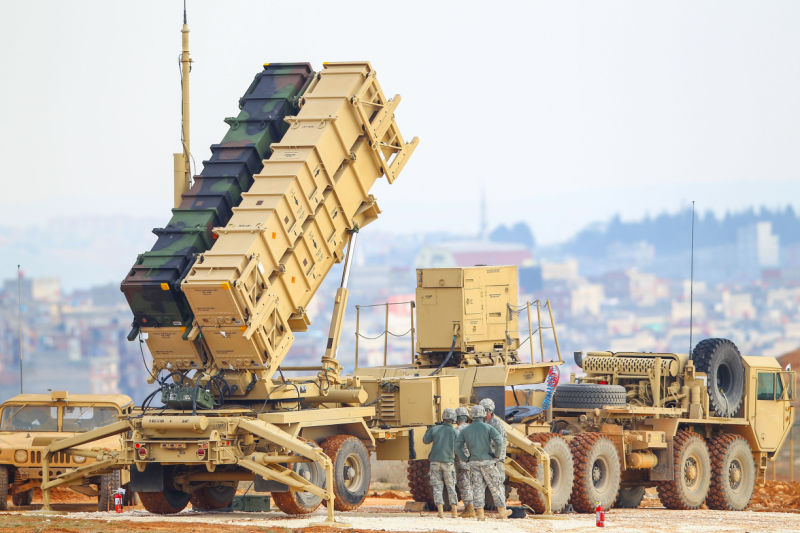
Israel has informed the U.S. its stockpile of ballistic missile interceptors is 'critically low', while the U.S. has bypassed Congress to sell 12,000 bomb bodies to Israel under an emergency declaration. The U.S. fired an estimated $2.4 billion of Patriot interceptors in the first five days of the conflict, pressuring supply chains and spotlighting Lockheed Martin (THAAD) and RTX (Patriot/Iron Dome components) as production ramps accelerate. Pentagon and industry are increasing THAAD/Patriot output, but backlogs and delivery speed — not just order size — are now the primary investor concern for the aerospace & defense sector.
The immediate market lever is supply-chain elasticity: high-value interceptors are assembly-heavy and limited by a handful of specialized subcomponents (seeker heads, high-performance propellant batches, and qualification flight hours). Expect tier-2/3 suppliers to experience 3–9 month order spikes, followed by M&A interest as primes look to secure capacity; primes that own vertically integrated propulsion and avionics will capture outsized margin expansion as fixed costs are absorbed.
Competitive dynamics favor firms that can both accelerate throughput and demonstrate rapid qualification/testing capacity — not simply those with inventory on hand. This advantages larger primes with test ranges, certified suppliers and Washington relationships, while creating an opening for non-US manufacturers to win allied replenishment contracts if export controls tighten; logistics and QA bottlenecks (skilled labor, environmental approvals for propellant manufacture, and test stand time) are the real gating factors, not raw machining capacity.
Upside catalysts are near-term emergency orders and multi-year replenishment contracts; reversals come fast if de-escalation reduces demand or if a single high-profile production failure forces requalification delays. Timeline expectations: incremental throughput gains (overtime, third‑shift) show in 1–3 months, capacity additions and new lines take 9–36 months — position sizing should reflect a bifurcated outcome where upside is contract-driven but downside is stoppage-driven, skewing payoffs toward option-style exposure rather than large, undisciplined equity positions.
AI-powered research, real-time alerts, and portfolio analytics for institutional investors.
Request DemoOverall Sentiment
mildly positive
Sentiment Score
0.20
Ticker Sentiment
