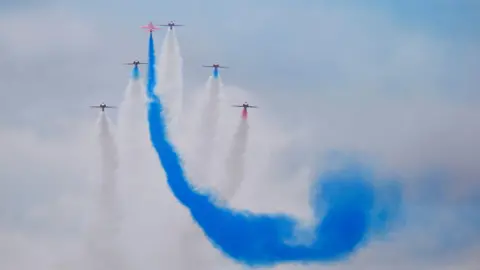
RIAT 2026 has been cancelled due to uncertainty tied to the ongoing Middle East conflict, after organisers discussed access to RAF Fairford with the United States Air Force. The world’s biggest military air show, which typically draws more than 170,000 attendees and was scheduled for 17-19 July, will now return in 2027. Ticket holders can choose a refund, rollover to 2027, or donate the value to the RAF Charitable Trust.
This is a small direct economic hit but a useful read-through on how geopolitical friction is filtering into non-defense discretionary spending. The immediate losers are the local event economy and the niche travel/leisure ecosystem around large-scale gatherings: hospitality, transport, temporary staffing, catering, and regional retail all lose a peak-summer demand spike that is hard to replace on short notice. The bigger second-order effect is reputational—once a marquee event is seen as logistics-sensitive to US military access or airspace constraints, sponsor and attendee booking patterns become more conservative even if the event returns next year.
For defense-linked names, the cancellation is not bearish; if anything it reinforces that elevated geopolitical risk supports procurement urgency and readiness budgets. The market usually underestimates how quickly conflict headlines convert into incremental demand for intelligence, base support, air mobility, and munitions inventory replenishment, but that typically shows up with a lag of 1-3 quarters rather than immediately. The more relevant trade is not “war = defense up” in a generic sense, but that European and UK governments become less tolerant of deferred maintenance and low stockpiles when civilian-military coordination starts failing in visible ways.
The main risk is that investors overreact to a one-off event cancellation and extrapolate to the broader leisure complex, which would be too aggressive. Unless there is a broader escalation that impairs UK transport or suppresses summer travel demand more broadly, the revenue loss should be localized and mostly bridged by refunds/rollovers next year. The contrarian takeaway is that the market may be underpricing the medium-term boost to defense-adjacent infrastructure, especially contractors with airfield, logistics, and base-support exposure rather than frontline weapons pure-plays.
AI-powered research, real-time alerts, and portfolio analytics for institutional investors.
Request DemoOverall Sentiment
mildly negative
Sentiment Score
-0.35
