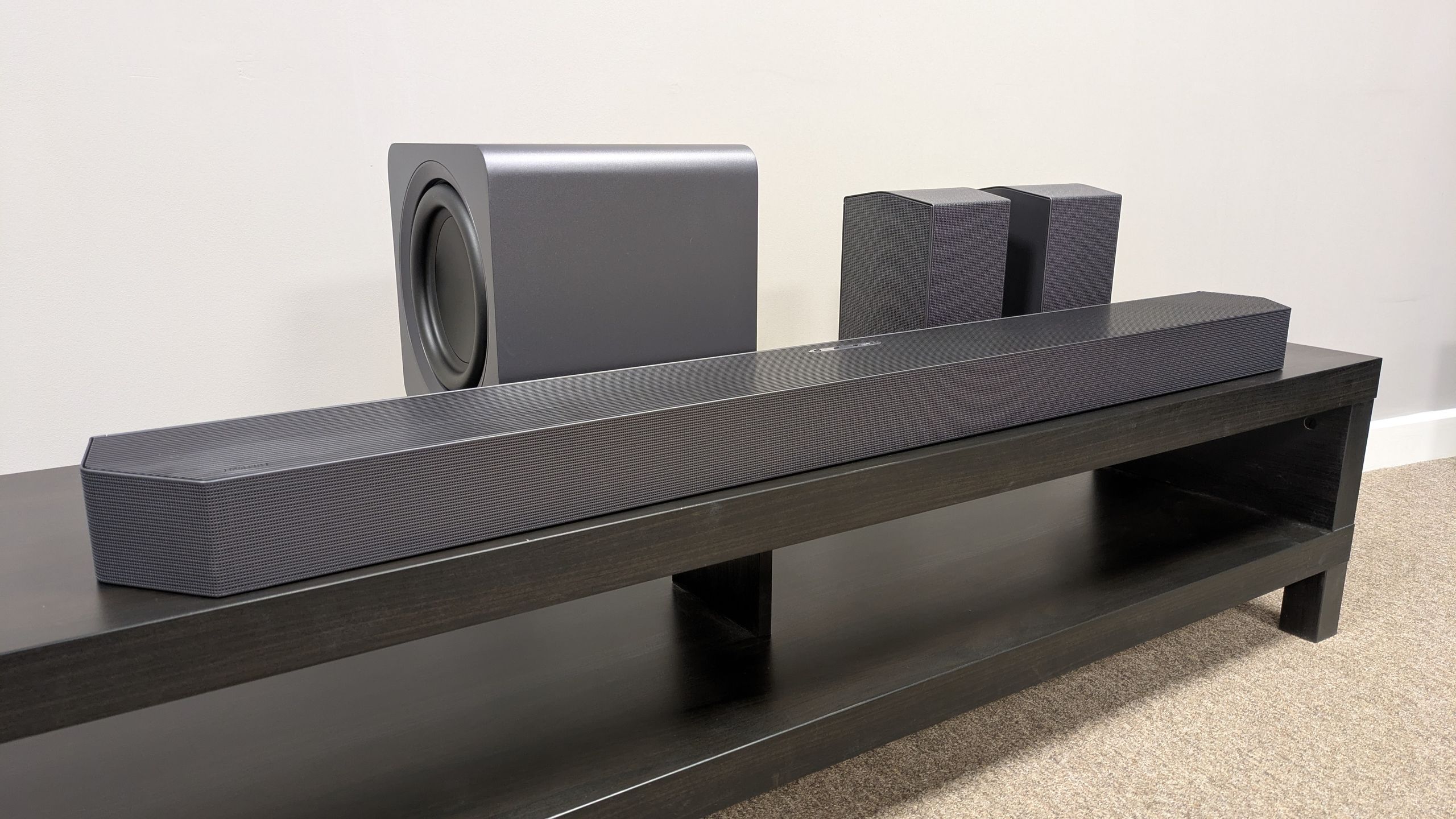
Samsung has announced two new flagship Dolby Atmos soundbars ahead of CES 2026: the HW-Q990H, a successor to the HW-Q990F featuring an 11.1.4-channel system with a main bar, two wireless rear speakers, a compact dual‑8" driver subwoofer and new audio processing features dubbed Sound Elevation and Auto Volume; and the HW-QS90H, a 7.1.2 all‑in‑one unit with 13 drivers including a Quad Bass Woofer aimed at competing with Sonos' Arc Ultra. Specs, images, pricing and a firm release date were not provided (Samsung typically ships these in spring), so while the launches reinforce Samsung's premium audio positioning they are unlikely to be a near-term material catalyst for Samsung Electronics' stock.
Market structure: Samsung’s announced HW-Q990H and HW-QS90H directly pressure pure-play premium soundbar vendors (Sonos/SONO) and indirectly benefit large consumer-electronics OEMs (Sony/SONY, Samsung) and audio-IP licensors (Dolby/DLB). Expect a 1–3 percentage-point share shift in the $500+ soundbar segment within 12 months as Samsung leverages channel reach and potential aggressive intro pricing (previous flagship launched at ~$2k, but promotional erosion to -20–30% within 6 months is typical). Retailers (Best Buy, Amazon) gain negotiating leverage on promotions and financing offers. Risk assessment: Tail risks include component shortages (DSP/driver) pushing ASPs +5–10% and geopolitical export controls or tariffs on Korean electronics, which could widen margins or disrupt shipments for 3–6 months. Near-term catalysts: CES demos (Jan) and Spring launch windows; any failure on DTS/HDMI passthrough or poor reviews could reverse share moves within weeks. Hidden dependency: post-sale ecosystem (voice assistants, firmware updates) determines long-term stickiness more than initial sound quality. Trade implications: Direct trades favor long SONY exposure for diversified CE product cycles and Dolby partnerships (estimate 12–18% upside vs. peers over 6–12 months) and short SONO for niche premium risk if shares rally on sentiment but not sales (expect 15–30% downside potential if Samsung converts 10–20% of Sonos’ TAM). Options: buy 3–6 month SONO puts ~15% OTM sized to 0.5–1% portfolio risk; consider covered-call income on SONY into positive CES headlines. Contrarian angles: Consensus overstates Sonos’ vulnerability — Sonos’ ecosystem and services (firmware, multiroom) can defend pricing; a >20% sell-off in SONO within 30 days would be a tactical long entry (mean reversion trade). Conversely, Samsung’s product cadence historically triggers short-term share gains for suppliers but margin compression for OEMs; if Samsung cuts ASP >15% to win share, expect pressured margins for all CE peers over 2–4 quarters.
AI-powered research, real-time alerts, and portfolio analytics for institutional investors.
Request DemoOverall Sentiment
mildly positive
Sentiment Score
0.28
Ticker Sentiment
