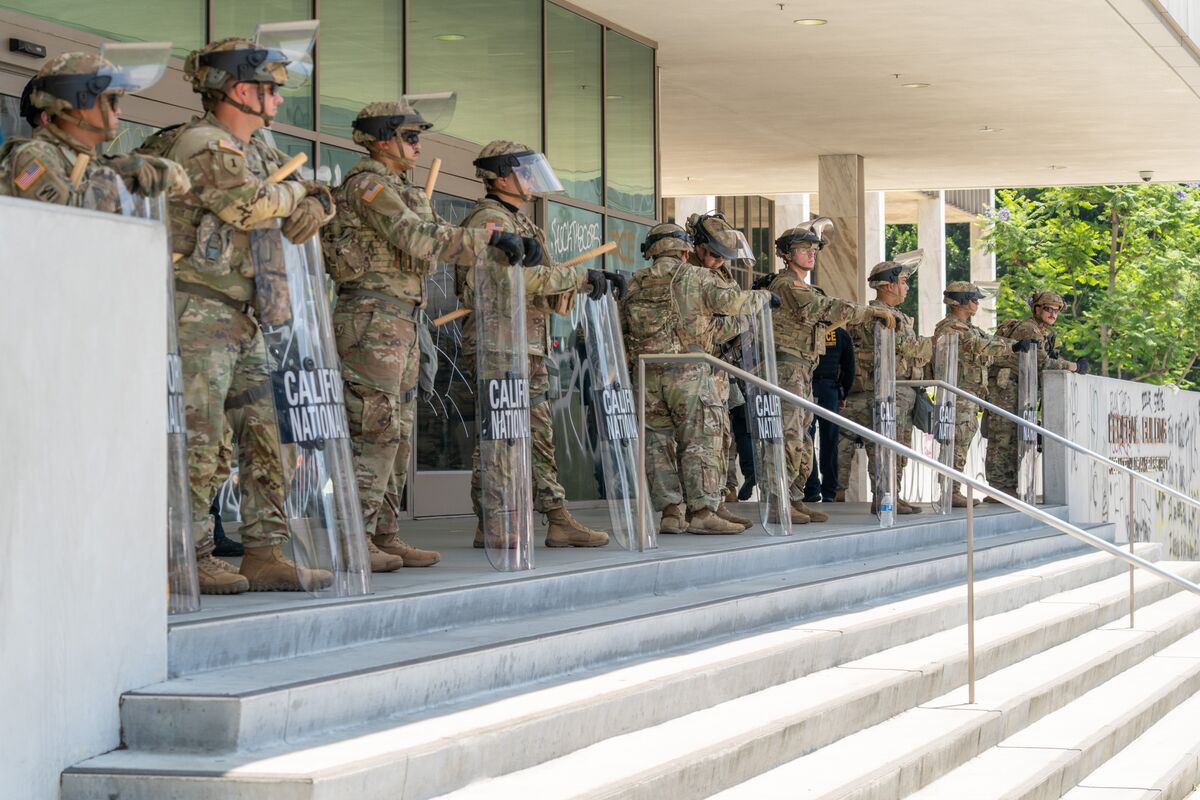
President Trump is deploying active-duty Marines to Los Angeles, escalating a conflict with California Governor Newsom and fulfilling a long-held ambition to use the military for displays of force and political power. This action, following the deployment of the National Guard, marks a shift from Trump's first term, where cabinet members previously resisted using soldiers on American soil. Newsom has characterized the troop mobilization as a "provocation."
President Trump's deployment of 700 active-duty Marines to Los Angeles, subsequent to the National Guard's mobilization, signifies an escalation in the federal government's engagement in domestic affairs and a direct challenge to California Governor Gavin Newsom, who termed the action a "provocation." This move reportedly fulfills Trump's long-held ambition to leverage the military for displays of force and political power, a strategy previously stymied by cabinet members during his first term but now facilitated by a more compliant team. The decision to use active-duty military personnel on American soil for such purposes carries significant implications for federal-state relations and potentially for perceptions of domestic political stability. While the provided signals indicate a neutral immediate market sentiment and impact, the speculative nature of these events suggests underlying uncertainty regarding their broader or longer-term consequences.
AI-powered research, real-time alerts, and portfolio analytics for institutional investors.
Request DemoOverall Sentiment
neutral
Sentiment Score
0.00
