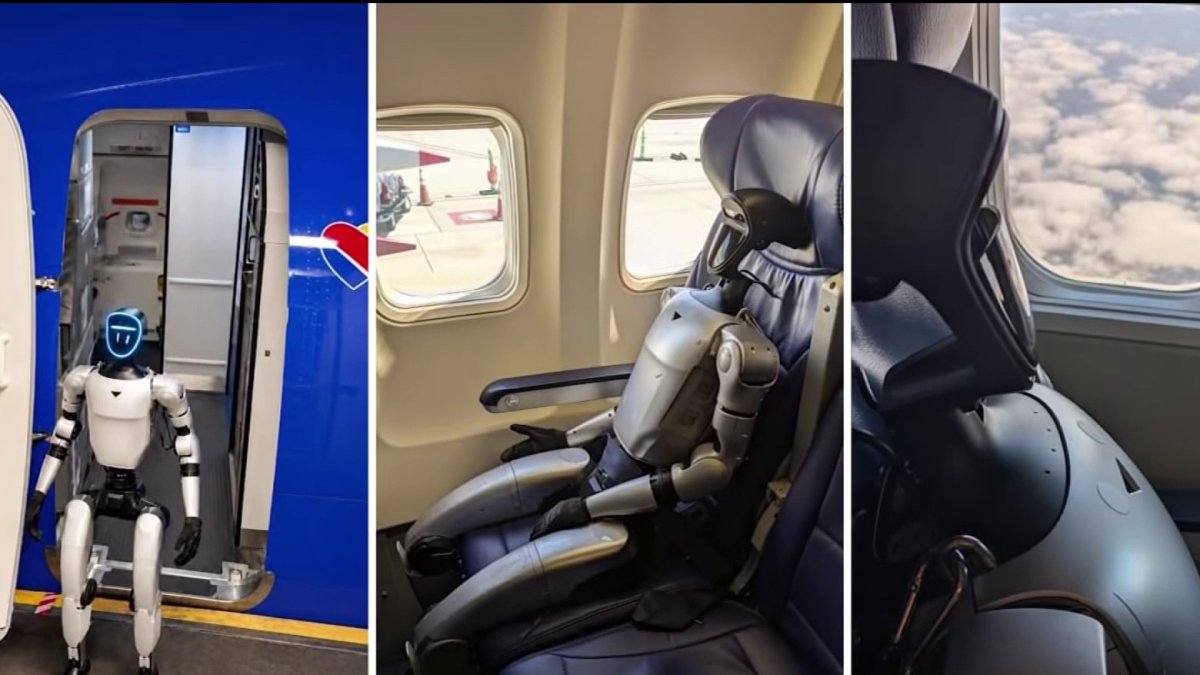
A humanoid robot named Bebop delayed a Southwest flight from Oakland to San Diego by nearly an hour while the airline determined how to transport it. The robot, owned by Elite Event Robotics, was eventually moved to a window seat and had its battery removed before the flight continued. The incident is novel but routine in market terms, with no clear financial implications beyond an isolated operational issue.
This is a small but useful signal that robotics is moving from novelty into regulated surface-area problems: airports, airlines, and baggage handling. The near-term winner is not the robot vendor so much as the firms that solve the integration layer — battery-safe transport, standardized packing, insurance, and airport exception workflows. That creates a second-order pull for industrial automation, last-mile logistics software, and aviation service providers that can monetize compliance friction rather than the robot itself.
For airlines, the economic impact is negligible, but the operational lesson is not: every ambiguous object adds delay risk and crew distraction, which is why carriers will increasingly push hard for pre-clearance rules on batteries and autonomous devices. Over months, this is mildly supportive of incumbents with strong ops discipline versus lower-cost carriers that depend on tight turn times; a single disruptive boarding event can cascade into missed connections and crew-time penalties. The broader implication is that as robots become more common in public spaces, the bottleneck shifts from hardware capability to liability management.
The contrarian takeaway is that this is not a demand catalyst for humanoid robotics stocks in the near term — if anything, it highlights how immature the distribution and regulatory stack remains. The market may be overestimating how quickly robots move from demo to scalable deployment; every deployment still has hidden costs in transport, training, and exception handling. That delays revenue conversion even if pilot interest stays high.
Risk to the thesis is that airports and carriers rapidly codify procedures, turning this into a non-event within weeks. If standardized rules emerge, the operational drag disappears, and the more durable winners become the companies that own the software and compliance infrastructure behind the scenes, not the robot makers themselves.
AI-powered research, real-time alerts, and portfolio analytics for institutional investors.
Request DemoOverall Sentiment
neutral
Sentiment Score
0.00
