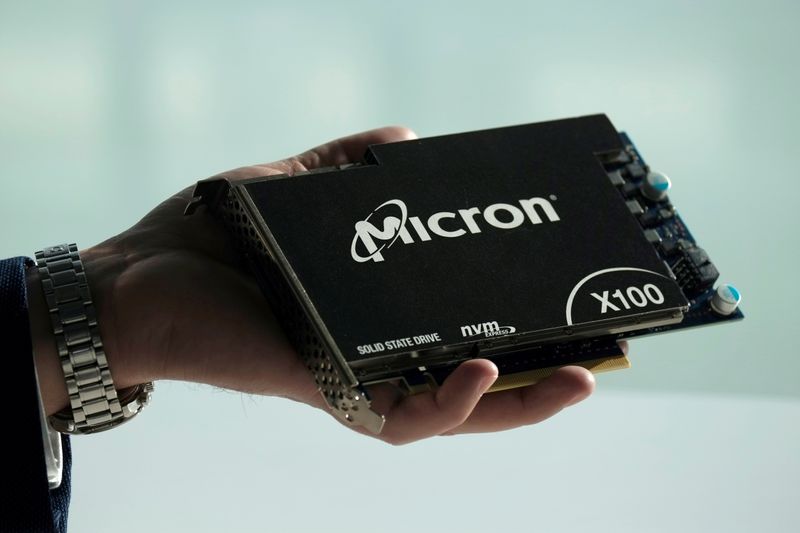
Barclays raised Micron's price target to $675 from $450 and maintained an Overweight rating after a strong quarter; Micron reported fiscal Q2 EPS $12.20 vs $8.79 consensus (+38.8%) and revenue $23.86B vs $19.19B (+24.3%). Management expects free cash flow to double QoQ to $13.7B (from $5.5B) in fiscal Q3 despite ~$7B capex, and signed a five-year supply agreement while customers are only fulfilling 50–67% of demand, supporting pricing through 2026. Stock has surged 354% over the past year to $461.73 (near a $471.34 52-week high); Micron plans a second DRAM cleanroom at Tongluo by end of fiscal 2026 and Barclays flags AI developments as additive to memory demand.
Micron’s positioning is creating a structural shift in bargaining dynamics across the memory supply chain: multi-year agreements and targeted capacity adds convert a historically lumpy industry into one with smoother revenue visibility and higher marginal FCF predictability for incumbents. That erodes the advantage of short-cycle opportunistic entrants and increases the value of scale — favoring vertically integrated and large-cap DRAM/NAND producers while compressing optionality for foundries and smaller OSATs that rely on spot demand swings.
The primary systemic risk is concentrated demand: AI accelerators drive step-function increases in bit consumption but remain highly concentrated among a handful of hyperscalers and accelerator vendors. If hyperscaler procurement paces slow, or if alternative memory architectures (HBM substitutes, on-die caches) gain traction, the current tightness and pricing power could reverse materially within 6–18 months. Geopolitical export controls and the timing of new cleanrooms coming online are second-order catalysts that can flip supply curves faster than the market currently discounts.
Positioning should reflect a binary payoff: asymmetric upside if AI-led bit-growth persists and Micron converts capex into yield, versus sharp downside if inventory digestion or demand bifurcation occurs. The market appears to be pricing a multi-year shortage premium; we should harvest that premium selectively while hedging customer-concentration and execution risk with duration-limited structures rather than outright leverage.
AI-powered research, real-time alerts, and portfolio analytics for institutional investors.
Overall Sentiment
strongly positive
Sentiment Score
0.75
Ticker Sentiment
