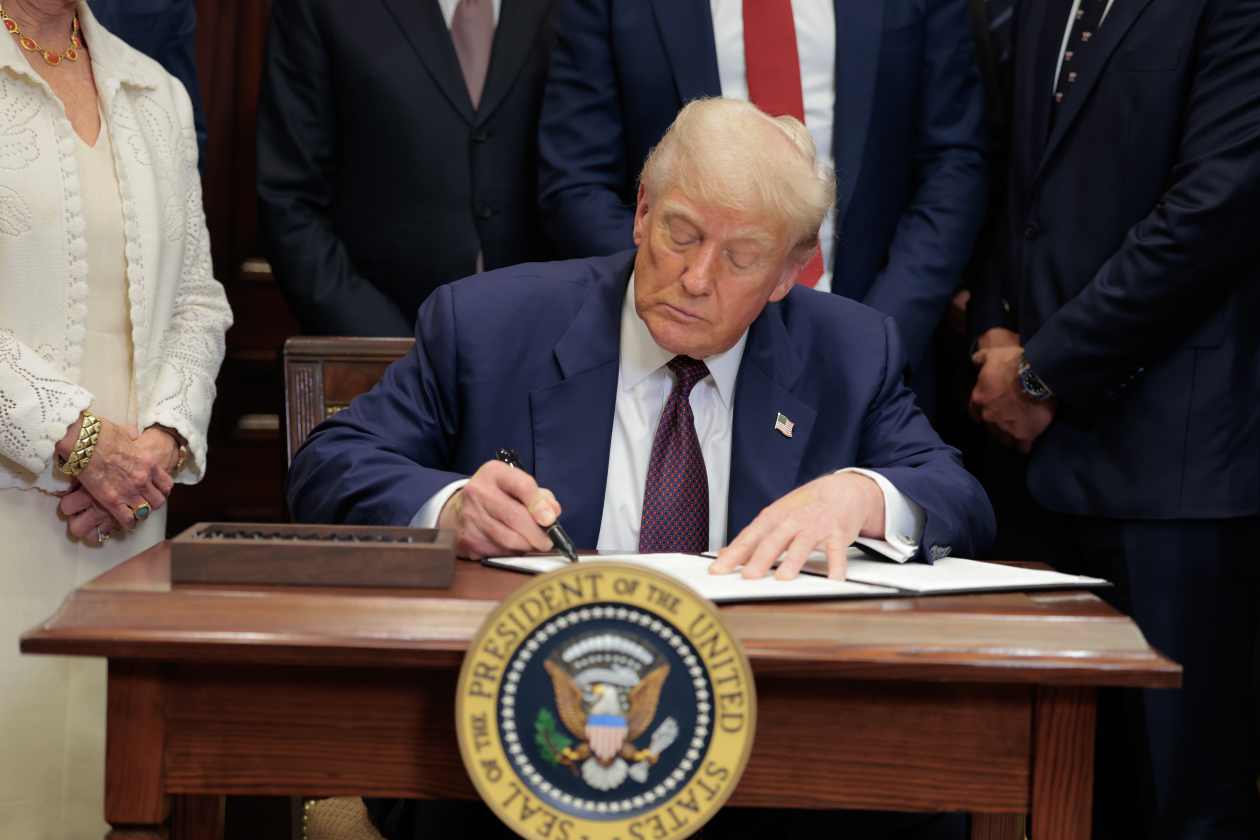
President Trump announced new, higher tariffs on dozens of countries, effective August 7th, escalating global trade tensions. While Canada faces an immediate 35% import levy starting Friday, 25 other trading partners previously notified received a one-week reprieve to negotiate new trade deals, highlighting ongoing trade policy uncertainty and potential supply chain disruptions.
The Trump administration has escalated global trade disputes by announcing steeper import levies on dozens of countries, scheduled to take effect on August 7. The policy is being implemented with differentiated timelines: Canada faces an immediate 35% levy starting Friday, while 25 other trading partners have been granted a one-week delay to negotiate new agreements. This development, marked by a hawkish tone and a strongly negative sentiment score of -0.75, injects significant uncertainty into global markets. The high market impact score of 0.7 indicates a strong potential for broad market volatility and disruptions to international supply chains, particularly for companies reliant on the affected nations. The short negotiation window for the 25 countries underscores a hardline U.S. stance, increasing the risk of retaliatory measures and further destabilizing trade relationships.
AI-powered research, real-time alerts, and portfolio analytics for institutional investors.
Request DemoOverall Sentiment
strongly negative
Sentiment Score
-0.75
