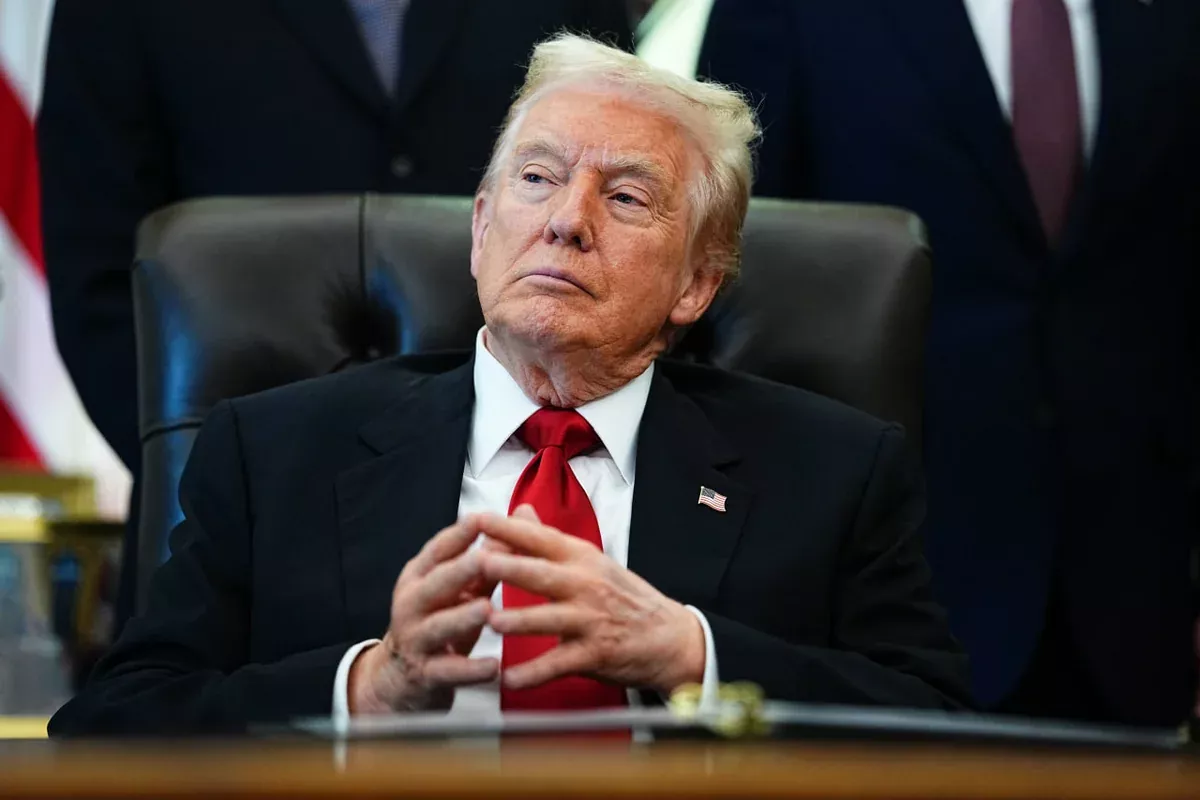
Trump said U.S. military stockpiles remain "more than double" what they were when the Iran conflict began, dismissing concerns about missile shortages. The article contrasts those comments with a CNN report warning that U.S. missile inventories have been significantly depleted and could pose a near-term ammunition risk in another major conflict. The piece is geopolitically relevant and modestly market-sensitive for defense stocks, but it does not contain a direct policy change or financial update.
The market implication is less about today’s inventory level and more about procurement urgency. Even if the official message is meant to project confidence, any credible hint of missile drawdown tends to accelerate multi-year replenishment orders, which is structurally supportive for the large primes with deep missile franchises and for the specialty electronics/propulsion suppliers behind them. The first-order winners are contractors with high mix exposure to interceptors, seekers, rocket motors, and solid propulsion; the second-order winners are tier-2/3 suppliers with constrained capacity, because sustained rearmament usually forces faster pricing and longer lead times.
The risk is a sequencing problem: if stockpiles are genuinely tighter than acknowledged, the near-term downside is not to primes but to operational flexibility. That raises tail risk around U.S. willingness to sustain simultaneous theaters, which can pressure allied confidence and increase demand for NATO/European munitions stockpiling over the next 6-18 months. The geopolitical readthrough is also important: any perception of U.S. scarcity can embolden adversaries to test deterrence, creating a reflexive loop where headline reassurance is followed by higher implied conflict probabilities.
Consensus is likely underestimating the option value embedded in capacity expansion, not just backlog. The market usually waits for appropriations headlines, but the better signal is subcontractor bookings and commentary on lead times; those tend to inflect 1-2 quarters before primes visibly re-rate. If the administration later softens its stance or a fresh conflict emerges, the trade becomes self-reinforcing as replenishment demand and strategic stockpile policy move together.
AI-powered research, real-time alerts, and portfolio analytics for institutional investors.
Request DemoOverall Sentiment
neutral
Sentiment Score
-0.10
