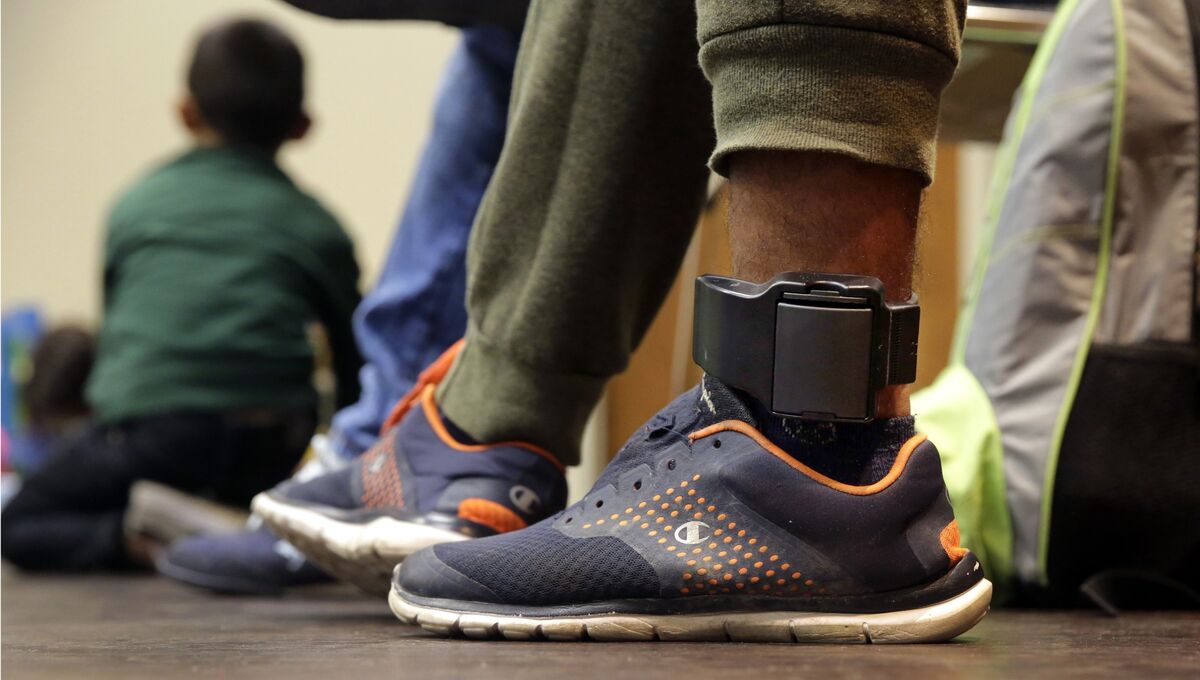
A group of asylum seekers/visa applicants sued to challenge a Trump administration policy requiring more immigration tracking monitors (ankle and wrist bracelets) instead of detention. The number of released migrants wearing devices rose from ~23,000 in late 2024 to nearly 50,000 now, according to government data cited in the lawsuit, after devices were previously used only in special high-supervision cases.
The economically relevant change is not the litigation headline; it is the budget mix shift from bed-days to device-based supervision. That tends to compress total dollars per migrant handled, but it can be margin-accretive for the contractor with the monitoring stack because recurring device fees scale with population while detention adds labor, real estate, and political overhead.
Relative winners are the vendors with electronic monitoring exposure, especially GEO Group versus CoreCivic: GEO has a built-in hedge through its monitoring franchise, while CXW is more levered to detention occupancy and therefore more vulnerable if release with supervision becomes the default. The first-order equity reaction may be muted because the policy change is operational rather than headline-driven, but the second-order effect over 1-3 months is procurement and utilization: if monitor counts keep rising, bed utilization can stagnate even if enforcement rhetoric stays hawkish.
The key risk is legal or administrative reversal. A court stay, appropriations language, or a shift in ICE guidance could unwind the adoption curve quickly, making this a poor standalone macro theme. Over 6-18 months, the bigger question is whether Washington normalizes cheaper supervision as a politically acceptable substitute for detention; if so, detention-heavy names face multiple compression while monitoring exposure deserves a higher quality multiple.
AI-powered research, real-time alerts, and portfolio analytics for institutional investors.
Request DemoOverall Sentiment
mildly negative
Sentiment Score
-0.25
