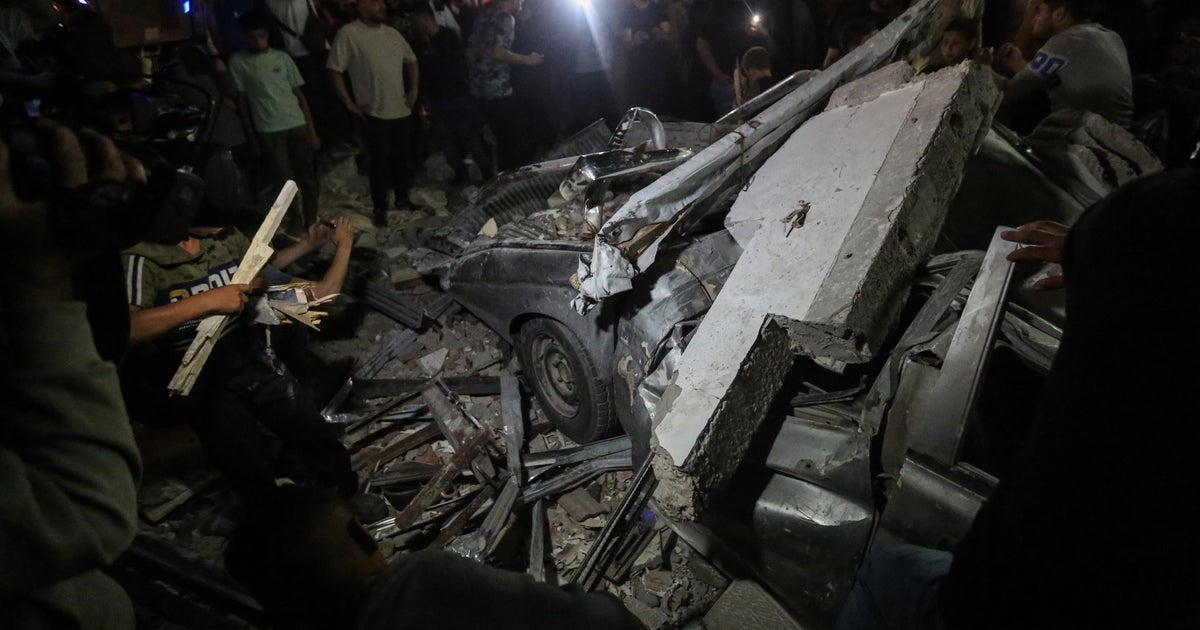
Israel said it killed Mohammed Odeh, the newly appointed head of Hamas's armed wing in Gaza, a day after a similar strike killed his predecessor Ezzedine al-Haddad. The statement underscores Israel's continued campaign to eliminate Hamas leadership tied to the October 7 attack, while the war's cumulative toll has reached at least 72,803 deaths in Gaza and 1,221 in Israel. The escalation keeps regional geopolitical risk elevated and may sustain volatility across defense-linked and Middle East-sensitive assets.
This is incrementally bullish for the Israeli security stack, but not in the obvious “headline risk” sense. The more important second-order effect is command-and-control degradation: repeated decapitation of Hamas leadership raises the probability of fragmented cells, weaker centralized bargaining, and more erratic operational behavior. That typically prolongs the conflict timeline rather than accelerating resolution, which keeps regional risk premia sticky even if immediate retaliation is contained.
For defense and ISR beneficiaries, the trade is less about one strike and more about a durable regime of high-intensity targeting: persistent drone surveillance, electronic warfare, counter-rocket systems, and munitions replenishment. The strongest fundamental read-through is to Israeli and US defense supply chains that support precision strike capacity and air defense inventories, where replenishment cycles can extend for quarters. European and Gulf shipping-sensitive sectors remain vulnerable to intermittent escalation because the market tends to underprice low-probability, high-consequence spillover into Lebanon, Red Sea lanes, or energy infrastructure.
The contrarian angle is that markets often overreact to leadership eliminations as if they were conflict-ending catalysts; historically, they more often create a temporary tactical lull followed by decentralization and revenge incentives. That means risk assets tied to Middle East de-escalation could be mispriced if investors assume negotiation odds improve mechanically after a decapitation event. The real hedge is not direction on a single strike, but exposure to sustained defense spending and downside protection against episodic regional shock.
Tail risk sits in a 1-8 week window for asymmetric retaliation, especially if Hamas or aligned groups choose symbolic targets outside Gaza to reassert deterrence. Over 3-6 months, the bigger catalyst is whether this pattern forces a broader replenishment cycle from US/European suppliers, which would be more persistent than the market’s knee-jerk focus on the headlines.
AI-powered research, real-time alerts, and portfolio analytics for institutional investors.
Request DemoOverall Sentiment
moderately negative
Sentiment Score
-0.45
