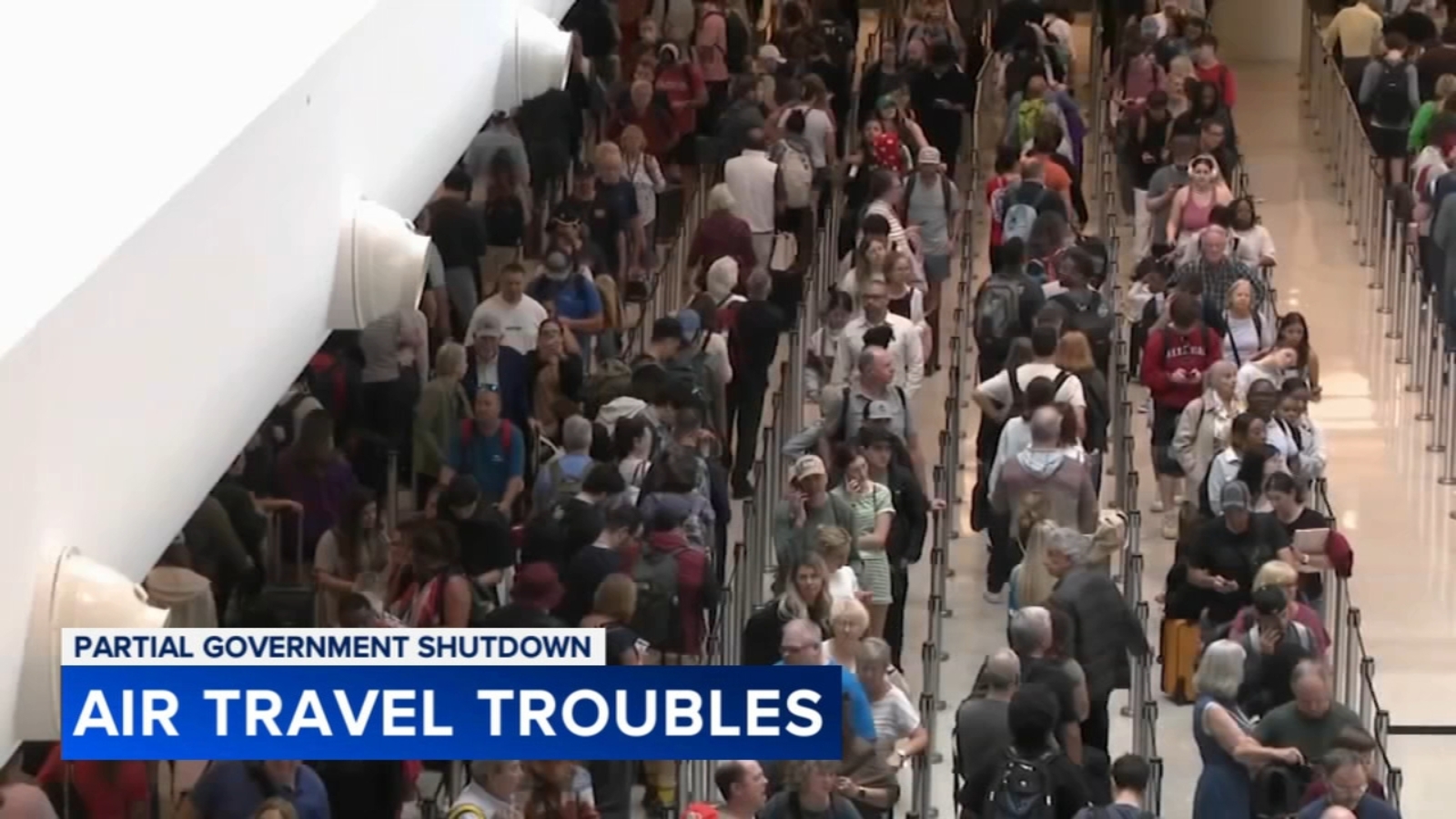
Partial federal government shutdown has left TSA employees working without pay (workers received a partial paycheck two weeks ago and the next pay is expected to be $0), reducing staffing and contributing to hours-long security lines in some cities while Philadelphia remains mostly normal. Travel advisers warn passengers to arrive 3–5 hours early as spring-break volumes rise; operational disruption risk is elevated locally but poses minimal direct market impact.
Operational staffing instability at a government-regulated chokepoint is creating concentrated, idiosyncratic disruption risk at specific hubs rather than a uniform demand shock. That means winners and losers will be determined by network topology and turn-time elasticity: carriers with tightly scheduled point-to-point networks and high aircraft utilization have materially higher exposure to cascading delays and crew-rest costs than hub-and-spoke operators with spare aircraft and recovery buffers.
In the short run (days-to-weeks) expect elevated volatility in daily operational metrics — on-time performance, cancellations, and gate-turn times — which flow directly into ancillary revenue swings (reaccommodation fees, change fees, parking, last-minute bookings). Over a 1–3 month window, if staffing dislocations persist or reassignments become routine, airlines will face higher opex from overtime and contractor screening, forcing margin pressure unless passed to consumers via higher ancillary fees or ticket price raises.
A resolution to the regulatory/fiscal impasse is the single largest catalyst to reverse these effects; a clean funding bill within 1–2 weeks would snap operational risk back toward baseline, while a protracted impasse (multi-week) increases the probability of patchwork labor actions and permanent schedule adjustments into the spring travel season. The most credible second-order tradeable is dispersion risk across travel equities: platform and rental names capture late rebookings and demand stickiness, while certain carrier equities will underperform on execution risk even if demand holds.
AI-powered research, real-time alerts, and portfolio analytics for institutional investors.
Overall Sentiment
mildly negative
Sentiment Score
-0.25
