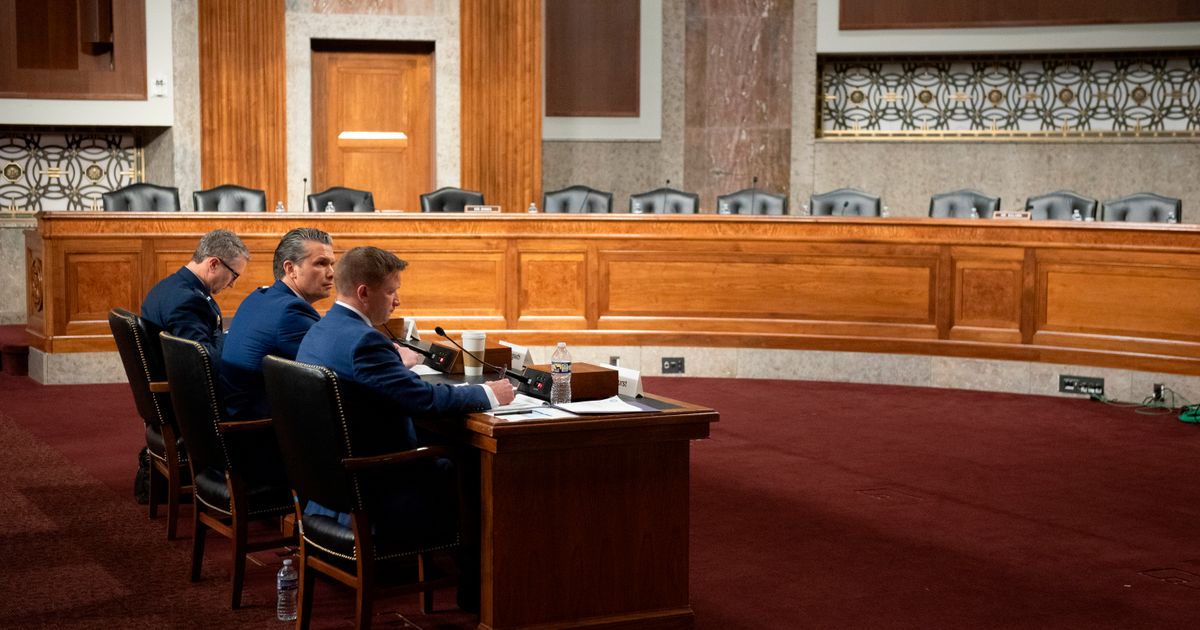
The 60-day War Powers deadline for Congress to authorize the Iran conflict is set to expire Friday, but GOP lawmakers are not moving to force a vote and the Trump administration argues the clock has stopped because of the ceasefire. Several Republican senators, including Lisa Murkowski and Susan Collins, signaled they want Congress to eventually weigh in, while Democratic efforts to halt the war failed for a sixth time. The dispute adds political risk around U.S. war powers and comes amid public frustration over the conflict and gas prices.
The market implication is less about the immediate military backdrop and more about the erosion of institutional checks: if Congress effectively cedes war powers here, future executive actions become more discretionary and harder to handicap. That tends to widen the geopolitical risk premium in energy, defense, and insurance, because the probability distribution shifts from a single bounded event to a series of rolling escalations with no clear policy off-ramp.
Energy is the most direct transmission channel, but the second-order effect is on volatility rather than spot price alone. Even if crude does not sustain a breakout, the risk of intermittent supply disruption through the Strait of Hormuz supports higher implied volatility, stronger crack spreads, and a larger bid for physical logistics and marine insurance; that can benefit midstream and integrated energy more than pure upstream if the move is driven by shipping frictions rather than lost barrels.
Politically, the longer Congress avoids a vote, the more this becomes a 2026 election issue tied to inflation and presidential overreach. That creates a tail risk of a fast narrative reversal if casualties rise or gasoline prices spike again: the same lawmakers deferring today may be forced into public distance later, which would increase the odds of a late authorization fight and a sharp reset in risk assets tied to the conflict.
The contrarian read is that the market may be overpricing a linear oil shock and underpricing policy normalization risk. If the ceasefire holds for several more weeks and shipping lanes remain contained, the premium can bleed out quickly because positioning in energy tends to be crowded after headline-driven spikes; in that scenario, the better expression is volatility capture rather than outright directional long exposure.
AI-powered research, real-time alerts, and portfolio analytics for institutional investors.
Request DemoOverall Sentiment
neutral
Sentiment Score
-0.10
