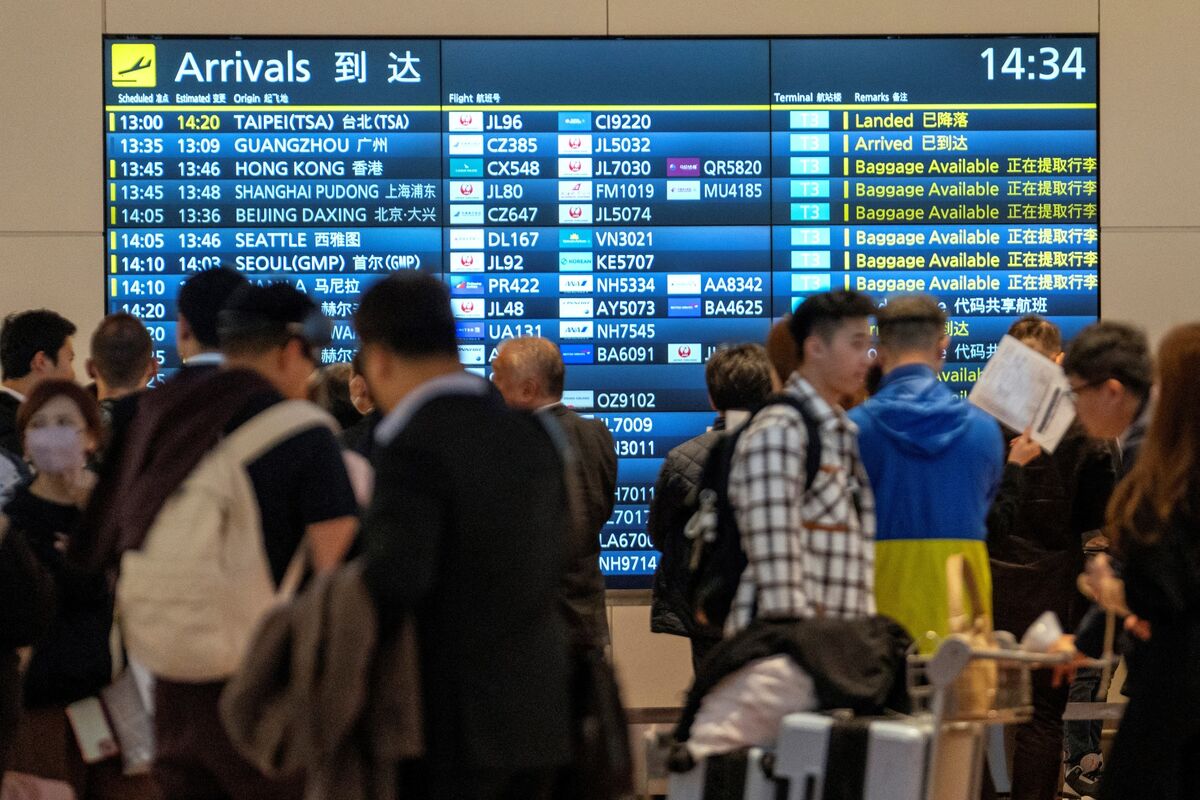
China has asked its airlines to extend cuts to flights to Japan through March 2026, effectively prolonging reduced capacity on that international route. The directive will constrain capacity and revenue for carriers, airports and travel-related businesses exposed to China–Japan travel and suggests sustained weak demand or regulatory constraints for cross‑border travel, which could weigh on airline earnings and tourism-sensitive equities.
Market structure: Capacity cuts to China–Japan routes transfer demand and pricing power away from point-to-point China carriers toward other regional hubs and carriers that can pick up indirect flows. Expect a 5–15% effective capacity contraction on bilateral seats through Mar‑2026 versus 2019 baselines, raising yields on remaining itineraries but reducing overall revenue for China‑listed carriers with high Japan exposure. FX and commodities impact will be modest: JPY could weaken 1–2% seasonally on lost tourism receipts, while jet‑fuel demand falls locally, shaving cents off refining margins in Asia over 1–3 quarters.
Risk assessment: Tail scenarios include an escalation to broader bilateral restrictions (10%+ downside to carrier equities) or a faster reopening from policy easing that reverts travel in 2–3 months (20%+ upside). Short‑term (days–weeks) risk centers on guidance/earnings revisions for carriers; medium term (3–9 months) is route reallocation and ancillary revenue loss; long term (to Mar‑2026) is sustained demand scar. Hidden dependencies: cargo belly capacity, transfer traffic via Korea/Hong Kong, and corporate MICE travel contracts can amplify or mute revenue shocks.
Trade implications: Favor targeted shorts on China carriers with high Japan exposure and longs on regional hubs capturing diverted flow (Korean Air). Use 3–12 month option structures to size risk : buy put spreads on 0670.HK (China Eastern) and buy calls on 003490.KS (Korean Air). Rotate out of Japan‑facing travel/hospitality names into domestic Chinese travel winners (TCOM) and cargo/logistics plays.
Contrarian angles: Market may overprice persistent weakness; capacity discipline could lift yields and per‑flight profitability, benefiting carriers retaining load factors. History (SARS, 2003) shows V‑shaped leisure rebounds after ~9–12 months; if policy signals shift, fast mean reversion is possible. Unintended winners: Gulf and Korean carriers that reprice indirect traffic, and hub airport operators that capture transfer premium.
AI-powered research, real-time alerts, and portfolio analytics for institutional investors.
Request DemoOverall Sentiment
mildly negative
Sentiment Score
-0.25
